

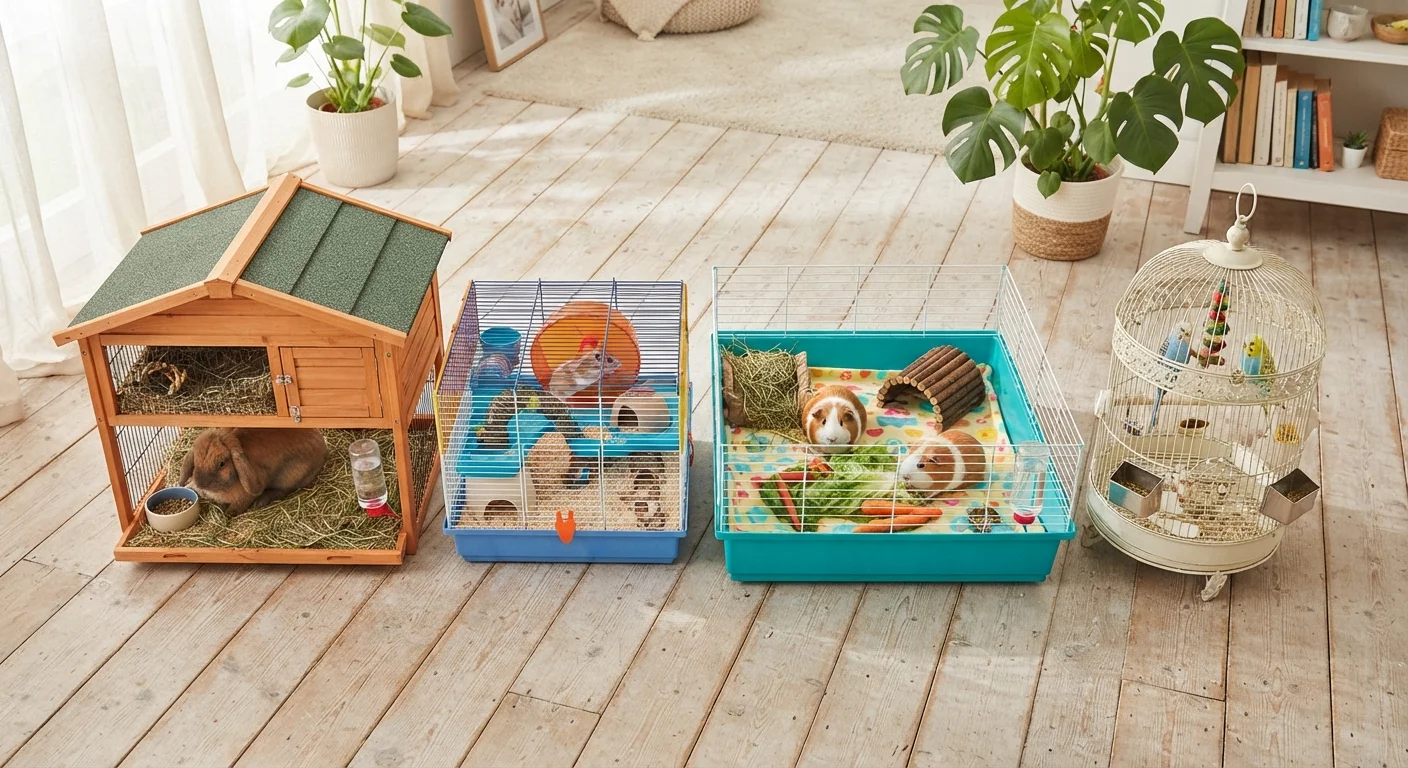
Our Verdict
No single small pet is universally 'easiest' — each species has genuine needs that must match your lifestyle. Hamsters suit low-interaction, smaller-space households; guinea pigs reward patient, hands-on owners; rabbits thrive with space and commitment; birds are ideal for experienced owners who enjoy daily engagement.
| Best for | Recommended |
|---|---|
| Busy adults or families with limited interaction time | Hamster |
| Families wanting an affectionate, handleable small mammal | Guinea Pig |
| Owners with ample space and time for an intelligent companion | Rabbit |
| Experienced pet owners seeking a highly social, long-lived companion | Pet Bird |
Why 'Small' Doesn't Mean 'Simple'
Small pets have a reputation for being low-maintenance starter animals. The reality is more nuanced. Each species — hamster, guinea pig, rabbit, or bird — carries a distinct set of behavioral, dietary, and environmental requirements. Choosing based on size or appearance alone often leads to welfare problems and owner frustration.
The smartest first step is an honest audit of your lifestyle: How many hours are you home each day? Do you have children? How much floor or cage space can you realistically provide? Can you afford routine veterinary care from a vet experienced with exotic or small animals? Your answers will point you toward the right match — or reveal that a small pet may not be the right fit right now.
If you're comparing small pet ownership to caring for a dog or cat, keep in mind that the differences in daily routine can be significant. See our overview of dog care or cat care if you're still weighing your options.
| Hamster | Guinea Pig | Rabbit | Pet Bird | |
|---|---|---|---|---|
| Typical activity period | Nocturnal / crepuscular | Daytime (diurnal) | Crepuscular (dawn/dusk) | Daytime (diurnal) |
| Social needs | Solitary (Syrian) | Needs companions | Pairs or bonded group | High — daily interaction |
| Minimum space requirement | 450 sq in floor space | 7.5 sq ft per pair | 12 sq ft+ enclosure | Largest feasible cage |
| Lifespan | 2–3 years | 4–8 years | 8–12 years | 5–80 years (varies widely) |
| Handling tolerance | Moderate, requires patience | Generally good | Variable, needs trust-building | Species-dependent |
| Noise level | Very quiet | Moderate (wheeking) | Generally quiet | Moderate to loud |
| Experience level suited to | Beginner (adult supervision) | Beginner to intermediate | Intermediate | Intermediate to advanced |
Hamsters: Independent but Misunderstood
Hamsters are popular partly because their enclosures seem compact and simple. However, hamsters are crepuscular to nocturnal — they're most active at dusk and during the night. Disturbing a sleeping hamster during the day can cause stress-related biting and illness. This makes them a poor match for young children who want daytime play.
A proper hamster habitat is larger than most commercial cages suggest. Veterinary and welfare organizations generally recommend a minimum of 450 square inches of unbroken floor space, with deep substrate (bedding) of at least six inches for burrowing. A solid-surface exercise wheel of adequate diameter — typically 10–11 inches for a Syrian hamster — is essential. Our hamster housing guide walks through exactly what an enclosure needs before your pet arrives.
Test the Nocturnal Reality Before You Commit
Before getting a hamster, spend a week noting what you're doing between 8 p.m. and midnight — that's when your hamster will be most active and most open to interaction. If your household is quiet and settled by then, a hamster's schedule will align well with yours. If evenings are hectic, a daytime-active species like a guinea pig may be a better match.
Guinea Pigs and Rabbits: Social Animals With Real Space Needs
Guinea pigs are highly social and, in most cases, should be kept in same-sex pairs or small groups. A single guinea pig without daily interaction can develop signs of stress and loneliness. They're vocal, active during the day, and generally tolerate gentle handling well — making them a genuinely good fit for attentive families.
Rabbits are intelligent, curious, and can form strong bonds with their owners, but they need considerably more space than is typically advertised. A rabbit that spends most of its life in a small hutch is likely to develop physical and behavioral problems. If you're considering a rabbit, our rabbit housing guide covers the space and setup requirements in detail.
One pairing that might seem logical — housing guinea pigs and rabbits together — actually carries significant risks. Our article on why guinea pigs and rabbits shouldn't share a hutch explains the behavioral and health reasons to keep them separate.
Avoid Housing Guinea Pigs and Rabbits Together
Despite being similar in size, rabbits and guinea pigs have different dietary needs, communication styles, and physical strengths. A rabbit can unintentionally injure a guinea pig, and rabbits can carry Bordetella bacteria that may cause respiratory illness in guinea pigs. Always house them separately.
Pet Birds: Rewarding, Demanding, and Long-Lived
Birds are often underestimated as pets. Even smaller species like budgies and cockatiels require daily social interaction, mental enrichment, and a carefully managed environment — they're sensitive to airborne toxins including non-stick cookware fumes and scented candles. Many parrots live for 20 to 80 years depending on species, meaning adoption is a decades-long commitment.
If you're drawn to birds, our overview of pet bird realities offers a balanced look at what ownership genuinely involves. For those deciding between common starter birds, our budgies vs. cockatiels comparison covers noise, social needs, and handling differences in practical terms.
20–30 years
Common lifespan of medium parrots
Species such as cockatiels and conures can live two to three decades, making bird ownership a major long-term commitment.
450 sq in
Recommended minimum hamster cage floor space
Many widely sold commercial hamster cages fall well below this threshold recommended by small animal welfare organizations.
Diet: The Area Where Most Owners Go Wrong
Regardless of which small pet you choose, diet is one of the most consequential decisions you'll make — and one of the most commonly mismanaged. Overfeeding seed mixes to birds, skipping unlimited hay for rabbits and guinea pigs, or offering sugary treats to hamsters can all cause serious health problems over time.
The details vary by species, but the principle is consistent: commercial pet food marketing doesn't always align with veterinary guidance on optimal nutrition. For a species-by-species look at common feeding errors, see our article on what small pet owners often get wrong about diet.
Whichever animal you choose, establishing a relationship with a veterinarian who has experience with small or exotic pets before any health issue arises is strongly advisable. Routine checkups help catch problems early and give you a trusted source of guidance tailored to your specific animal.
This article is for general informational purposes only and is not a substitute for professional veterinary advice. Always consult a qualified veterinarian for guidance specific to your pet's health and care needs.
The content provided on our blog site traverses numerous categories, offering readers valuable and practical information. Readers can use the editorial team’s research and data to gain more insights into their topics of interest. However, they are requested not to treat the articles as conclusive. The website team cannot be held responsible for differences in data or inaccuracies found across other platforms. Please also note that the site might also miss out on various schemes and offers available that the readers may find more beneficial than the ones we cover.