

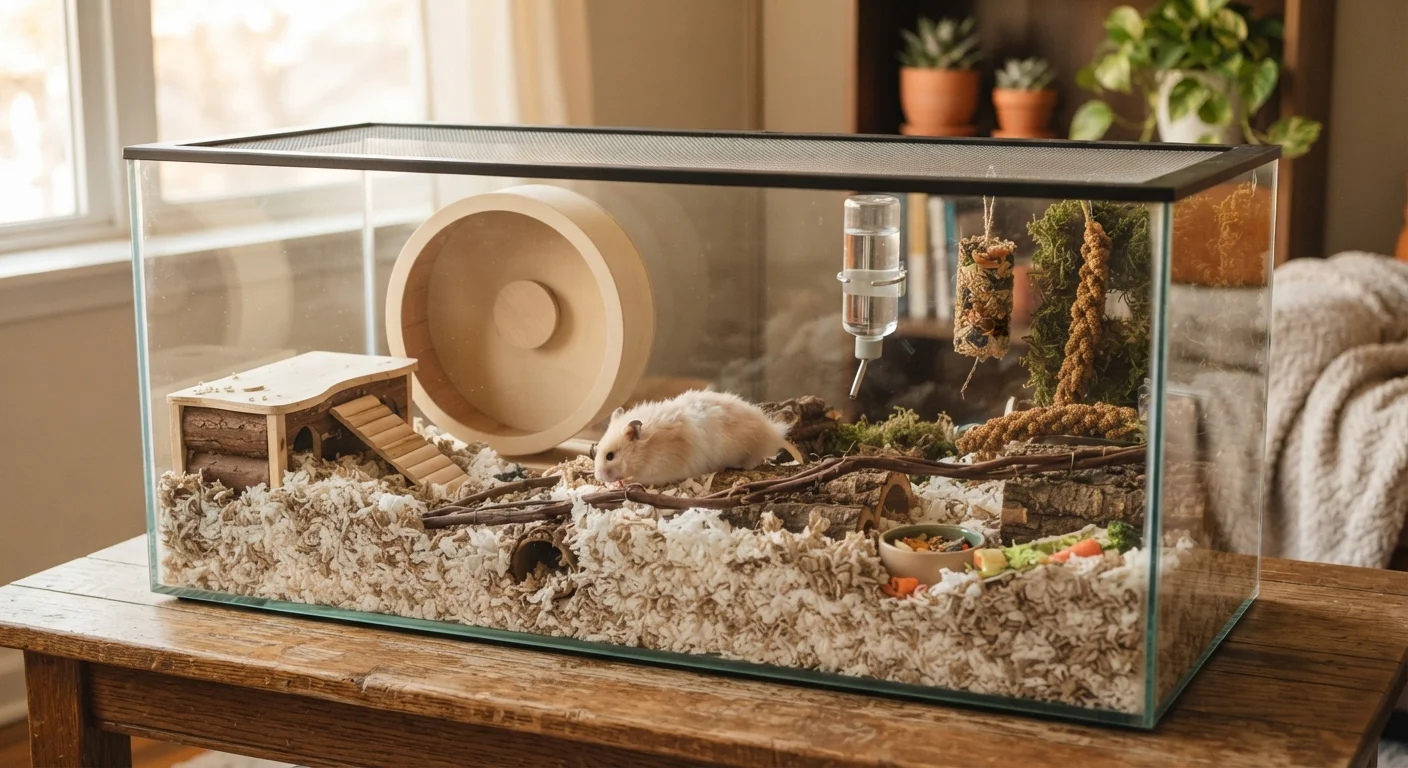
Summary
20 items · 45–90 minutes
Why Getting the Enclosure Right Matters Before Day One
Hamsters are often marketed as low-maintenance starter pets, but their welfare needs are more specific than many first-time owners realize. A poorly sized cage, insufficient bedding, or the wrong wheel can lead to chronic stress, repetitive behaviors, and physical health problems. The good news: setting up a proper environment is straightforward once you know what to look for.
Unlike bringing home a dog or cat — see our guide on bringing a dog home for the first time for that scale of preparation — a hamster enclosure is self-contained and can be fully configured before your pet ever sets foot inside it. That's a real advantage: you can get everything right before the animal experiences any stress of relocation.
Work through the checklist below in order. Items marked must are non-negotiable for basic welfare. Should items are strongly recommended, and nice to have items add enrichment but are not urgent.
Glass aquarium or deep plastic bin cage
Provides the escape-proof, deep-sided enclosure hamsters need for adequate bedding depth.
Unscented paper-based bedding
Fills the enclosure to the depth required for natural burrowing and nesting behavior.
Solid-surface exercise wheel (8–10 inch diameter)
Supports daily physical activity without posing a risk of leg or back injury.
Sipper water bottle
Delivers clean water without the contamination risks of an open dish in deep bedding.
Wooden or cork-bark hideout
Gives the hamster a secure, enclosed resting space that mimics natural shelter.
Thermometer
Lets you monitor the room temperature and avoid conditions that could cause torpor or heat stress.
Sand bath dish and reptile-safe sand
Provides a dedicated grooming area that keeps the hamster's coat clean without water bathing.
Wooden chew toys
Supports natural tooth-wear behavior and adds environmental enrichment.
The Hamster Setup Checklist
Use this checklist to audit your setup before your hamster arrives. Complete all must items first, then work through the rest at your own pace.
Enclosure Size and Type
Bedding and Substrate
Exercise Wheel
Hideouts and Enrichment
Food, Water, and Nutrition Basics
Environment and Placement
Avoid Wire Mesh Wheels and Running Balls
Wire or barred exercise wheels create gaps that small paws can slip through, causing broken toes and leg injuries. Exercise balls — sealed plastic spheres hamsters run inside — restrict normal sensory input, trap heat, and prevent the animal from stopping when tired. These items are widely sold but are generally considered poor choices for hamster welfare; a properly sized solid wheel inside the enclosure is a safer alternative.
A Few Things That Surprise New Hamster Owners
Even careful owners can overlook certain details. Hamsters are crepuscular — most active at dawn and dusk — so placing their enclosure near a television or in a noisy living room disrupts their natural sleep cycles. A quieter bedroom corner or dedicated pet area works better, provided it stays within the recommended temperature range.
Scented or cedar wood shavings, despite being widely sold, can irritate a hamster's respiratory tract. Stick to unscented paper-based bedding. Mesh or barred wheels are another common misstep: a hamster's small feet can slip through the rungs, causing leg injuries. Always choose a solid running surface.
Temperatures Below 60°F Can Trigger Torpor
Hamsters can enter a state of torpor (a form of involuntary hibernation) if temperatures drop consistently below around 60°F. Torpor may look like death and can be dangerous if prolonged. If you notice your hamster unusually cold, limp, or unresponsive, contact a veterinarian with small-animal experience rather than attempting to warm them rapidly on your own.
If you're also researching setups for other small pets, it's worth knowing that the housing needs of hamsters differ significantly from those of rabbits and guinea pigs. Our article on what rabbits actually need from their living space covers those distinctions in detail. Likewise, why guinea pigs and rabbits shouldn't share a hutch is a useful read if you're managing a multi-species household.
This article is for general informational purposes only. For any concerns about your hamster's health, consult a veterinarian with small-animal experience.
The content provided on our blog site traverses numerous categories, offering readers valuable and practical information. Readers can use the editorial team’s research and data to gain more insights into their topics of interest. However, they are requested not to treat the articles as conclusive. The website team cannot be held responsible for differences in data or inaccuracies found across other platforms. Please also note that the site might also miss out on various schemes and offers available that the readers may find more beneficial than the ones we cover.