

Start here
Setting Up Your Home Before Your Dog Arrives
Next
The First 48 Hours: What to Expect
Build on it
Nutrition Basics for New Dog Owners
Develop skills
Early Training and Routine Building
Long-term health
Your First Vet Visit and Preventive Care
Setting Up Your Home Before Your Dog Arrives
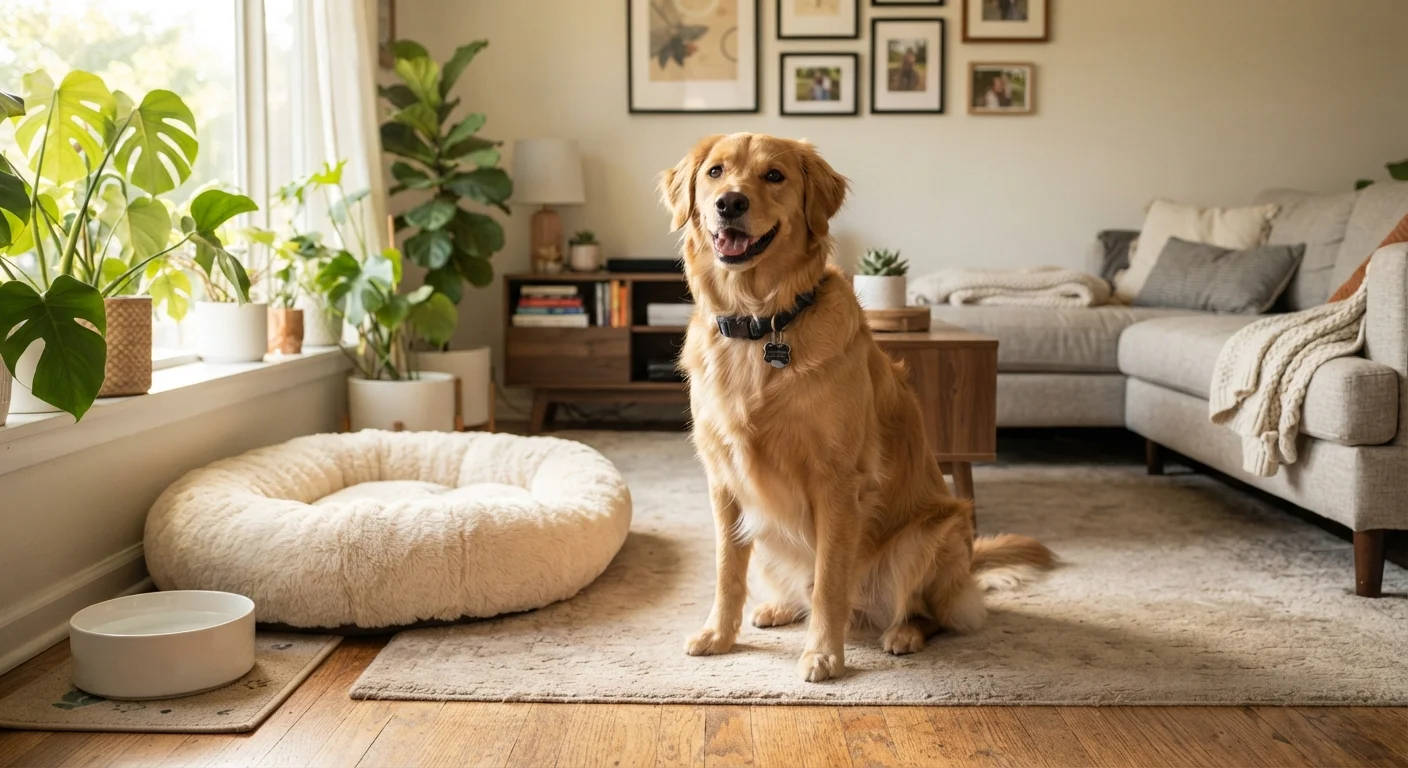
Preparation is what separates a stressful first day from a smooth one. Before your dog walks through the door, take a walk through every room from a dog's perspective — low to the ground, nose-first, and curious about everything.
Dog-proofing basics:
- Secure electrical cords and charging cables out of reach.
- Store household chemicals, medications, and toxic plants in closed cabinets.
- Block off stairways or rooms you don't want your dog to access yet using baby gates.
- Remove small objects a dog could swallow.
Beyond safety, your dog needs a dedicated resting spot — a crate, dog bed, or quiet corner that is theirs alone. Crates, when introduced positively, serve as a comfortable den rather than a punishment. Place it in a low-traffic area where your dog can still see and hear family activity.
Stock supplies before day one: food and water bowls, a collar with ID tags, a 6-foot leash, age-appropriate food, waste bags, and a few toys. If you have questions about how pet ownership compares to other major responsibility milestones, our guide to bringing a cat home offers a useful side-by-side perspective.
Crate training
The process of teaching a dog to see their crate as a safe, comfortable resting place. When done positively, it supports potty training and reduces anxiety.
Decompression period
The initial days or weeks a new dog needs to adjust to their environment. During this time, lowering stimulation helps the dog feel safe.
Positive reinforcement
A training method that rewards desired behaviors with treats, praise, or play to encourage the dog to repeat them. It is widely supported by animal behavior research.
Life stage feeding
Choosing dog food formulated for your dog's current age — puppy, adult, or senior — since nutritional needs change significantly over a dog's lifetime.
Enzymatic cleaner
A cleaning product that uses enzymes to break down the organic compounds in urine, effectively eliminating odor signals that can draw a dog back to the same spot.
The First 48 Hours: What to Expect
Many new dog owners expect instant bonding — and feel worried when their dog seems withdrawn, won't eat, or hides. This is normal. A new environment is genuinely overwhelming for a dog, and the first two days should be treated as a decompression period rather than an orientation tour.
What helps during this window:
- Keep the household calm and limit visitors.
- Let your dog explore at their own pace without forcing interaction.
- Offer water and food on a schedule, even if they don't eat much at first.
- Begin introducing outside potty breaks every 2–3 hours to establish the habit early.
Avoid Overwhelming Your Dog Early On
It's tempting to introduce your new dog to friends, family, and neighbors right away — but too much stimulation in the first few days can increase stress and slow the bonding process. Hold off on large gatherings or playdates with other dogs for at least the first week. Let your dog set the pace.
By the end of the first 48 hours, most dogs begin to visibly relax. You'll notice more eye contact, a willingness to approach you, and greater interest in food. These are all positive signs that trust is beginning to form.
Nutrition Basics for New Dog Owners
What your dog eats directly shapes their energy, coat health, weight, and long-term wellbeing. For the first week, feed the same food your dog was receiving before adoption or purchase. A sudden food switch can cause digestive upset — loose stools, vomiting, and general discomfort.
When you're ready to transition, do so gradually over 7 to 10 days: start with 75% old food and 25% new, shifting the ratio slowly until the new food makes up the entire meal.
Choose a food appropriate for your dog's life stage:
- Puppies need higher protein and calorie density to support growth.
- Adult dogs do well on a balanced maintenance formula.
- Senior dogs may benefit from formulas supporting joint health and lower caloric density.
Portion size matters. Overfeeding is one of the most common issues in new dog households. Follow label guidelines as a starting point, then adjust based on your vet's recommendations and your dog's body condition. For more insight into how your dog's eating patterns can reflect their health, see what your dog's eating habits are actually telling you.
Use a Consistent Feeding Schedule
Feeding your dog at the same times each day does more than regulate hunger — it also makes potty training more predictable. Most dogs need to eliminate within 20–30 minutes of eating, so a consistent meal schedule helps you anticipate bathroom breaks and reduce indoor accidents.
Early Training and Routine Building
Dogs are creatures of habit, and consistent routines reduce anxiety while accelerating learning. From day one, aim to feed, walk, and put your dog to bed at the same times each day. Predictability helps your dog feel secure.
Start with these foundational behaviors:
- Sit — the gateway behavior for most training sequences.
- Come (recall) — the most important safety command your dog will ever learn.
- Leave it — essential for preventing dangerous chewing or ingestion.
- Stay — builds impulse control and calm behavior.
Keep sessions short — 5 to 10 minutes — and always end on a success. Positive reinforcement (rewarding the behavior you want with a treat, praise, or play) is the most evidence-supported training approach for dogs. Avoid punishment-based methods, which can erode trust and increase anxiety.
Potty training follows the same principle: take your dog outside frequently, reward the moment they go in the right spot, and clean up indoor accidents thoroughly with an enzymatic cleaner to remove the scent cue. Accidents are expected — not a failure.
Puppies vs. Adult Dogs: Training Differences
Puppies have shorter attention spans and higher energy, so they benefit from very brief training sessions spread throughout the day. Adult dogs — especially those from shelters — may already know some commands or may have habits that need gentle redirection. Neither is harder to train; they simply require slightly different pacing and expectations.
Your First Vet Visit and Preventive Care
Schedule your dog's first veterinary appointment within the first week. This visit serves multiple purposes: a head-to-toe physical exam, review of existing vaccination records, a discussion about parasite prevention (fleas, ticks, heartworm), and an opportunity to ask any questions about your specific dog's needs.
Bring any documentation you received from the shelter or breeder — vaccination history, microchip numbers, and any known health conditions. If your dog hasn't been spayed or neutered, your vet will advise on the appropriate timing based on breed and age.
Preventive care is not a one-time event. Vaccines, annual wellness exams, dental checks, and parasite control are ongoing commitments. Our detailed guide on building a preventive care routine for your dog walks through each of these habits across your dog's life stages.
Knowing when something is wrong is equally important. Familiarize yourself with common warning signs early — our article on dog health red flags every owner should recognize explains what symptoms warrant prompt veterinary attention.
This article is for general informational purposes only and is not a substitute for professional veterinary advice. Always consult a licensed veterinarian for guidance specific to your dog's health, breed, and life stage.
Frequently Asked Questions
Most dogs take between two and four weeks to feel comfortable in a new home, though some may need up to three months. This adjustment period — sometimes called the 3-3-3 rule — involves initial decompression, gradual comfort-building, and finally feeling truly at home. Patience and consistent routine are your most effective tools.
Keep the first night low-key and limit your dog's access to just one or two rooms. Show them their sleeping area, offer water, and avoid overwhelming them with guests or noise. Some dogs whine at night initially — brief reassurance is fine, but avoid reinforcing the behavior by bringing them into your bed if you don't intend that to be permanent.
Start by continuing whatever food the shelter or breeder was using to avoid digestive upset. If you want to switch foods, transition gradually over 7–10 days by mixing increasing amounts of the new food with the old. Choose a food appropriate for your dog's life stage (puppy, adult, or senior) and consult your vet for personalized guidance.
Ideally within the first week of bringing your dog home. The vet will assess overall health, review vaccination history, discuss parasite prevention, and answer any questions specific to your dog's breed or age. Early visits establish a health baseline that makes future care much easier.
Chewing is a natural behavior, especially in puppies. Provide appropriate chew toys and redirect your dog whenever you catch them chewing something off-limits. Dog-proofing — removing access to cables, shoes, and other hazards — is just as important as training. Consistent redirection combined with praise for using the right objects is the most effective long-term approach.
Yes, in several important ways. Dogs generally need more active supervision, structured routines, and outdoor time than cats. If you're weighing your options, our <a href="/pets-animals/cat-care/bringing-a-cat-home-for-the-first-time">guide to bringing a cat home</a> covers what that process looks like in comparison.
The content provided on our blog site traverses numerous categories, offering readers valuable and practical information. Readers can use the editorial team’s research and data to gain more insights into their topics of interest. However, they are requested not to treat the articles as conclusive. The website team cannot be held responsible for differences in data or inaccuracies found across other platforms. Please also note that the site might also miss out on various schemes and offers available that the readers may find more beneficial than the ones we cover.