

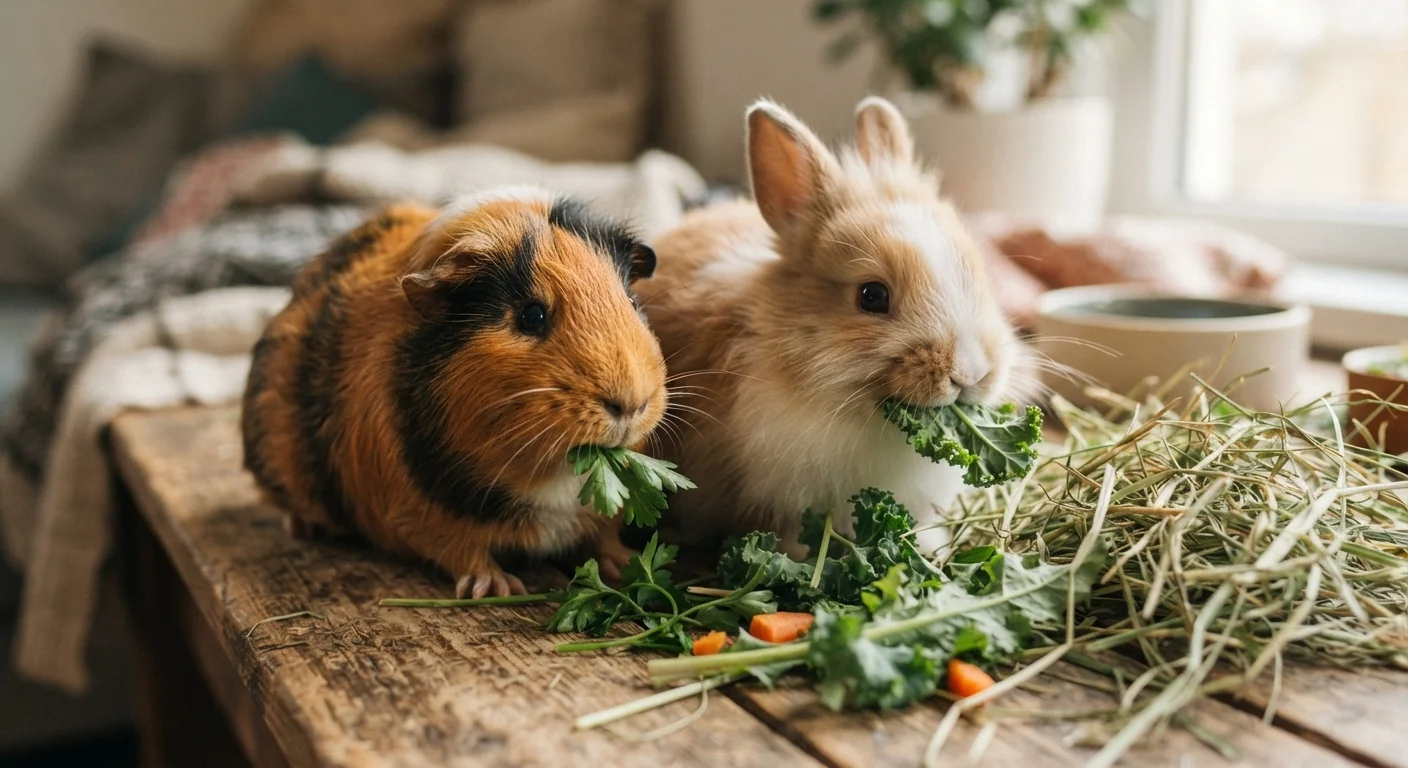
Why Small Pet Diets Are Easy to Get Wrong
Small animals — rabbits, guinea pigs, hamsters, gerbils, and companion birds — are among the most commonly misunderstood pets when it comes to nutrition. Their compact size can make owners assume their dietary needs are equally simple. In reality, many small pets have highly specific requirements that differ significantly from cats, dogs, or even from each other.
Part of the challenge is that the pet industry markets many products — seed mixes, treat sticks, flavored pellets — in ways that suggest they're complete and sufficient. Attractive packaging isn't the same as nutritional accuracy. If you're thinking about bringing a small pet home, our guide on matching your lifestyle to the right animal can help you understand each species' needs before you commit.
Below are the most common dietary mistakes small pet owners make — and what to do instead.
Small Pets Hide Illness Until It's Serious
Many small animals are prey species and instinctively conceal signs of weakness. By the time diet-related illness becomes visible, it may already be advanced. If your small pet's eating habits, weight, or energy level changes noticeably, consult an exotic or small-animal veterinarian promptly. See our guide on signs that warrant a vet visit for what to watch for.
Common Feeding Mistakes and How to Correct Them
These errors span a range of small pet types, but they share a common thread: well-meaning care based on incomplete or misleading information. Recognizing them is the first step toward better feeding habits.
Treating a seed or nut mix as a complete diet for rabbits or guinea pigs.
Why it happens: Seed mixes are colorful, easy to portion, and widely sold as 'complete' small animal food, which leads owners to trust the packaging over species biology.
Feeding birds an all-seed diet and skipping fresh foods entirely.
Why it happens: Seeds are convenient, affordable, and birds often prefer them — reinforcing the habit even when it isn't nutritionally balanced.
Forgetting that guinea pigs require a daily source of vitamin C.
Why it happens: Owners often assume pellets cover all nutritional needs, not realizing vitamin C degrades quickly in stored food and that guinea pigs — like humans — cannot synthesize it internally.
Overfeeding treats, including fruits and vegetables, without considering sugar content.
Why it happens: Owners associate fresh produce with health and assume more is always better, especially when the animal appears to enjoy it eagerly.
Providing insufficient hay or skipping it altogether for rabbits.
Why it happens: Hay can seem messy and its role is underestimated; owners may reduce it to keep the enclosure tidy or assume pellets are equivalent.
Applying one species' diet rules to a different small animal.
Why it happens: Small pets are often grouped together in care advice, leading owners to assume hamsters, rabbits, and guinea pigs have similar or interchangeable needs.
Not All 'Small Animal' Products Are Appropriate
Pet store products labeled for small animals are not automatically safe or nutritionally complete. Many commercial mixes are formulated for palatability rather than health, containing dyes, added sugars, and fillers. Always cross-reference ingredients with species-specific guidance from a veterinarian or a reputable exotic animal organization before purchasing.
The Bigger Picture: Diet and Long-Term Health
Dietary mistakes in small animals don't always produce obvious symptoms right away. Weight gain, dental disease, vitamin deficiency, and digestive problems can develop gradually — and because prey animals instinctively hide discomfort, owners may not notice until a condition is well established.
80%
Of rabbit diet that should be hay
Veterinary organizations including the House Rabbit Society consistently recommend grass hay as the foundation of a healthy rabbit diet, comprising the vast majority of daily intake.
~10mg
Daily vitamin C needed by guinea pigs
Guinea pigs require vitamin C every day; deficiency leads to scurvy, a serious and preventable condition recognized by exotic animal veterinarians.
Making informed, species-specific choices about what and how much to feed your small pet is one of the most meaningful things you can do for their long-term wellbeing. When in doubt, a veterinarian experienced with small or exotic animals is your most reliable resource — general advice is a starting point, not a substitute for professional guidance tailored to your specific animal.
This article is for general informational and educational purposes only. It is not a substitute for veterinary advice. Always consult a qualified veterinarian for guidance specific to your pet's health and dietary needs.
The content provided on our blog site traverses numerous categories, offering readers valuable and practical information. Readers can use the editorial team’s research and data to gain more insights into their topics of interest. However, they are requested not to treat the articles as conclusive. The website team cannot be held responsible for differences in data or inaccuracies found across other platforms. Please also note that the site might also miss out on various schemes and offers available that the readers may find more beneficial than the ones we cover.