

Summary
22 items · 45–90 minutes
Why Seasonal Checks Matter More Than Most Drivers Realize
Your vehicle faces a different set of physical demands in January than it does in July. Temperature swings affect fluid viscosity, tyre pressure, battery voltage, and the integrity of rubber seals — all without any warning on the dashboard. A brake pad that performs adequately in summer heat can wear differently once road salt and cold temperatures enter the equation.
Seasonal maintenance isn't about spending money unnecessarily. It's about catching small issues before they become expensive ones. As our guide on why skipped services cascade into major repairs explains, deferred checks rarely stay cheap for long.
This checklist is organized into four seasonal transition points — late summer into fall, fall into winter, winter into spring, and spring into summer — but many items apply across multiple transitions. Work through the groups most relevant to your current season, and flag anything that requires attention from a qualified mechanic before driving further.
Know Your Limits Before You Begin
This checklist covers inspections and fluid top-ups that most drivers can safely perform. Tasks involving brakes, suspension, steering components, or electrical systems beyond basic bulb replacement should always be handled by a qualified mechanic. If you identify a safety-critical problem — such as a brake warning light, severely worn tyres, or a failing battery — do not defer the repair or continue driving until the issue has been assessed.
What You'll Need Before You Start
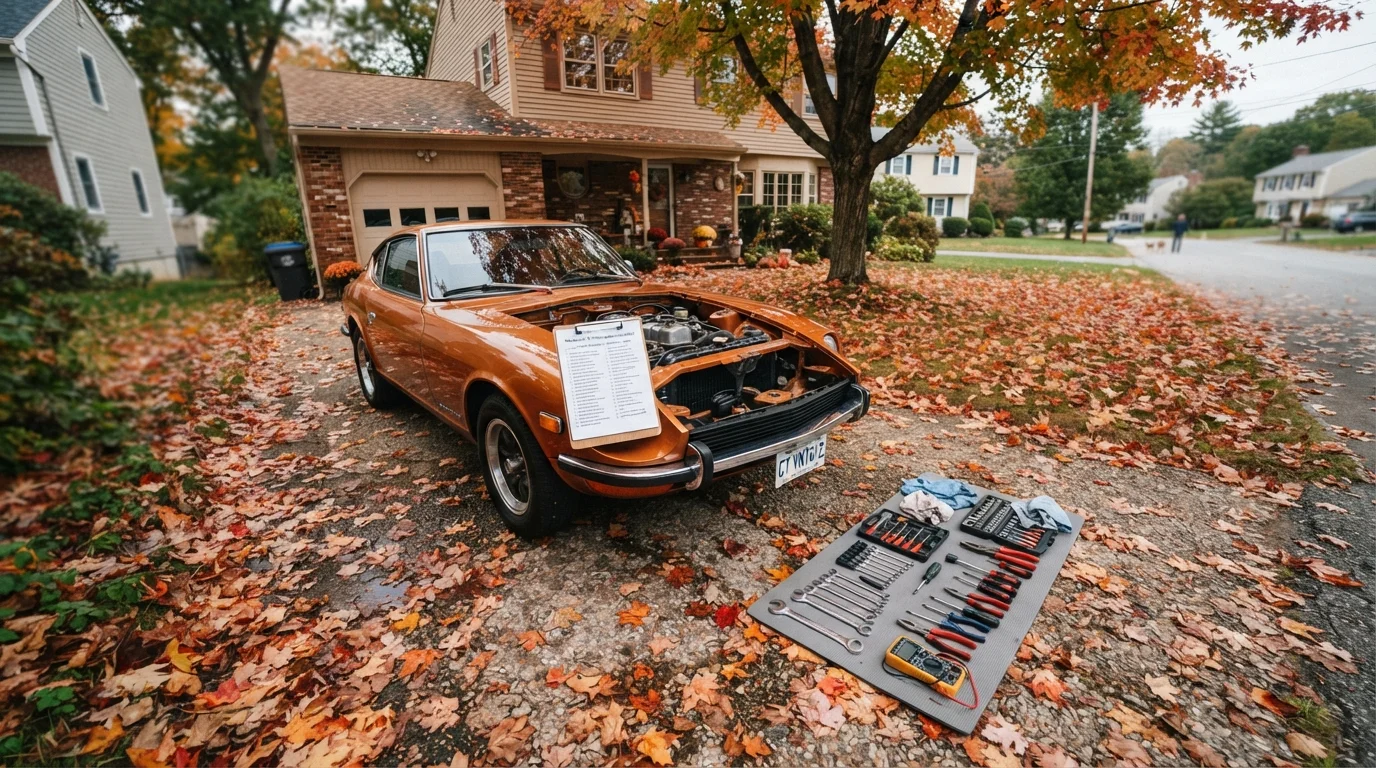
Most of these checks require basic tools you likely already own, plus a few supplies worth keeping in the car or garage. Having everything at hand before you begin saves time and means you won't skip steps.
Tyre pressure gauge
Accurately measures tyre PSI so you can inflate or deflate to the recommended level.
Tread depth gauge or coin
Quickly checks whether tyre tread has worn below the safe minimum threshold.
Flashlight or work light
Illuminates the engine bay, undercarriage, and tyre sidewalls for a thorough visual inspection.
Coolant hydrometer or test strips
Measures the freeze and boil-over protection level of your engine coolant.
Battery load tester
Assesses whether the battery can hold a charge under real-world conditions — many auto parts stores will test for free.
Owner's manual
Provides manufacturer-specific fluid specs, service intervals, and tyre pressure recommendations for your exact vehicle.
For tasks beyond visual inspection — such as brake pad measurement, coolant concentration testing, or battery load testing — a qualified mechanic should be consulted. Some service centers offer complimentary seasonal inspection checks; call ahead to find out what's included.
The Seasonal Maintenance Checklist
Work through the groups below methodically. Items marked must are non-negotiable for road safety. Those marked should are strongly recommended and prevent longer-term problems. Nice-to-have items improve comfort, efficiency, or resale value but are unlikely to affect immediate safety.
Tyres
Battery and Electrical
Fluids
Brakes, Wipers, and Safety Items
Seasonal Extras
For a shorter, trip-by-trip version of many of these checks, see the pre-drive safety check you can do in minutes.
Cold Weather Battery Failures Happen Fast
A battery that works fine in September may fail to start your vehicle in January. Cold temperatures significantly reduce a battery's available cranking power, and heat accelerates internal degradation. If your battery is three or more years old, a load test before winter is one of the most cost-effective steps you can take. Many service stations offer this test at no charge.
After the Checklist: Record, Schedule, and Follow Up
Once you've worked through these items, note what you checked, what you found, and any work completed or deferred. A simple log — even a notes app on your phone — makes the next seasonal check significantly faster and helps any mechanic you visit understand your vehicle's history.
Our article on keeping accurate service records covers exactly how to do this and why it matters for safety and vehicle value alike. If you're new to ownership responsibilities more broadly, car maintenance for new drivers is a solid starting point.
Seasonal preparation pairs directly with safer driving habits. If you regularly drive in challenging weather, reviewing common misjudgements in rain, fog, and ice will round out your readiness considerably.
This article is for general informational purposes only. Always consult a qualified mechanic before undertaking repairs or if you identify a safety concern with your vehicle.
The content provided on our blog site traverses numerous categories, offering readers valuable and practical information. Readers can use the editorial team’s research and data to gain more insights into their topics of interest. However, they are requested not to treat the articles as conclusive. The website team cannot be held responsible for differences in data or inaccuracies found across other platforms. Please also note that the site might also miss out on various schemes and offers available that the readers may find more beneficial than the ones we cover.