

Summary
18 items · 3–10 minutes
Why a Pre-Drive Check Is Worth Your Time
Most vehicle problems don't appear suddenly — they develop gradually and show early warning signs that a quick visual check will catch. A flat tyre, a burned-out brake light, or an obscured rear window are all detectable in seconds, yet each can contribute directly to a crash or a traffic stop. The goal of this checklist is to build a habit so automatic that you perform it without thinking, much like fastening your seatbelt.
This isn't about performing a full mechanical inspection every time you drive. It's a structured, fast routine covering the systems most likely to fail or create hazards without notice. For deeper maintenance schedules, see our guide to routine maintenance timelines — but the checks below are what every driver should run through before any journey, short or long.
Tyres
Lights
Visibility
Dashboard and Controls
Occupant Safety
Quick Exterior Walk-Around
Tools You'll Need (Almost None)
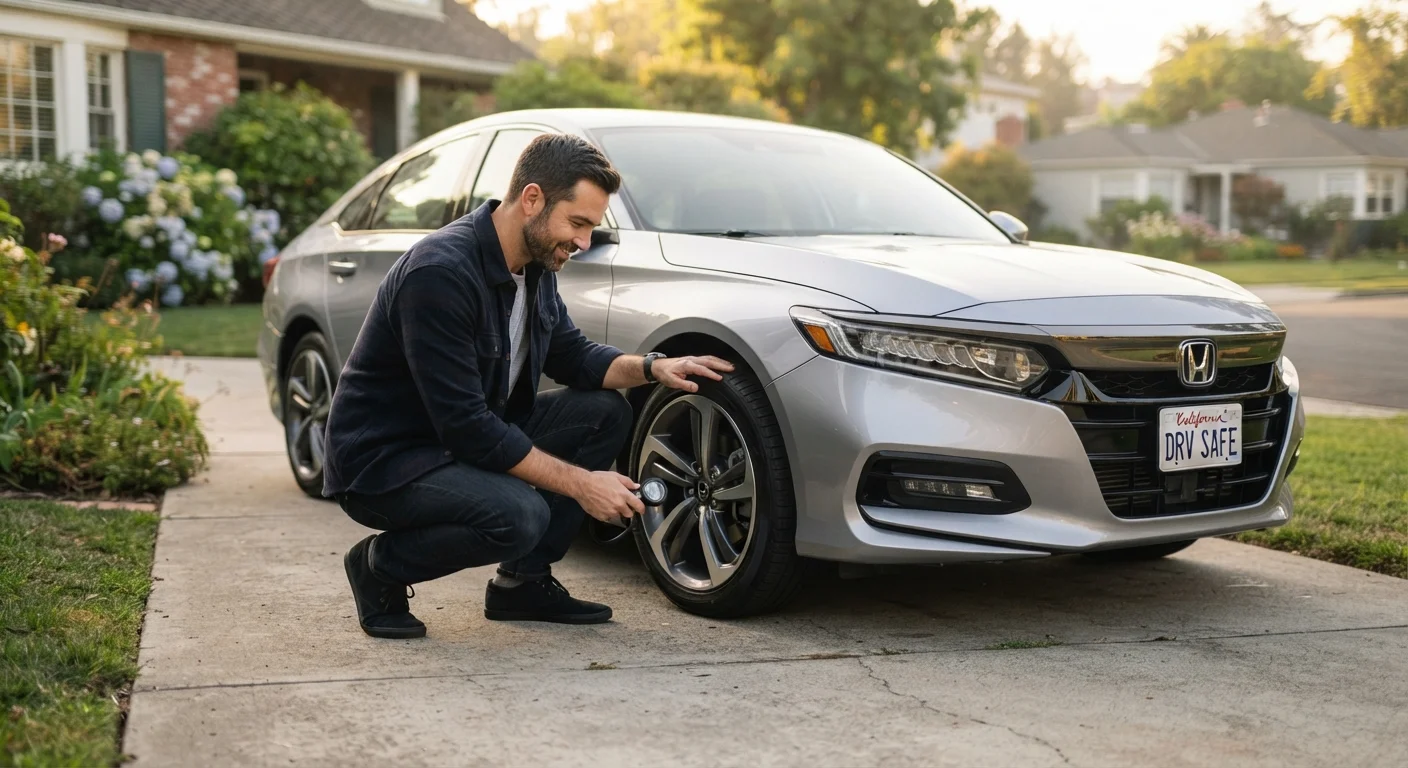
The beauty of a pre-drive check is that it demands very little equipment. For most items, your eyes and hands are sufficient. A tyre pressure gauge is the one practical tool that earns its place in every glove box.
Tyre pressure gauge
Measures tyre inflation to confirm it matches the manufacturer's recommended PSI.
Tread depth gauge
Gives an accurate reading of remaining tread depth, especially useful when tyres are approaching end of life.
Ice scraper and de-icer spray
Clears ice and frost from windshields and windows quickly, essential during winter months.
Small flashlight or phone torch
Helps inspect tyres, lights, and undercarriage in low-light conditions such as early morning or evening.
If you're preparing for a longer road trip, this daily habit pairs well with a more thorough seasonal review. Our seasonal car maintenance checklist covers the deeper checks — fluids, belts, and battery — that complement this routine.
What to Do If You Find a Problem
Don't Ignore Problems and Drive Anyway
It can be tempting to dismiss a warning light or push on with a tyre that looks low, especially when you're running late. Doing so significantly increases your risk of a breakdown or collision. If you discover a safety-critical issue — severely low tyre pressure, brake warning light, or non-functional headlights at night — address it before driving, or arrange alternative transport.
Not every issue you find needs to halt your journey, but some absolutely do. A tyre that's visibly flat or showing cord through the tread is a hard stop — driving on it risks a blowout. Similarly, if your dashboard lights include a brake warning, engine temperature, or oil pressure indicator, do not drive until the cause is identified. Our dashboard warning lights guide explains what each symbol means and how urgently to act.
For issues that don't prevent driving — a slightly low tyre, a dim interior bulb, or a dirty windshield — note them and schedule attention within the week. Deferring too long turns minor issues into costly repairs or safety risks. New drivers especially benefit from understanding how quickly small problems compound; our car maintenance guide for new drivers covers ownership responsibilities in plain language.
Know What to Do If an Incident Happens
Even well-prepared drivers can encounter emergencies. Familiarise yourself with the immediate steps to take after a collision — staying calm, checking for injuries, and securing the scene. Our guide to the first 60 seconds after a road incident walks through exactly what to do.
The content provided on our blog site traverses numerous categories, offering readers valuable and practical information. Readers can use the editorial team’s research and data to gain more insights into their topics of interest. However, they are requested not to treat the articles as conclusive. The website team cannot be held responsible for differences in data or inaccuracies found across other platforms. Please also note that the site might also miss out on various schemes and offers available that the readers may find more beneficial than the ones we cover.