

Start here
Choosing the Right Site
Next
Understanding and Preparing Your Soil
Then
Deciding What to Grow
Getting practical
Sowing Seeds and Transplanting Seedlings
Keep it growing
Watering, Feeding, and Ongoing Care
Stay ahead of problems
Managing Pests and Common Problems
Choosing the Right Site
The single most consequential decision you'll make for a new vegetable garden is where to put it. Most food crops require a minimum of six hours of direct sunlight per day — eight hours is preferable. Before settling on a location, observe how sunlight moves across your yard at different times of day, keeping in mind that shadows shift with the seasons.
Beyond sunlight, consider these practical factors:
- Drainage: Avoid low-lying spots where water pools after rain. Roots sitting in waterlogged soil are vulnerable to rot and disease.
- Water access: Locate your garden within reach of a hose or spigot. Carrying water by hand across a yard quickly becomes a reason to skip watering altogether.
- Proximity to trees: Large trees compete for water and nutrients, and their roots can extend well beyond the canopy's edge.
- Level ground: A gently sloped or level site prevents water and topsoil from washing away during heavy rain.
If your yard has limited options, a raised bed can help you work around poor drainage or shallow soil. See our guide to raised beds vs. in-ground planting to help you decide which approach suits your space.
Understanding and Preparing Your Soil
Vegetables grow best in loose, well-draining soil rich in organic matter. Before planting anything, take time to understand what you're working with. A basic soil test — available through many local cooperative extension offices — reveals your soil's pH and nutrient levels, which determines what amendments, if any, are needed.
Soil pH
A measure of how acidic or alkaline your soil is, on a scale of 0–14. Most vegetables grow best when pH sits between 6.0 and 7.0.
Compost
Decomposed organic matter — kitchen scraps, leaves, plant waste — that enriches soil with nutrients and improves its texture and drainage.
Direct sowing
Planting seeds directly into the garden bed where the crop will grow to maturity, rather than starting them indoors first.
Transplant shock
Temporary stress a plant experiences when moved from one growing environment to another, often causing wilting or slowed growth for a few days.
Hardiness zone
A geographic area classification (defined by the USDA) based on average annual minimum temperatures, used to guide planting timing and crop selection.
Row cover
A lightweight fabric draped over crops to protect them from insects, frost, or wind while still allowing light and some moisture to pass through.
Most vegetables prefer a soil pH between 6.0 and 7.0 (slightly acidic to neutral). If your soil is too acidic, ground limestone can raise the pH; if it's too alkaline, elemental sulfur can lower it. Your soil test results will indicate the appropriate rates.
To physically prepare the bed, loosen the top 10–12 inches of soil with a garden fork or tiller, then mix in a 2–4 inch layer of compost. Compost improves soil structure, adds slow-release nutrients, and encourages the microbial life that supports healthy plants. Avoid working soil when it's wet, as this destroys the structure you're trying to build.
Build Soil Health Before Anything Else
Resist the urge to skip directly to planting. Investing two or three weekends in soil preparation — testing, amending, and adding compost — will produce noticeably better results than planting into unprepared ground. Healthy soil grows healthy plants; it's the foundation everything else depends on.
Deciding What to Grow
For a first garden, choose crops that are reliable, fast-maturing, and actually match what your household eats. Growing vegetables you won't use leads to neglect and wasted effort.
Beginner-friendly vegetables include:
- Lettuce and salad greens: Fast to harvest, tolerant of partial shade, and can be cut repeatedly.
- Radishes: Ready in as few as 25 days; great for filling gaps between slower crops.
- Bush beans: Productive, low-maintenance, and direct-sown into the soil.
- Zucchini: Vigorous and high-yielding; one or two plants typically produce abundantly.
- Cherry tomatoes: More forgiving than large-fruiting types and consistently rewarding.
Pair complementary plants thoughtfully — our article on companion planting explains which combinations genuinely support each other. Start small: a 4×8-foot bed allows you to grow five or six types of vegetables without overwhelming you in the first season.
Sowing Seeds and Transplanting Seedlings
Some crops perform best when seeds are sown directly into garden soil, while others benefit from being started indoors weeks earlier or purchased as young transplants.
Direct sow these crops where they will grow: carrots, beets, beans, peas, radishes, and squash. They develop taproots or grow quickly enough that transplanting isn't worth the disruption.
Transplant tomatoes, peppers, eggplant, and brassicas (broccoli, cabbage, kale). These crops have long growing seasons and benefit from the head start that indoor starting or nursery-grown transplants provide.
When transplanting purchased seedlings, water them thoroughly before removing from their containers. Dig a hole slightly deeper than the root ball, set the plant in place, firm the soil gently around the roots, and water immediately. Avoid transplanting on a hot, sunny afternoon — early morning or an overcast day reduces transplant shock.
Don't Plant Too Early in the Season
Warm-season crops like tomatoes, peppers, and squash planted before the soil has warmed (consistently above 60°F) will stall or decline even if there's no frost. Cold soil slows root development and leaves young plants vulnerable. Check your local last frost date and soil temperature before transplanting, rather than going by calendar date alone.
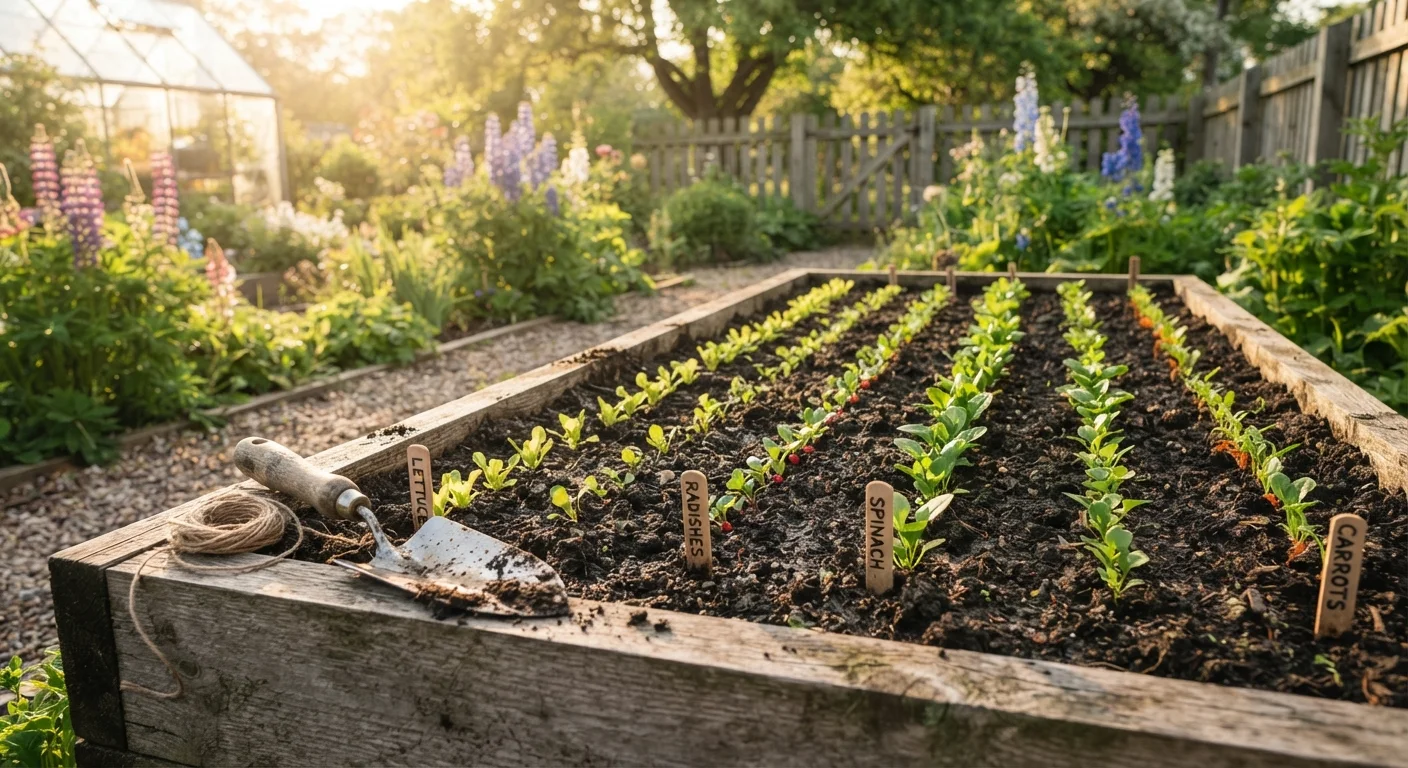
Label everything as you plant. Memory is unreliable mid-season, and knowing exactly what and when you planted makes troubleshooting much easier.
Watering, Feeding, and Ongoing Care
Consistent watering is one of the most critical factors in a productive vegetable garden — but more water is not always better. Most vegetables need about one inch of water per week from rain or irrigation. The goal is to water deeply and less frequently, encouraging roots to grow downward rather than staying near the surface.
Water at the base of plants rather than overhead when possible. Wet foliage left overnight creates conditions that favor fungal disease. Our article on watering habits that quietly damage gardens covers the most common mistakes and how to avoid them.
For feeding, a layer of compost worked into the soil at planting typically provides adequate nutrition through mid-season for many crops. Heavy feeders like tomatoes and corn may benefit from supplemental fertilizer; follow label instructions rather than guessing at rates.
Mulching around plants with 2–3 inches of straw or wood chips retains soil moisture, moderates temperature, and suppresses weeds — all of which reduce the daily maintenance burden considerably.
Track your seasonal tasks with a month-by-month garden checklist to stay ahead of planting windows and upkeep milestones.
Managing Pests and Common Problems
No garden escapes pests entirely, but most problems are manageable when caught early. Make a habit of spending a few minutes every few days inspecting plants closely — look at leaf undersides, stem bases, and the soil surface around plants.
Common vegetable garden pests and straightforward responses:
- Aphids: Small, soft-bodied insects clustered on new growth. Knock off with a firm stream of water or remove by hand.
- Caterpillars and cabbage worms: Handpick or use row covers to exclude moths before eggs are laid.
- Slugs: Most active at night; reduce hiding places by clearing debris and consider copper tape barriers around raised beds.
- Fungal diseases (powdery mildew, blight): Improve air circulation through proper plant spacing, water at soil level, and remove affected leaves promptly.
When to Consider Organic Controls
If hand-removal and physical barriers aren't keeping pest pressure manageable, look into certified organic controls appropriate to the specific pest — such as Bacillus thuringiensis (Bt) for caterpillars. Always read label instructions carefully and apply only as directed. Broad-spectrum pesticides, even organic ones, can harm beneficial insects including pollinators, so targeted approaches are preferable.
Healthy soil, appropriate spacing, and good watering practices are your strongest preventive tools. Stressed plants attract more pest pressure than vigorous, well-cared-for ones. Growing food at home connects directly to the broader appeal of eating more plants — and knowing exactly where your food came from adds real value to both the garden and the table.
Frequently Asked Questions
A 4×8-foot plot is a practical and manageable size for a first-time gardener. It's large enough to grow a meaningful variety of vegetables but small enough to keep maintenance realistic. You can always expand once you've built experience and confidence.
Timing depends on your local climate and USDA hardiness zone. Most cool-season crops like lettuce and spinach can go in 4–6 weeks before your last expected frost, while warm-season crops like tomatoes and squash should wait until frost risk has passed. Check your local cooperative extension service for region-specific guidance.
A basic soil test is strongly recommended. It tells you the pH level and nutrient content of your soil, which directly affects plant health. Many cooperative extension offices offer affordable testing kits. Without this information, you're essentially guessing at what amendments your soil actually needs.
Transplants (young plants purchased from a nursery) are easier for beginners because they reduce the early-season failure rate and shorten the time to harvest. Seeds are more economical and offer more variety, but some crops — like beans, carrots, and beets — grow better when sown directly in the ground.
Check plants every few days, especially on the undersides of leaves, and remove pests by hand when numbers are low. Physical barriers like row covers can exclude common insects. Healthy soil and appropriate spacing also reduce plant stress, which makes crops less vulnerable to pest damage.
The content provided on our blog site traverses numerous categories, offering readers valuable and practical information. Readers can use the editorial team’s research and data to gain more insights into their topics of interest. However, they are requested not to treat the articles as conclusive. The website team cannot be held responsible for differences in data or inaccuracies found across other platforms. Please also note that the site might also miss out on various schemes and offers available that the readers may find more beneficial than the ones we cover.