

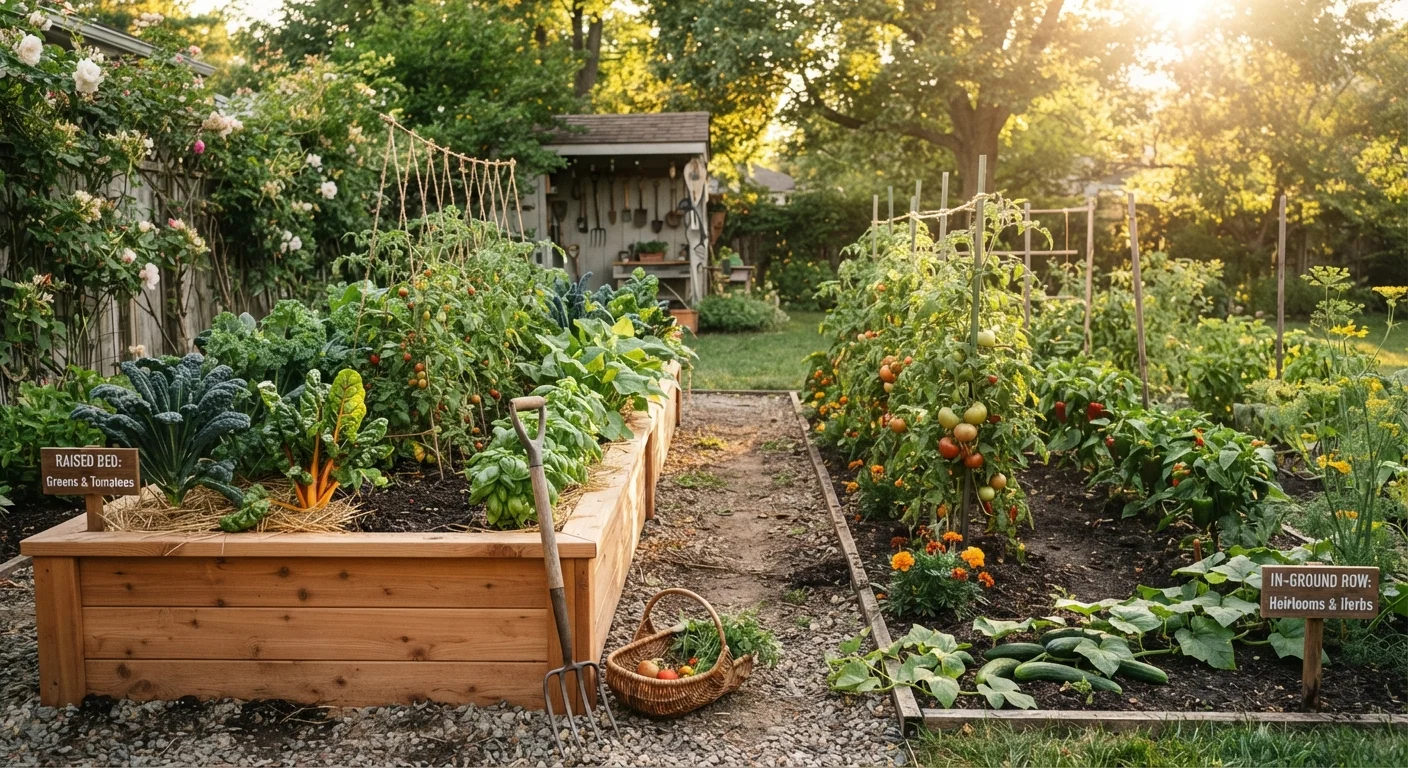
Option A
Raised Beds
The controlled, higher-setup garden solution.
Best for: Gardeners dealing with poor native soil, limited mobility, or small defined spaces who want quick results.
Option B
In-Ground Planting
The traditional, lower-barrier approach to food gardening.
Best for: Gardeners with decent existing soil who want to grow at scale without significant upfront materials cost.
The Core Difference: Control vs. Scale
The choice between raised beds and in-ground planting comes down to one fundamental tension: how much control you want over your growing environment versus how much space and scale you want to work with. Neither approach is universally superior — each solves a different set of problems.
Raised beds are essentially self-contained growing chambers. You build or buy the frame, fill it with a blended soil mix, and plant into conditions you've engineered from the ground up. That control is enormously useful when native soil is the problem. In-ground planting, by contrast, means working with what's already there — amending, improving, and adapting the existing earth over time. If you're just getting started, see our full guide to starting a vegetable garden from scratch for broader context on site selection and soil preparation.
| Criterion | Raised Beds | In-Ground Planting |
|---|---|---|
| Upfront cost | Higher (materials + soil) | Lower (amendments only) |
| Soil control | Full — you choose the mix | Depends on native soil quality |
| Drainage | Excellent; dries out faster | Varies by site and soil type |
| Spring warm-up | Faster — soil warms earlier | Slower in cold or heavy soils |
| Root depth | Limited by bed depth | Unlimited |
| Weed pressure | Lower at the start | Higher from existing seed bank |
| Accessibility | High with correct bed height | Requires kneeling or bending |
| Scale potential | Limited by structure size | Easier to scale across large plots |
Soil, Drainage, and Root Access
Soil quality is where raised beds most clearly earn their reputation. Because you fill them yourself — typically with a mix of topsoil, compost, and other amendments — you control drainage, nutrient levels, and texture from the start. Raised beds also warm up faster in spring, which can give cool-climate gardeners a meaningful head start on the growing season.
In-ground gardens, however, provide unlimited root depth. For crops like carrots, parsnips, or established perennial herbs, unrestricted downward root growth can mean healthier, more drought-resilient plants over time. Shallow raised beds (under 12 inches) can actually restrict some root vegetables, so bed depth matters if you're growing below-ground crops.
Drainage is generally better in raised beds, but that same quality can become a drawback in dry climates or hot summers — raised beds dry out faster and may need more frequent watering. Poor watering habits can undermine either method, but the risk of under-watering is more acute in elevated structures.
6–8°F
Extra warmth raised bed soil gains in spring
Raised bed soil can run several degrees warmer than in-ground soil in early spring, according to university extension horticulture resources, giving transplants and seeds a head start.
12 in.
Minimum raised bed depth for most vegetables
Most cooperative extension services recommend at least 12 inches of soil depth for a productive vegetable raised bed; root crops like carrots benefit from 18 inches or more.
3–5 yrs
Typical time to improve poor native soil organically
Consistent compost additions and cover cropping can meaningfully improve clay or compacted in-ground soil, but visible results generally take several growing seasons.
Cost, Labor, and Long-Term Maintenance
Raised beds carry higher upfront costs. Materials for a single 4×8-foot cedar bed — wood, hardware, and enough quality soil to fill it — can run anywhere from $100 to $300 or more depending on your region and material choices. Multiply that across a large growing space and the investment adds up quickly.
In-ground gardens are far cheaper to establish. Turning over a plot with a garden fork, adding compost, and planting costs a fraction of that. The tradeoff is time: improving poor native soil is a multi-season process, not a weekend project.
Weed pressure differs between the two methods. Raised beds filled with weed-free soil start with fewer weed seeds, though wind and birds will introduce them over time. In-ground plots draw from the existing seed bank in native soil, which can mean heavier early-season weeding. Using the right mulch in either setting helps considerably — our guide to mulching methods covers which materials suit different situations.
A Note on Treated Wood and Soil Safety
If you're building raised beds from lumber, the type of wood matters. Older pressure-treated wood used chromated copper arsenate (CCA), which is no longer sold for residential use in the U.S. Modern pressure-treated lumber uses different preservatives considered lower-risk, but many gardeners still prefer untreated cedar, redwood, or composite materials for food gardens. Check current guidance from your local cooperative extension office before selecting materials.
Which Method Suits Your Garden Goals?
For most home gardeners, the honest answer is that both methods can work well — the deciding factors are your site conditions, physical needs, and budget. Raised beds excel when you're working around bad soil, need accessibility features, or want tightly managed growing zones. In-ground gardening makes more sense for large plots, deep-rooted crops, and longer-term soil-building projects.
Many experienced gardeners use a combination: raised beds for intensive vegetable production and fragile seedlings, in-ground space for sprawling crops, established perennials, and cut flowers. You don't have to commit entirely to one approach. Whichever route you choose, companion planting can improve yields in either setting — see our guide to companion planting for which pairings actually deliver results.
The content provided on our blog site traverses numerous categories, offering readers valuable and practical information. Readers can use the editorial team’s research and data to gain more insights into their topics of interest. However, they are requested not to treat the articles as conclusive. The website team cannot be held responsible for differences in data or inaccuracies found across other platforms. Please also note that the site might also miss out on various schemes and offers available that the readers may find more beneficial than the ones we cover.