

Our Verdict
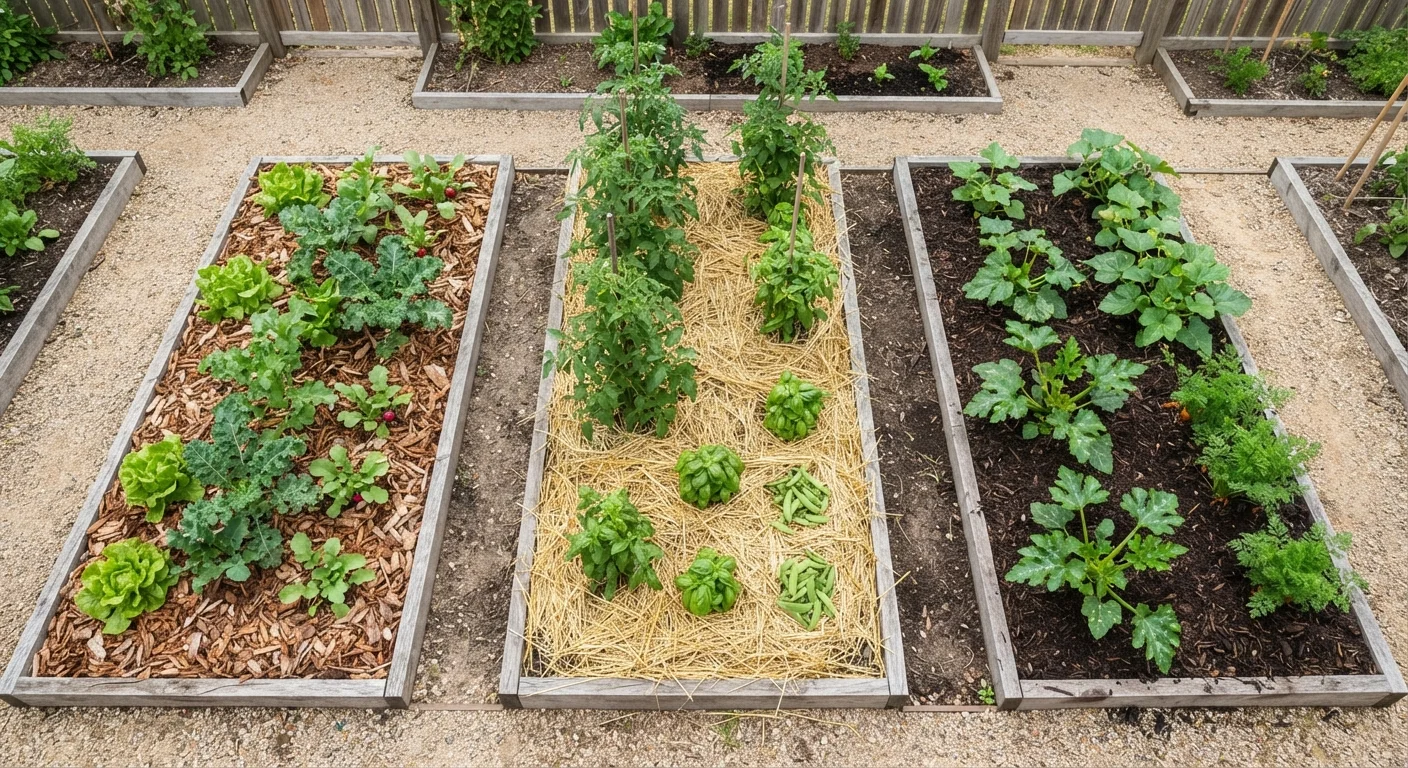
No single mulch type wins across every situation. Organic options like compost and wood chips build long-term soil health, making them the most versatile choices for most gardens. Straw suits vegetable beds especially well, while inorganic options like gravel work better in low-maintenance or drought-prone landscapes where decomposition would be counterproductive.
| Best for | Recommended |
|---|---|
| Gardeners who want to improve soil health over time | Compost or wood chips |
| Vegetable and annual beds needing easy seasonal removal | Straw mulch |
| Permanent landscape beds with drought concerns | Gravel or crushed stone |
| Budget-conscious gardeners with access to fallen leaves | Shredded leaf mulch |
Why Mulch Type Actually Matters
Mulching is one of the highest-return habits in home gardening — but the type of mulch you choose has real consequences for your soil, your plants, and your workload. Not all mulches behave the same way once they hit the ground. Some feed microorganisms, some shed water instead of retaining it, and a few can even alter soil chemistry over time.
If you're building out a vegetable patch or refining a perennial border, understanding what each material does gives you a meaningful advantage. For a deeper look at how soil conditions interact with plant health, see our guide on soil pH and nutrient availability.
| Wood Chips | Straw | Shredded Leaves | Compost | Gravel/Stone | |
|---|---|---|---|---|---|
| Soil improvement | Good (slow) | Moderate | Good | Excellent | None |
| Weed suppression | Excellent | Good | Good | Poor | Good |
| Moisture retention | Excellent | Good | Good | Moderate | Low |
| Best use | Trees & shrubs | Vegetable beds | Woodland beds | All garden beds | Drought landscapes |
| Cost | Low–free | Low | Free | Low–moderate | Moderate–high |
| Longevity | 1–3 years | 1 season | 1 season | 1 season | Permanent |
| Nitrogen effect | Can tie up N | Neutral | Neutral | Adds N | None |
Organic Mulches: Building Soil From the Top Down
Organic mulches decompose over time, and that breakdown is the point. As they break down, they add organic matter to the soil, feed beneficial microbes, and gradually improve soil structure — which means better drainage in clay soils and better moisture retention in sandy ones.
Wood Chips
Coarse wood chips are excellent for established trees, shrubs, and perennial borders. Applied 2–4 inches deep, they suppress weeds effectively and regulate soil temperature across seasons. One important note: freshly chipped wood can tie up nitrogen near the soil surface as it decomposes, so keep it away from the root zones of nitrogen-hungry annuals and vegetables. Aged or composted wood chips reduce this risk considerably.
Straw
Straw (not hay, which carries weed seeds) is a go-to for vegetable gardens. It's lightweight, easy to apply and remove, and breaks down within a single season — feeding the soil without leaving a permanent residue. It also creates a clean barrier that reduces soil splash, which helps limit fungal disease on low-growing crops like tomatoes and peppers.
Shredded Leaves
Fallen leaves are arguably the most accessible free mulch available to homeowners. Shredded with a mower or leaf blower, they decompose faster than whole leaves and mat down less. They're particularly well-suited to woodland garden areas or beneath deciduous trees, mimicking the natural leaf-litter layer that native plants thrive in.
Shred Leaves Before You Spread Them
Whole leaves tend to mat together and form a water-repelling layer, which defeats the purpose of mulching. Running over a pile of leaves with a lawn mower two or three times creates shredded material that breaks down faster and stays in place better. Store excess shredded leaves in a bin and use them throughout the season as needed.
Compost as a Mulch: A Different Kind of Organic Layer
Finished compost applied as a 1–2 inch top-dressing functions differently from bulkier organic mulches. Rather than primarily suppressing weeds (it won't do much there), it acts as a slow-release amendment that improves soil biology with every rainfall. Nutrients leach gradually into the root zone, and microbial activity increases noticeably in beds treated consistently over multiple seasons.
Compost mulch works especially well in established vegetable beds and around fruiting plants. It pairs well with a secondary layer of straw on top for weed control. If you're starting a vegetable garden from scratch, leading with compost as your first mulch layer sets a strong foundation.
25%
Reduction in soil moisture loss
Research from university extension programs consistently shows mulched soil loses significantly less moisture to evaporation compared to bare soil.
2–3 inches
Recommended mulch depth for most beds
Most cooperative extension services recommend this depth as the effective range for weed suppression without risking root suffocation.
Inorganic Mulches: When Permanence Makes Sense
Gravel, crushed stone, and decomposed granite don't feed the soil — but they don't need to in every situation. In drought-prone climates, along house foundations, or in Mediterranean-style landscapes with succulents and ornamental grasses, inorganic mulches offer long-lasting coverage with minimal maintenance. They also don't attract certain pests that shelter in organic material.
The tradeoff is clear: over time, inorganic mulches can actually reduce soil biology by blocking the organic inputs that microbial life depends on. They also absorb and radiate heat, which can stress plants in already-hot climates. For most food-growing areas and flower beds where soil improvement is a goal, organic alternatives are the better long-term choice.
Rubber Mulch: Weigh the Trade-offs Carefully
Rubber mulch made from recycled tires is marketed for its long lifespan and weed suppression, but it provides no soil benefit and can leach compounds into the soil over time. It also retains heat intensely, which can stress plant roots in warm climates. Most garden experts and extension services caution against its use in planting beds where soil health is a priority.
For gardeners weighing where to invest their mulching effort, the planting system itself plays a role. Our comparison of raised beds vs. in-ground planting covers how bed type affects soil management decisions, including mulch strategy.
Applying Mulch Correctly: Depth and Timing
Even the right mulch applied poorly won't deliver its full benefit. A few consistent principles apply across all types:
- Depth: 2–3 inches is the sweet spot for most organic mulches. Thinner layers don't suppress weeds reliably; thicker layers can suffocate roots and promote crown rot.
- Volcano mulching: Avoid piling mulch against tree trunks or plant stems. This traps moisture and invites fungal disease and pest damage. Keep mulch 2–3 inches away from stems.
- Timing: Apply in late spring after soil has warmed, or in fall as an insulating layer before frost. Mulching cold, wet soil early in spring can delay warming and slow plant establishment.
- Watering before mulching: Lay mulch over moist soil, not dry. If you're uncertain about your irrigation approach, our article on watering habits that quietly damage gardens covers common mistakes worth avoiding.
The content provided on our blog site traverses numerous categories, offering readers valuable and practical information. Readers can use the editorial team’s research and data to gain more insights into their topics of interest. However, they are requested not to treat the articles as conclusive. The website team cannot be held responsible for differences in data or inaccuracies found across other platforms. Please also note that the site might also miss out on various schemes and offers available that the readers may find more beneficial than the ones we cover.