

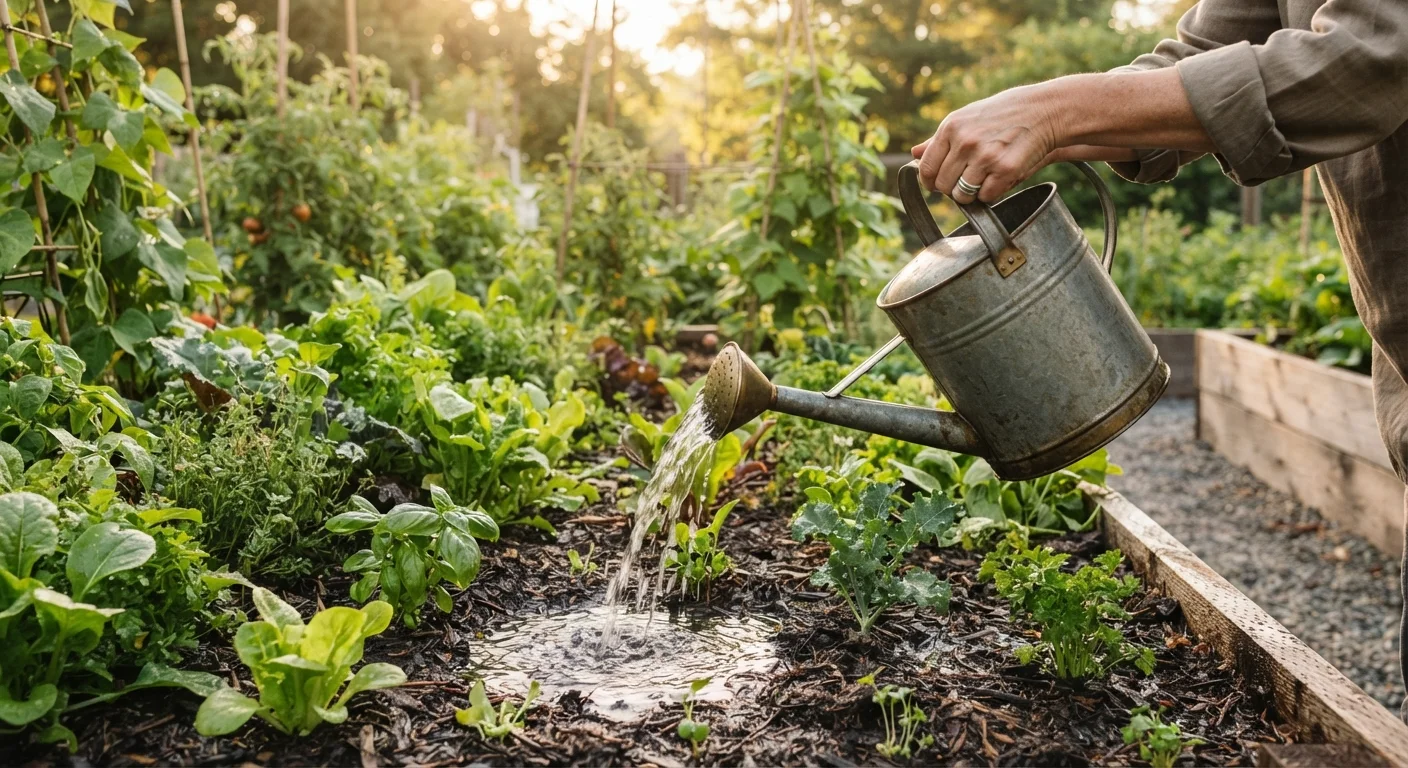
Why Watering Mistakes Are So Common
Most gardeners who struggle with wilting, yellowing leaves, or stunted growth assume the problem is pests, poor soil, or bad weather. Watering habits are rarely the first suspect — yet they're often the actual cause. The frustrating part is that both too much and too little water can produce nearly identical symptoms, making it hard to self-diagnose without digging a little deeper. Whether you're growing vegetables or maintaining ornamental beds, building smarter irrigation habits is one of the highest-return changes you can make. If you're setting up a new growing space, our guide to starting a vegetable garden from scratch covers site selection and soil prep that also affects how water behaves in your beds.
Watering on a fixed schedule regardless of weather or soil conditions.
Why it happens: Automated timers and rigid routines feel reliable, so gardeners stick to them even after rain or during cool spells when soil stays moist for days.
Applying water overhead to plants that are sensitive to wet foliage.
Why it happens: Overhead sprinklers and hose wands are convenient and cover a lot of ground quickly, so they become the default method even for disease-prone plants.
Watering frequently but shallowly, wetting only the top inch or two of soil.
Why it happens: Brief daily watering sessions feel attentive, but they don't push moisture down to where the roots actually need it.
Overwatering container plants because drainage isn't considered.
Why it happens: Containers look dry on the surface quickly, leading gardeners to water more often than necessary. Pots without adequate drainage holes compound the problem significantly.
Ignoring variation in water needs across different plants in the same bed.
Why it happens: Gardeners often treat a whole bed as a single unit and apply the same watering routine to every plant in it, regardless of species or maturity.
How Soil, Mulch, and Timing Work Together
Fixing individual watering habits is easier when you understand the broader system your garden operates in. Soil structure determines how fast water moves through it — sandy soils drain quickly and may need more frequent watering, while dense clay soils hold moisture longer and are prone to waterlogging. Matching your watering schedule to your soil type is foundational. You can learn more about how soil composition affects plant health in our guide to soil pH and plant struggles.
Mulch is one of the most underused tools for water management. A 2–3 inch layer of organic mulch — wood chips, straw, or compost — slows evaporation, moderates soil temperature, and reduces the frequency with which you need to water. Our overview of mulching methods breaks down which types suit different garden styles. Pairing good mulch coverage with corrected watering habits produces noticeably healthier plants within a single growing season.
50%
Outdoor water lost to evaporation or runoff
The U.S. Environmental Protection Agency estimates that as much as 50% of outdoor irrigation water is wasted due to overwatering, evaporation, and inefficient application methods.
6–8"
Target soil depth for effective watering
Most garden extension services recommend wetting soil to 6–8 inches to encourage deep root development and drought resilience in established plants.
Timing is the third lever. Morning watering gives foliage time to dry before cooler evening temperatures, reducing conditions that favor fungal disease. Evening watering, particularly overhead irrigation, leaves leaves damp overnight — a primary driver of powdery mildew and leaf blight. A month-by-month garden checklist can help you build consistent routines, including irrigation adjustments as seasons shift.
Evening Watering Raises Disease Risk
Watering late in the day — especially overhead — leaves plant foliage wet overnight, creating ideal conditions for fungal diseases like powdery mildew and early blight. These diseases spread quickly and can be difficult to control once established. Shift watering to early morning whenever possible so leaves dry quickly in the sun and wind.
The content provided on our blog site traverses numerous categories, offering readers valuable and practical information. Readers can use the editorial team’s research and data to gain more insights into their topics of interest. However, they are requested not to treat the articles as conclusive. The website team cannot be held responsible for differences in data or inaccuracies found across other platforms. Please also note that the site might also miss out on various schemes and offers available that the readers may find more beneficial than the ones we cover.