

Our Verdict
Plant-based eating has a solid body of evidence behind it, particularly for cardiovascular and metabolic health. The benefits are real, but so are the nutritional gaps that require active management. Done thoughtfully — with attention to key nutrients and food quality — shifting toward more plant foods is one of the more evidence-supported dietary moves most people can make.
Best suited to health-conscious adults willing to plan their meals carefully and seek professional guidance on supplementation and nutrient needs.
What Does Plant-Based Eating Actually Mean?
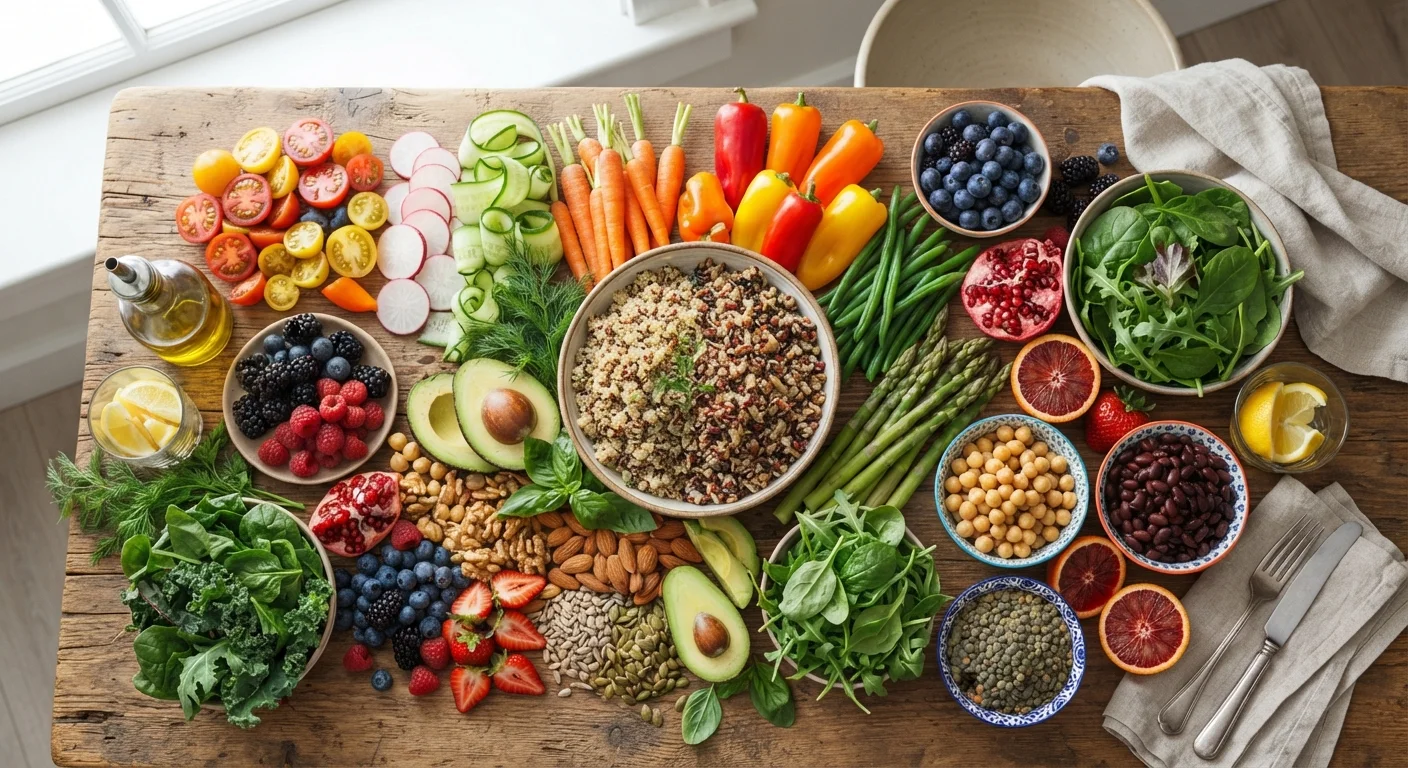
"Plant-based" is one of the most elastic phrases in modern nutrition. At its most flexible, it simply means centering meals around vegetables, fruits, whole grains, legumes, nuts, and seeds while reducing — but not necessarily eliminating — animal products. At its strictest, it describes a fully vegan diet that excludes all animal-derived foods.
This distinction matters. The research on plant-based diets covers a wide continuum: Mediterranean-style patterns, pescatarian diets, vegetarian diets, and fully vegan approaches all fall loosely under the umbrella. Understanding where you want to land on that spectrum is the practical starting point before weighing pros and cons.
It's also worth noting that plant-based does not automatically mean nutritious. A diet of white bread, potato chips, and soda is technically plant-based. Understanding food processing is essential context when evaluating any plant-forward eating pattern.
The Genuine Benefits
Large bodies of epidemiological research associate plant-rich diets with several meaningful health outcomes. These are associations, not guaranteed individual results, but the consistency across studies is notable.
Linked to lower cardiovascular disease risk
Multiple large studies associate plant-rich diets with reduced LDL cholesterol, lower blood pressure, and decreased risk of heart disease. The mechanisms include higher fiber intake, lower saturated fat, and greater antioxidant consumption.
Associated with reduced type 2 diabetes risk
Research, including a major analysis in PLOS Medicine, has found that plant-based dietary patterns are associated with a meaningfully lower risk of developing type 2 diabetes, partly through effects on body weight and insulin sensitivity.
Supports gut health through higher fiber intake
Plant foods are the dominant source of dietary fiber, which feeds beneficial gut bacteria, supports regular digestion, and is linked to reduced colorectal cancer risk.
May support healthy weight management
Whole plant foods tend to be high in volume and fiber relative to their calorie content, which can support satiety. Observational data generally shows lower average body mass index among people eating plant-heavy diets.
Broad variety of naturally nutrient-dense foods
Vegetables, legumes, whole grains, fruits, nuts, and seeds collectively provide a wide array of vitamins, minerals, and phytonutrients that support overall health.
~25%
Lower heart disease risk in vegetarians
A large prospective study published in the BMJ found vegetarians had approximately 25% lower risk of ischemic heart disease compared to meat-eaters.
23%
Reduced type 2 diabetes risk
A meta-analysis in PLOS Medicine estimated that adherence to healthy plant-based dietary patterns was associated with a roughly 23% lower risk of type 2 diabetes.
~17g
Average daily fiber intake in US adults
The Dietary Guidelines for Americans report that average fiber intake among US adults is around 17 grams per day — well below the 25–38g recommended range.
Beyond cardiovascular markers, higher plant food intake is linked to better digestive health, largely through dietary fiber. Most Americans consume well under the recommended daily intake of fiber — a gap that carries real consequences for gut health, blood sugar regulation, and cholesterol management. Plant foods are the primary dietary source of fiber.
Plant-forward eating patterns also tend to support a healthier weight over time, partly because whole plant foods are generally lower in calorie density and higher in volume and satiety nutrients than their processed counterparts.
The Real Trade-offs
No dietary pattern is without limitations, and plant-based eating has several nutritional gaps that deserve honest attention rather than dismissal.
Vitamin B12 deficiency risk on fully vegan diets
B12 is found almost exclusively in animal-derived foods. Without supplementation or fortified foods, fully plant-based eaters face a real risk of deficiency, which can affect neurological function and red blood cell production.
Lower bioavailability of key minerals
Iron and zinc from plant sources (non-heme iron) are absorbed less efficiently than from animal sources. Compounds called phytates in grains and legumes can further inhibit absorption, requiring dietary strategies to compensate.
Omega-3 fatty acid gap
Plant foods provide ALA (a precursor omega-3), but conversion to the EPA and DHA forms the body uses most efficiently is limited. Fatty fish and algae-based supplements are the more direct sources.
Protein adequacy requires planning
While plant proteins are plentiful in legumes, tofu, and tempeh, achieving adequate total protein and a complete amino acid profile takes deliberate meal planning, especially for older adults and active individuals.
"Plant-based" label doesn't guarantee nutritional quality
Many packaged plant-based products — meat alternatives, snack foods, dairy substitutes — are highly processed and high in sodium, refined starches, or added sugars. The label alone is not a reliable marker of health value.
Social and logistical complexity
Dining out, traveling, or eating in communal settings can be noticeably harder on restrictive plant-based diets. This practical friction can affect long-term adherence for some people.
Special Populations Need Extra Care
Children, pregnant or breastfeeding individuals, older adults, and people managing chronic conditions have nutrient needs that can be harder to meet on restrictive plant-based diets. For these groups, dietary changes carry higher stakes. Always consult a registered dietitian or physician before making significant shifts.
Social and practical challenges are also real. Eating out, traveling, or navigating family meals can become more complicated on a restrictive plant-based diet. These aren't insurmountable obstacles, but they're worth factoring into any decision — particularly for people who eat frequently in social or institutional settings.
It's also easy to fall into swapping animal products for heavily processed plant alternatives — products that may be high in sodium, saturated fat, or refined ingredients. Marketing language around plant foods can obscure rather than clarify their actual nutritional profile.
Making It Work: Practical Considerations
For most people, the goal doesn't have to be all-or-nothing. Research suggests that even partial shifts — eating more legumes, vegetables, and whole grains while reducing red and processed meat — can yield meaningful benefits. The dietary habits most durably supported by research tend to emphasize variety and whole foods rather than strict category elimination.
If you're considering a more significant shift, a few priorities stand out:
- Vitamin B12: Found almost exclusively in animal products; supplementation is generally necessary for fully vegan diets.
- Iron and zinc: Present in plant foods, but less bioavailable than in meat; pairing with vitamin C-rich foods improves absorption.
- Omega-3 fatty acids: Algae-based supplements can provide EPA and DHA without fish.
- Calcium and vitamin D: Need deliberate attention if dairy is excluded.
Learning to read nutrition labels clearly becomes especially useful when evaluating plant-based packaged foods, which vary widely in nutritional quality.
This article is for general informational and educational purposes only and is not medical or nutritional advice. Individual dietary needs vary. Consult a registered dietitian or qualified healthcare professional before making significant changes to your diet, especially if you have an existing health condition.
The content provided on our blog site traverses numerous categories, offering readers valuable and practical information. Readers can use the editorial team’s research and data to gain more insights into their topics of interest. However, they are requested not to treat the articles as conclusive. The website team cannot be held responsible for differences in data or inaccuracies found across other platforms. Please also note that the site might also miss out on various schemes and offers available that the readers may find more beneficial than the ones we cover.