

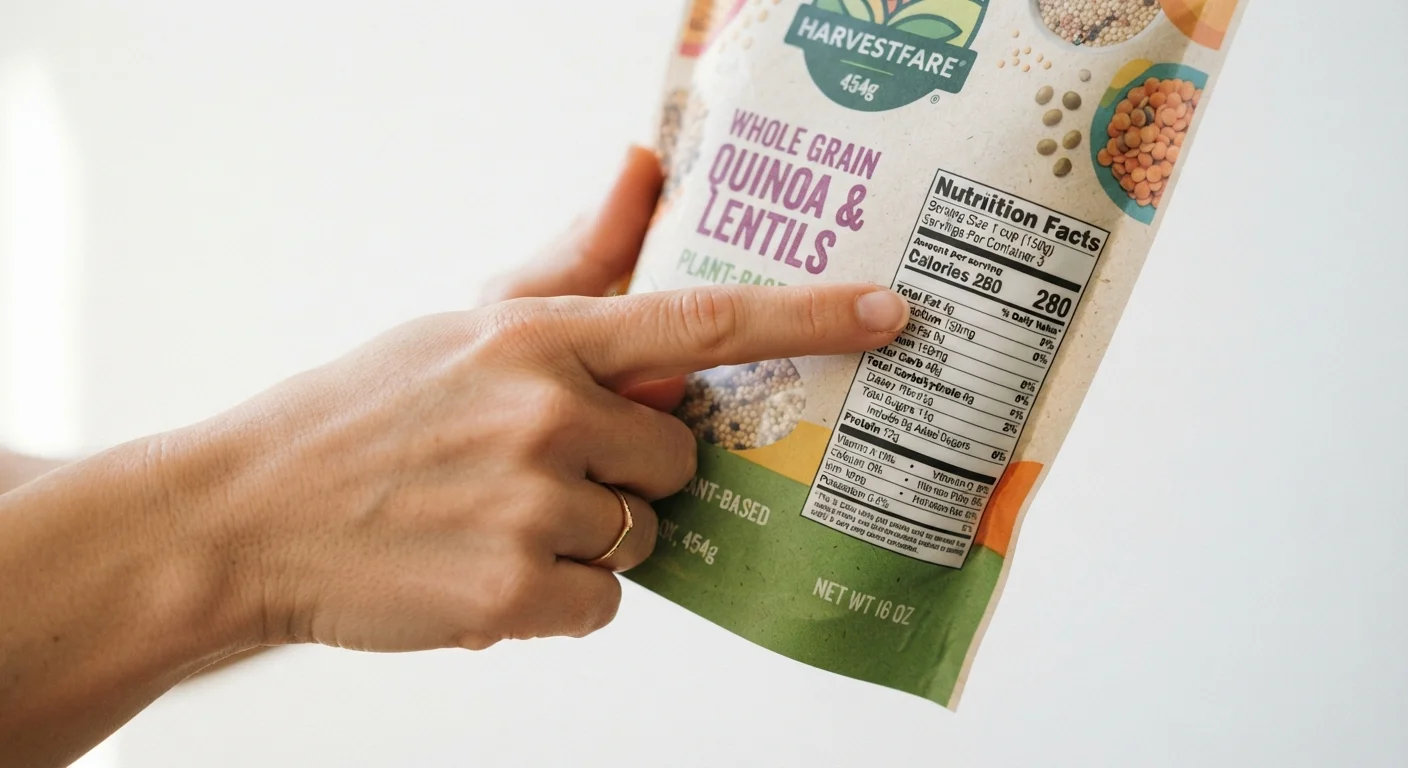
Why Nutrition Labels Matter More Than You Think
The Nutrition Facts label has been a required feature on most packaged foods in the U.S. since the early 1990s, and the FDA updated its format significantly in 2020 to reflect current nutritional science. Despite being widely available, many shoppers either ignore labels entirely or find them too confusing to use meaningfully.
Understanding even the basics puts you in a stronger position when comparing products at the grocery store. It also helps you see past front-of-package marketing language — terms like "natural," "light," or "multigrain" are not regulated the way the Nutrition Facts panel is. For a deeper look at how food marketing language can mislead, see our breakdown of nutrition claims that sound scientific but aren't.
This walkthrough covers the label section by section, so you know exactly what each number means and which ones deserve the most attention.
What you will need
How to Read the Label Step by Step
Follow these steps the next time you pick up a packaged product. With a little practice, the process takes under a minute.
Start with the serving size
The very first line under "Nutrition Facts" tells you the serving size and the number of servings per container. Every other number on the label applies to one serving — not the whole package. If a bag of chips lists 7 chips as a serving but you eat 21, you need to multiply all figures by three.
Check the calories per serving
Calories measure the energy a food provides per serving. The 2020 FDA label made this number larger and bolder to make it easier to spot. Keep in mind that calorie needs vary considerably between individuals based on age, sex, activity level, and health status. The label uses a general 2,000-calorie reference diet.
Understand the % Daily Value column
The % Daily Value (%DV) column on the right side of the label shows how much of each nutrient one serving contributes toward a general daily recommendation. A simple rule of thumb: 5% DV or less is considered low for a nutrient; 20% DV or more is considered high. Use this column to quickly compare products rather than trying to calculate grams in your head.
Review the macronutrients — fat, carbohydrates, and protein
The label breaks down total fat into saturated and trans fats (both worth limiting), total carbohydrates into dietary fiber and total sugars (with added sugars listed separately), and protein as a standalone figure. Trans fat has no established safe level, so aim for as close to 0g as possible per serving.
Scan the vitamins and minerals section
The bottom section lists select micronutrients: typically Vitamin D, Calcium, Iron, and Potassium. These were chosen because inadequate intake is a common public health concern in the U.S. A higher %DV for these nutrients is generally favorable. Other vitamins and minerals may also appear depending on the product.
What to Prioritize — and What to Watch Out For
Not every line on the label deserves equal attention. For most people, a practical approach focuses on a short list of nutrients.
Look for more of:
- Dietary fiber — Most Americans fall well short of recommended intakes. Fiber supports digestive health, blood sugar regulation, and more. Learn why fiber matters and how to get enough.
- Protein — Helps with satiety and muscle maintenance. Higher protein per serving is generally a positive signal.
- Vitamins and minerals — Vitamin D, calcium, iron, and potassium are flagged on the label because many people's diets run low in them.
Look for less of:
- Added sugars — Listed separately from total sugars since the 2020 label update. Added sugars provide calories without nutritional benefit.
- Saturated fat — Current dietary guidance generally recommends keeping saturated fat intake moderate; check the %DV.
- Sodium — Many packaged foods contain surprisingly high sodium levels, especially soups, sauces, and snacks.
Use Labels to Compare, Not to Judge
The most practical use of a nutrition label is side-by-side comparison. When choosing between two similar products, hold them up and check serving-size-adjusted calories, sodium, added sugars, and fiber. Small differences across repeated purchases can add up meaningfully over time. You don't need to memorize numbers — just look for relative better or worse.
Understanding how heavily processed a product is can also shape your perspective on its label. Explore the spectrum from whole to ultra-processed foods to add useful context to what the numbers show.
This article is for general informational and educational purposes only and is not a substitute for personalized advice from a qualified healthcare professional or registered dietitian.
The content provided on our blog site traverses numerous categories, offering readers valuable and practical information. Readers can use the editorial team’s research and data to gain more insights into their topics of interest. However, they are requested not to treat the articles as conclusive. The website team cannot be held responsible for differences in data or inaccuracies found across other platforms. Please also note that the site might also miss out on various schemes and offers available that the readers may find more beneficial than the ones we cover.