

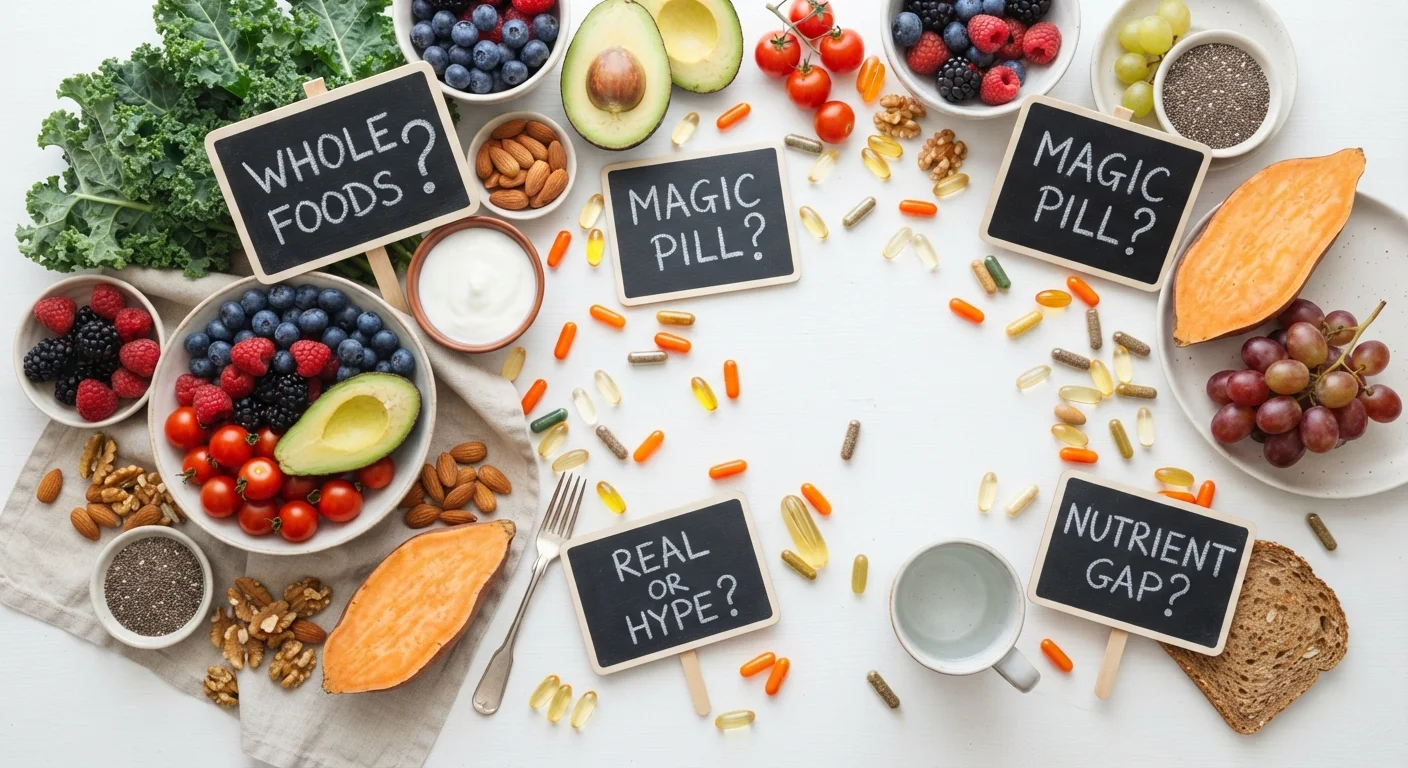
Why Nutrition Misinformation Spreads So Easily
Nutrition is one of the most contested fields in public health — and one of the easiest to exploit. Studies are frequently misrepresented, small preliminary findings get amplified into headlines, and terminology borrowed from real science is used to lend credibility to unproven claims. For everyday consumers, separating signal from noise is genuinely difficult.
The myth-fact pairs below examine some of the most persistent nutrition claims circulating today. Each one sounds plausible, often uses scientific-sounding language, and yet fails to hold up when examined against the broader body of evidence. Understanding where these ideas go wrong is the first step toward making more informed food choices. For a grounding in what the evidence does consistently support, see eating habits with durable research support.
Myth
Detox diets and cleanses flush harmful toxins from your body, giving your organs a 'reset.'
Fact
The human body has a built-in detoxification system — the liver, kidneys, and lymphatic system — that operates continuously without dietary intervention.
The word 'detox' in commercial wellness products is almost never defined precisely. No credible clinical evidence supports the idea that juice cleanses, herbal teas, or special protocols remove specific toxins more effectively than normal physiological processes. When researchers have investigated, they have consistently found no identifiable mechanism by which these products produce the claimed effects. Staying well-hydrated and eating a varied diet supports organ function — but that's quite different from needing a periodic 'cleanse.'
Myth
Superfoods are a scientifically recognized category of foods with proven, exceptional health benefits.
Fact
'Superfood' is a marketing term, not a nutritional classification used by regulatory agencies or mainstream dietetic bodies.
Blueberries, kale, and acai are all nutritious foods — but the idea that they possess uniquely superior powers compared to other fruits and vegetables is not supported by strong comparative evidence. Nutrients found in so-called superfoods are often available in less fashionable, less expensive alternatives. Spinach, for example, offers many of the same micronutrients as trendy greens at a fraction of the cost. Dietary diversity is a more evidence-backed goal than chasing specific 'super' items. See also our grounded look at plant-based eating for context on where plant foods genuinely shine.
Myth
Carbohydrates are inherently fattening and should be avoided or severely restricted for good health.
Fact
Carbohydrates are a primary energy source for the body and brain; the type and quantity consumed matters far more than cutting the macronutrient entirely.
Decades of nutrition research have not established that carbohydrates cause weight gain independent of overall calorie balance and diet quality. Whole food sources of carbohydrate — such as legumes, whole grains, fruits, and vegetables — are consistently associated with positive health outcomes in large population studies. Dietary fibre, which is itself a carbohydrate, is linked to improved digestive health, blood sugar regulation, and reduced cardiovascular risk. For more on this underappreciated nutrient, see why fibre is the nutrient most people undereat. Refined carbohydrates and added sugars deserve more scrutiny — but that's a far narrower claim than 'all carbs are harmful.'
Myth
If a supplement or food is labeled 'natural,' it is automatically safe and effective.
Fact
The word 'natural' on food or supplement packaging carries no standardized regulatory definition related to safety or efficacy.
Many naturally occurring substances — including certain mushrooms, herbs, and plant compounds — can be toxic at certain doses or interact with medications. Conversely, many manufactured compounds are rigorously tested and safe. In the United States, dietary supplements are not required to demonstrate safety or effectiveness before going to market in the same way prescription drugs are; manufacturers are largely responsible for substantiating their own claims. Consumers should approach 'natural' labeling as a marketing signal rather than a safety guarantee, and consult a healthcare provider before adding supplements to their routine.
[important_callout]Myth
Eating fat makes you fat — low-fat diets are the healthiest approach to weight and heart health.
Fact
Dietary fat is essential for hormone production, vitamin absorption, and cell function; the relationship between fat intake and health outcomes depends heavily on the type of fat consumed.
The widespread low-fat dietary guidelines of past decades have been substantially revised. Research has clarified that unsaturated fats — found in foods like olive oil, nuts, avocados, and oily fish — are associated with cardiovascular benefit. Meanwhile, many low-fat processed products replaced fat with added sugar and refined starches, which did not produce the expected health improvements in population-level studies. Trans fats (largely removed from the US food supply) and excess saturated fat remain areas of legitimate concern, but the blanket avoidance of dietary fat is not supported by current evidence.
How to Think About Nutrition Claims More Critically
Most misleading nutrition claims share a few tell-tale patterns. They tend to single out one food, nutrient, or ingredient as uniquely powerful. They lean on anecdote or celebrity endorsement rather than peer-reviewed evidence. They often use vague but impressive-sounding language — 'boosts metabolism,' 'cleanses toxins,' 'activates cellular repair' — without specifying a measurable mechanism or outcome.
~80%
Americans who take dietary supplements
According to the Council for Responsible Nutrition's consumer survey data, roughly 8 in 10 American adults report using dietary supplements, despite limited regulatory scrutiny of efficacy claims.
$50B+
US dietary supplement market size
The US dietary supplement industry has been estimated at over $50 billion annually, reflecting widespread consumer belief in product efficacy that often outpaces the available evidence.
Less than 5%
Adults meeting fibre intake recommendations
Research published in nutrition journals consistently finds that fewer than 1 in 20 American adults meet established daily fibre intake recommendations, despite widespread focus on 'superfoods.'
A more reliable approach is to focus on overall dietary patterns rather than individual foods. Research consistently shows that diets rich in vegetables, legumes, whole grains, and lean proteins are associated with better health outcomes — not because of any single 'super' ingredient, but because of the cumulative effect of nutritional variety and balance. Learning to read food packaging critically is also valuable; our guide to reading nutrition labels without getting lost in the numbers can help you decode what product claims actually mean.
Trendy Diets Can Mask Nutritional Gaps
Highly restrictive eating patterns — whether they eliminate entire food groups or rely heavily on a narrow set of 'clean' foods — can quietly create deficiencies in key nutrients like vitamin B12, iron, calcium, or omega-3 fatty acids. What works short-term for some people may not be appropriate or sustainable for others. If you are considering a significant dietary change, consult a registered dietitian to ensure your nutritional needs are fully met.
It's also worth understanding that the degree of food processing matters more than a simple 'natural vs. artificial' divide. Understanding the full spectrum from minimally to ultra-processed foods gives you a more nuanced lens than blanket rules about 'clean eating.'
This article is for general informational and educational purposes only and is not a substitute for professional medical or dietary advice. Consult a registered dietitian or qualified healthcare provider before making significant changes to your diet.
The content provided on our blog site traverses numerous categories, offering readers valuable and practical information. Readers can use the editorial team’s research and data to gain more insights into their topics of interest. However, they are requested not to treat the articles as conclusive. The website team cannot be held responsible for differences in data or inaccuracies found across other platforms. Please also note that the site might also miss out on various schemes and offers available that the readers may find more beneficial than the ones we cover.