

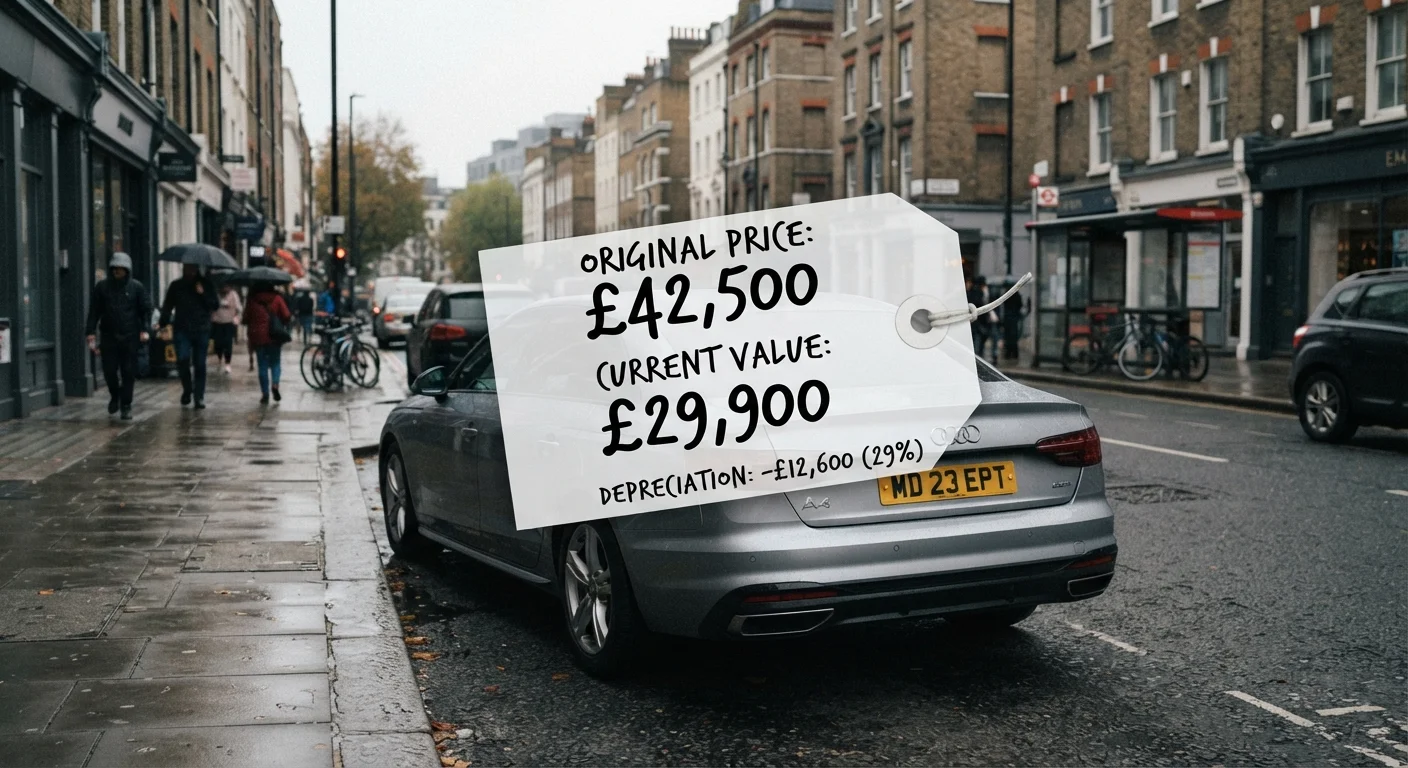
The Hidden Cost That Never Appears on Your Bill
When drivers tally up the cost of owning a car, they typically count fuel, insurance, and oil changes. What rarely appears on any spreadsheet is depreciation — yet for most drivers, it costs more than any of those line items combined. Understanding how it works is one of the most practical financial skills a car owner can develop.
See our guide to the true cost of car ownership for a full breakdown of the expenses that go beyond the sticker price.
~20%
Average value lost in year one
Industry data broadly indicates new vehicles lose roughly 15–25% of their value within the first 12 months of ownership.
~50%
Value lost within five years
Many vehicles lose approximately half their original purchase value within five years, though rates vary significantly by make, model, and market conditions.
#1
Largest cost of car ownership
For most drivers, depreciation outpaces fuel, insurance, and maintenance as the single largest expense of owning a vehicle over time.
How Depreciation Actually Works
The moment a new vehicle is registered and driven off a dealership lot, it becomes a used car in the eyes of the market. That status shift alone can account for a notable drop in resale value — even before any miles accumulate or time passes.
Depreciation is not a flat, steady decline. It follows a curve: the drop is sharpest in the early years and gradually slows. A car that loses 20% of its value in year one will typically lose a smaller percentage in year three, and a smaller percentage still by year five. After several years, the rate of decline flattens considerably, which is part of why well-maintained older vehicles can offer strong value per mile driven.
Depreciation Rates Vary Widely by Vehicle
Not every car depreciates at the same pace. Vehicles with strong reliability reputations, loyal owner communities, or limited supply can hold value considerably better than average. Conversely, luxury vehicles and those in crowded market segments often depreciate faster. Researching the historical resale performance of a specific model before purchase is always worthwhile.
What Accelerates Value Loss
Not all cars depreciate at the same pace. Several factors can push a vehicle's value down faster than average:
- High mileage: Every mile adds wear and signals remaining useful life to potential buyers. Vehicles driven significantly above average annual mileage depreciate more quickly.
- Deferred maintenance: A car with a spotty service history raises red flags. Buyers discount the price to account for unknown risks. Our article on keeping accurate service records explains why documentation matters more than most drivers realize.
- Color and trim: Unusual or polarizing colors can narrow your pool of buyers and reduce competitive bidding at resale.
- Market supply: When a particular model floods the used-car market — through fleet sales or lease returns — individual vehicle values drop.
- Technology shifts: As fuel standards and consumer preferences evolve, certain powertrain types can lose favor faster than others.
Protect Resale Value From Day One
Simple habits go a long way: keep up with scheduled maintenance, store service receipts, avoid unnecessary modifications, and protect the interior and exterior from excessive wear. These steps don't eliminate depreciation, but they help your vehicle hold as much value as possible relative to comparable vehicles on the used market.
Why This Matters for Your Ownership Decisions
Depreciation has real financial consequences beyond resale. If your car is declared a total loss after an accident, your insurer generally pays current market value — not what you originally paid. If you financed the vehicle, you may owe more than that payout, a situation commonly called being "underwater" on the loan. Gap insurance is one tool drivers use to address this risk; understanding how depreciation works helps you evaluate whether it makes sense for your situation.
Depreciation also shapes the case for buying used. A vehicle that is two to three years old has already passed through its steepest depreciation curve, meaning the next owner absorbs far less value loss going forward. This dynamic is central to the decision covered in our guide to financing vs. leasing, where residual value plays a key role in how lease payments are structured.
What You Can Do About It
You cannot stop depreciation, but you can make choices that reduce its impact. Keeping your vehicle well-maintained and retaining service records are among the most effective steps — documented upkeep signals reliability to future buyers and appraisers. Our car maintenance guide for new drivers covers the core tasks every owner should stay on top of.
Choosing a vehicle with a strong reliability reputation and steady resale demand also helps. Planning your ownership horizon matters too: if you drive a car well past the steepest depreciation window, the per-year cost of that lost value becomes far more manageable. Awareness of depreciation won't eliminate it — but it will help you factor it honestly into every ownership decision you make.
This article provides general financial and automotive information for educational purposes only. It is not personalized financial advice. Consult a qualified financial professional for guidance specific to your circumstances.
Frequently Asked Questions
A new car typically loses a significant portion of its value within the first year of ownership, often in the range of 15–25%. This drop is steepest early in a vehicle's life and slows somewhat as the car ages.
High mileage, poor maintenance history, unpopular colors, a weak reliability reputation, and high market supply all accelerate depreciation. Fuel type and technology trends can also play a role as consumer preferences shift.
Yes — even if you never sell, depreciation represents real lost wealth. It affects your insurance coverage levels, trade-in value if plans change, and the financial risk you carry if the vehicle is totaled.
Consistent maintenance and thorough service records can meaningfully preserve resale value. Buyers and dealers pay more for vehicles with documented upkeep because it reduces their uncertainty about the car's condition.
Buying a used vehicle lets you avoid the steepest early depreciation, which has already been absorbed by the first owner. However, all vehicles continue to depreciate — the rate simply tends to slow as the car ages.
The content provided on our blog site traverses numerous categories, offering readers valuable and practical information. Readers can use the editorial team’s research and data to gain more insights into their topics of interest. However, they are requested not to treat the articles as conclusive. The website team cannot be held responsible for differences in data or inaccuracies found across other platforms. Please also note that the site might also miss out on various schemes and offers available that the readers may find more beneficial than the ones we cover.