

Our Verdict
Each feeding approach has genuine strengths and meaningful limitations. Dry food suits most households for everyday convenience, wet food excels for hydration and palatability, and raw diets may appeal to owners willing to invest time in safe preparation and veterinary guidance. The right choice depends on your dog's individual health needs, your schedule, and your comfort managing food-safety practices.
| Best for | Recommended |
|---|---|
| Busy owners seeking affordable, easy daily feeding | Dry kibble |
| Dogs with low water intake, dental sensitivities, or picky appetites | Wet food |
| Owners committed to whole-food feeding with veterinary oversight | Raw diet |
| Dogs with complex health conditions or specific dietary needs | Veterinarian-guided prescription or mixed feeding |
How the Three Main Feeding Approaches Differ
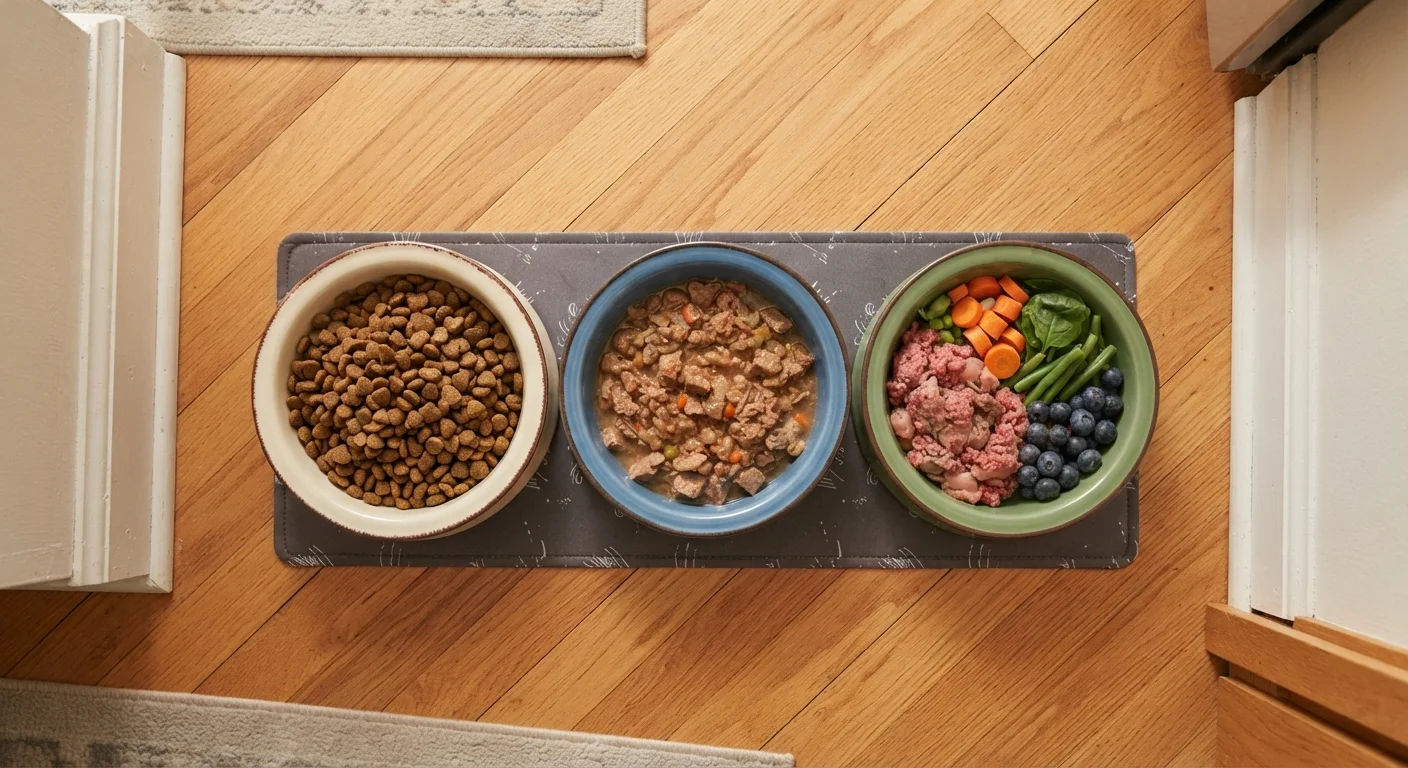
Dog nutrition options generally fall into three categories: dry food (kibble), wet food (canned or pouched), and raw diets (fresh or frozen uncooked meat, bones, and produce). Each is processed — or left unprocessed — in a fundamentally different way, which shapes its nutrient profile, safety characteristics, and practical demands on the owner.
Kibble is heat-extruded, meaning ingredients are cooked at high temperatures and pressed into shelf-stable pieces. Wet food is similarly cooked but retains far more moisture — typically 70–80% water compared to kibble's 10% or less. Raw diets skip the cooking step entirely, relying on fresh or frozen animal proteins, organ meats, raw bone, and sometimes fruits and vegetables. If you're curious about what these feeding differences reveal in your dog's day-to-day behavior, see what your dog's eating habits can tell you.
| Dry Kibble | Wet Food | Raw Diet | |
|---|---|---|---|
| Moisture content | ~10% | ~70–80% | ~60–70% (varies) |
| Convenience | High — easy to store and measure | Moderate — refrigerate after opening | Low — requires prep and safe handling |
| Typical cost | Generally lower per meal | Moderate to high per meal | High, especially commercial raw |
| Nutritional completeness | Usually AAFCO-compliant | Usually AAFCO-compliant | Varies — often needs expert formulation |
| Food-safety risk | Low | Low | Higher — pathogen exposure risk |
| Palatability | Good for most dogs | High — aromatic and soft | Very high for most dogs |
| Best suited for | Most adult dogs, busy households | Senior, picky, or low-drinking dogs | Committed owners with vet guidance |
Dry Food: Practical and Widely Available
Kibble remains the most common choice among U.S. dog owners, and for good reason. It stores easily, measures precisely, and tends to be the most cost-effective option per meal. Many formulations are nutritionally complete and balanced to meet the Association of American Feed Control Officials (AAFCO) standards — a baseline that indicates a food has been formulated or tested to meet minimum canine nutritional requirements.
The main limitations of dry food center on moisture content and ingredient variation. Because kibble is so low in water, dogs who eat only dry food must drink enough separately to stay adequately hydrated — this matters most for dogs prone to urinary issues. Ingredient quality also varies considerably between formulations; reading the guaranteed analysis and ingredient list helps, though interpreting them accurately often requires guidance from a veterinarian or veterinary nutritionist.
Reading a Kibble Label Effectively
Look for an AAFCO nutritional adequacy statement on the packaging — it indicates whether the food was formulated or feeding-trial tested to meet baseline canine nutritional needs. The first several ingredients listed by weight give you a rough sense of the primary protein and carbohydrate sources. When in doubt, ask your veterinarian to help interpret a specific formula for your dog's life stage and size.
Wet Food: Hydration and Palatability Advantages
Canned and pouched wet foods have a clear edge when it comes to moisture delivery. For dogs who drink insufficiently, have kidney considerations, or are recovering from illness, the built-in water content can support overall hydration without additional effort from the owner. Wet food is also generally more aromatic and palatable, making it a practical tool for finicky eaters or dogs with reduced appetite due to age or medication.
The trade-offs are cost and convenience. Wet food is typically more expensive per calorie than kibble, and opened cans must be refrigerated and used within a day or two. Calorie density can be lower too, so larger dogs may need greater volumes to meet energy needs. Some owners blend wet and dry food to balance palatability with cost — a practice that is generally safe as long as total calorie intake stays appropriate for the dog's size and activity level.
Raw Diets: Potential and Real Risks
Raw feeding — sometimes called BARF (Biologically Appropriate Raw Food) or prey-model feeding — has grown in popularity among owners seeking a minimally processed, whole-food approach. Proponents point to improved coat condition, firmer stools, and higher overall engagement with food. However, the scientific evidence supporting specific health claims remains limited and largely anecdotal at this stage.
The risks are well-documented. Raw meat can harbor pathogens such as Salmonella, Listeria, and E. coli — posing a health risk not just to dogs but to humans in the household, particularly children, elderly individuals, and immunocompromised people. Home-prepared raw diets are also frequently nutritionally unbalanced unless formulated by a board-certified veterinary nutritionist. Calcium-to-phosphorus ratios, vitamin D levels, and micronutrient gaps are common concerns. The American Veterinary Medical Association (AVMA) has published a formal position discouraging raw protein diets due to these safety concerns.
Raw Diets and Household Safety
If you choose to feed raw, strict hygiene practices are essential. Wash all preparation surfaces, bowls, and hands thoroughly after handling raw meat. Store raw food separately from human food, and be aware that dog feces from raw-fed animals can carry higher pathogen loads. Households with young children, pregnant individuals, or immunocompromised members should discuss this risk carefully with both a veterinarian and a physician before proceeding.
If you're interested in how unprocessed versus processed food choices compare more broadly, the principles in understanding the processed food spectrum offer useful context — though the specifics differ significantly for companion animals.
Making the Right Choice for Your Dog
No single diet is universally optimal. The right feeding approach depends on your dog's life stage (puppy, adult, senior), breed size, existing health conditions, and your household's practical realities. A healthy adult dog with no known health issues may thrive on a quality kibble, while a senior dog with kidney concerns may benefit from a wet or mixed-feeding approach to support hydration.
Before switching diets — especially to raw — talk with your veterinarian. They can assess your dog's current health status, flag any nutrient concerns, and recommend whether a board-certified veterinary nutritionist consultation makes sense. For a broader view of how nutrition fits into long-term dog health, building a preventive care routine covers how diet integrates with other wellness habits. Transition to any new food gradually over 7–10 days to reduce the risk of digestive upset.
~70–80%
Moisture in wet dog food
Compared to roughly 10% in dry kibble, wet food's water content can meaningfully support daily hydration, according to general veterinary nutrition guidelines.
~30%
U.S. dog owners feeding non-kibble diets
Industry surveys suggest a growing portion of dog owners now incorporate wet food, fresh food, or raw components alongside or instead of traditional kibble.
This article is for general informational purposes only and does not constitute veterinary or nutritional advice. Always consult a licensed veterinarian before making significant changes to your dog's diet, especially if your dog has an existing health condition.
The content provided on our blog site traverses numerous categories, offering readers valuable and practical information. Readers can use the editorial team’s research and data to gain more insights into their topics of interest. However, they are requested not to treat the articles as conclusive. The website team cannot be held responsible for differences in data or inaccuracies found across other platforms. Please also note that the site might also miss out on various schemes and offers available that the readers may find more beneficial than the ones we cover.