

Why the First 60 Seconds Matter
A collision, however minor, triggers an immediate surge of adrenaline. That physiological response can cloud judgment exactly when clear thinking is most important. The actions — or inactions — taken in the first minute after impact can affect the safety of everyone at the scene, the outcome of an insurance claim, and even potential legal consequences.
Most drivers have never rehearsed what to do at the moment of a crash. Understanding the correct sequence in advance means you are less likely to freeze, react impulsively, or make a misstep that worsens the situation. The steps below are designed to be remembered and executed quickly, even under stress.
Reducing risk before you even leave home is just as important — see our pre-drive safety checklist for a practical routine that helps catch problems early.
What you will need
Step-by-Step: Immediate Actions After a Collision
Follow these steps in order. Each one builds on the last to keep you, your passengers, and other road users as safe as possible.
Breathe and assess yourself
Before reacting to anything around you, take one deliberate breath. Check whether you feel any pain or disorientation. A calm, focused mindset in the next few seconds will improve every decision that follows. If you are significantly injured, remain still and call for help.
Activate hazard lights and secure the vehicle
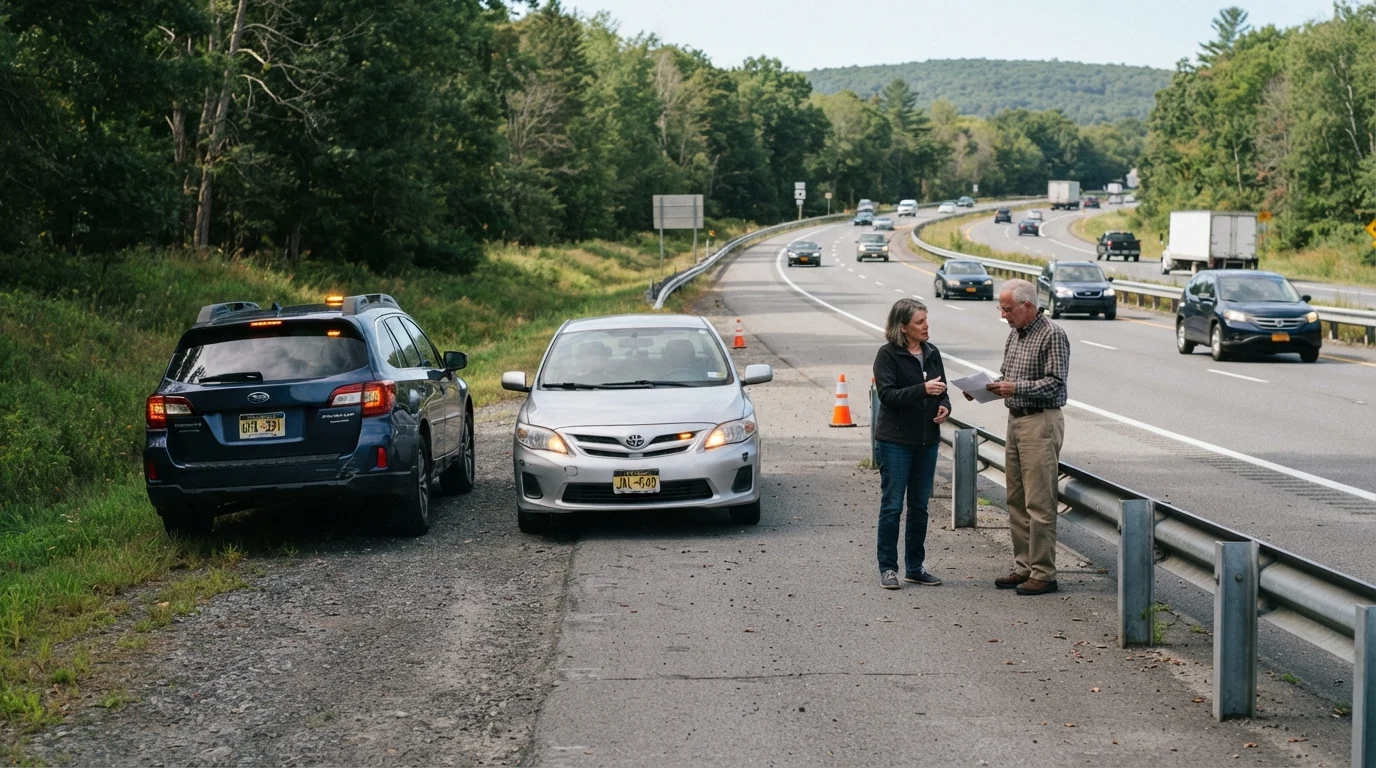
Switch on your hazard lights immediately — this signals to other drivers that something is wrong. If it is safe to do so without crossing live traffic lanes, move your vehicle to the shoulder or a nearby parking area. Apply the parking brake once stopped.
Check all occupants for injuries
Ask every person in your vehicle if they are hurt. Do not assume no injury means no pain — some injuries, particularly whiplash and concussion, may not be felt immediately due to adrenaline. If anyone reports pain or loss of consciousness occurred, do not move them unless there is an immediate hazard such as fire.
Call 911 if needed
Call emergency services if: anyone is injured, the road is blocked, you suspect the other driver is impaired, or any party refuses to stop. Even in minor incidents in some states, a police report is legally required or strongly advisable for insurance purposes. Tell the dispatcher your location, the number of vehicles involved, and whether anyone is injured.
Make the scene visible to other drivers
If you carry warning triangles or road flares, place them behind the vehicles at a safe distance — typically 100–200 feet — to alert approaching traffic. If you do not have these, remain inside your vehicle with hazard lights on rather than standing in a lane.
Exchange information — calmly and factually
Collect the following from every other driver involved:
- Full name and contact number
- Driver's license number
- Vehicle license plate number
- Insurance company name and policy number
- Vehicle make, model, and color
Provide the same details in return. Keep the conversation factual. Do not discuss who was at fault, apologize, or make any statements that could be interpreted as an admission of liability.
Document the scene with photos and notes
While waiting for police or before vehicles are moved, photograph: overall vehicle positions, all visible damage to every vehicle, any skid marks or road debris, nearby street signs or landmarks, and any visible injuries (with consent where appropriate). Write down the time, weather conditions, and a brief factual account of what happened while it is fresh.
Do Not Admit Fault at the Scene
Admitting liability — even with a casual apology — can have serious consequences for your insurance claim and any legal proceedings. Stick to factual statements only. Determining fault is the job of insurers, police, and, if necessary, the courts — not roadside conversation.
After the Scene: What Comes Next
Once you have exchanged information and the immediate situation is stable, contact your insurance company as soon as reasonably possible — even if the damage looks minor and you think the other driver was at fault. Insurers typically require prompt notification, and delays can complicate claims.
Keep all photos, written notes, and any witness contact information in a single folder, digital or physical. Avoid posting about the incident on social media before speaking with your insurer or, if relevant, a legal professional.
Keep a Collision Information Card in Your Glovebox
Print a simple checklist of the information you need to collect — names, license numbers, insurance details — and store it in your glovebox. Under stress, even experienced drivers can forget what to ask for. Having a card to hand takes the pressure off memory entirely.
Poor weather conditions significantly raise collision risk. If you want to understand the driving misjudgements most likely to cause a crash in the first place, our guide on driving in rain, fog, and ice covers the situations where most drivers go wrong. Similarly, motorway habits such as those described in our article on tailgating and middle-lane hogging are among the leading contributors to collisions — understanding them can help you avoid future incidents altogether.
This article provides general safety information for educational purposes. It is not legal or insurance advice. For guidance specific to your situation, consult a qualified legal professional or your insurance provider.
The content provided on our blog site traverses numerous categories, offering readers valuable and practical information. Readers can use the editorial team’s research and data to gain more insights into their topics of interest. However, they are requested not to treat the articles as conclusive. The website team cannot be held responsible for differences in data or inaccuracies found across other platforms. Please also note that the site might also miss out on various schemes and offers available that the readers may find more beneficial than the ones we cover.