

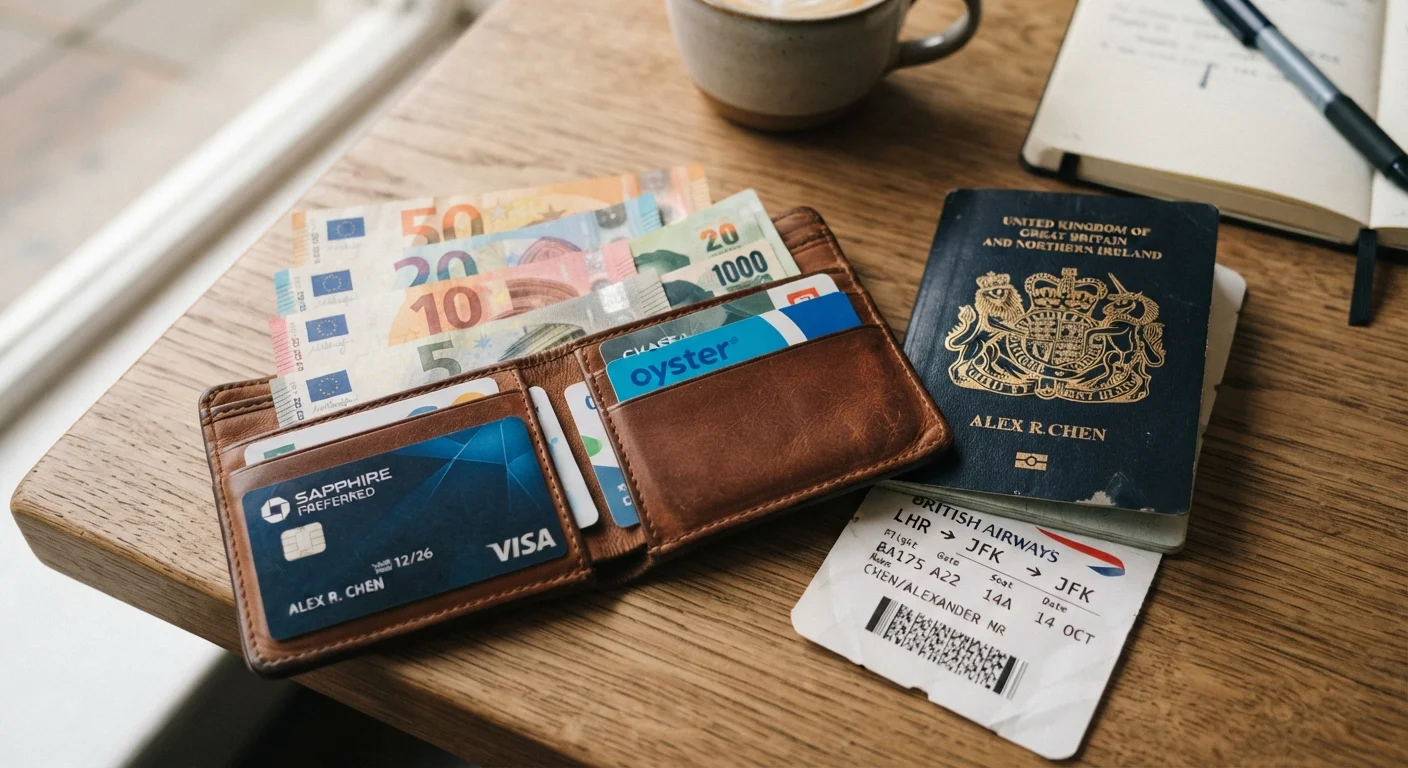
Option A
Cash (Foreign Currency)
The universal fallback with no surprise fees at the point of sale.
Best for: Markets, small vendors, taxis, and destinations where card infrastructure is limited or unreliable.
Option B
Travel-Friendly Cards
The convenient, secure option when used strategically.
Best for: Hotels, restaurants, transportation hubs, and any destination with modern payment infrastructure.
The Real Cost of Getting This Wrong
International travel is full of invisible money drains — and most of them happen right at the moment you're paying for something. A 3% foreign transaction fee here, a $5 ATM withdrawal charge there, and a sneaky dynamic currency conversion rate add up faster than you'd expect. As noted in our guide on why travel budgets fall apart, it's rarely one big mistake — it's a series of small, avoidable ones.
Understanding how cash and cards each work in international settings isn't about picking a winner. It's about knowing which tool to reach for at which moment — and recognizing the pitfalls of each before they cost you real money.
| Criterion | Cash (Foreign Currency) | Travel-Friendly Cards |
|---|---|---|
| Accepted everywhere? | Yes, including small vendors | Not always in rural/cash-dominant areas |
| Risk if lost or stolen | Unrecoverable | Can be frozen and replaced |
| Exchange rate quality | Varies — avoid airports/hotels | Often near-market rate (card-dependent) |
| Hidden fees | ATM withdrawal fees | Foreign transaction fees; DCC risk |
| Ease of budgeting | Tangible; easy to track spending | Requires checking statements actively |
| Best use | Markets, tips, small purchases | Hotels, restaurants, large purchases |
The Card Traps Most Travelers Don't See Coming
Cards feel seamless until they don't. Three common card pitfalls catch American travelers off guard:
- Foreign transaction fees: Many standard US cards charge 1–3% on every international purchase. On a two-week trip with $3,000 in spending, that's up to $90 quietly drained from your account.
- Dynamic currency conversion (DCC): When a foreign merchant or ATM offers to charge you in US dollars instead of local currency, decline it — always. The exchange rate they use is typically far less favorable than your bank's rate, and the "convenience" comes at your expense.
- Card blocks: Banks sometimes flag international transactions as fraud and freeze your card mid-trip. Notify your bank of your destination and travel dates before you leave. This single step prevents one of the most stressful travel disruptions there is.
1–3%
Typical foreign transaction fee on US cards
Many standard US-issued credit and debit cards charge this per-transaction surcharge on purchases made in foreign currencies.
~$5–$10
Combined ATM fees per international withdrawal
International ATM users often face fees from both their home bank and the foreign ATM operator, making frequent small withdrawals expensive.
3–7%
Typical dynamic currency conversion markup
When merchants offer to charge you in US dollars abroad, the exchange rate applied is often 3–7% worse than the interbank rate, according to general financial guidance.
For a broader look at currency assumptions US travelers make, see what Americans get wrong about traveling abroad.
The Cash Pitfalls That Quietly Cost You
Cash has its own hazards. The biggest one? Where you get it.
Airport currency exchange kiosks and hotel desks typically offer exchange rates that are meaningfully worse than what a local bank ATM will give you. Exchanging $500 at an airport kiosk instead of an in-city bank ATM can easily cost you $20–$40 or more depending on the currency and the provider's spread.
Skip the Airport Currency Exchange
Currency exchange desks at airports and hotels are convenient but consistently offer poor exchange rates compared to bank-affiliated ATMs in the destination city. If you need local currency on arrival, exchange only a small emergency amount at the airport — enough for transport and immediate needs — then withdraw from a local bank ATM once you've settled in.
ATM fees also stack. A single international withdrawal might carry both a fee from your own bank and a fee from the foreign ATM operator. Withdrawing a larger amount less frequently — rather than small amounts often — reduces total fee exposure.
Finally, cash carries theft and loss risk that cards don't. For tips on keeping your money and documents secure while abroad, check out our guide to staying safe abroad.
Building Your Smart Money Strategy Before You Fly
A well-prepared traveler doesn't choose cash or cards — they prepare both thoughtfully. Here's a practical framework:
- Research your destination's payment culture. Japan, for example, remains heavily cash-based in many contexts, while much of Western Europe is card-friendly. Knowing this shapes how much cash you need.
- Arrive with a small amount of local currency. Enough to cover a taxi, a meal, and incidentals on day one — before you've had a chance to find a good ATM. You can order foreign currency through your bank before departure, often at better rates than the airport.
- Identify fee-free ATM options. Some US banks and credit unions reimburse international ATM fees. Check your account terms or ask your bank before you travel.
- Carry two cards. One primary, one backup stored separately. If your wallet is lost or your main card is blocked, a backup card in your hotel safe is a genuine lifeline.
Getting your finances organized is one part of smart pre-trip prep. For the gear side of things, our piece on packing light vs. overpacking covers the trade-offs worth thinking through before you zip up that suitcase.
This article provides general travel and financial information for educational purposes and does not constitute personalized financial advice. Fees, exchange rates, and bank policies vary and may change. Always verify current terms with your financial institution before traveling.
The content provided on our blog site traverses numerous categories, offering readers valuable and practical information. Readers can use the editorial team’s research and data to gain more insights into their topics of interest. However, they are requested not to treat the articles as conclusive. The website team cannot be held responsible for differences in data or inaccuracies found across other platforms. Please also note that the site might also miss out on various schemes and offers available that the readers may find more beneficial than the ones we cover.