

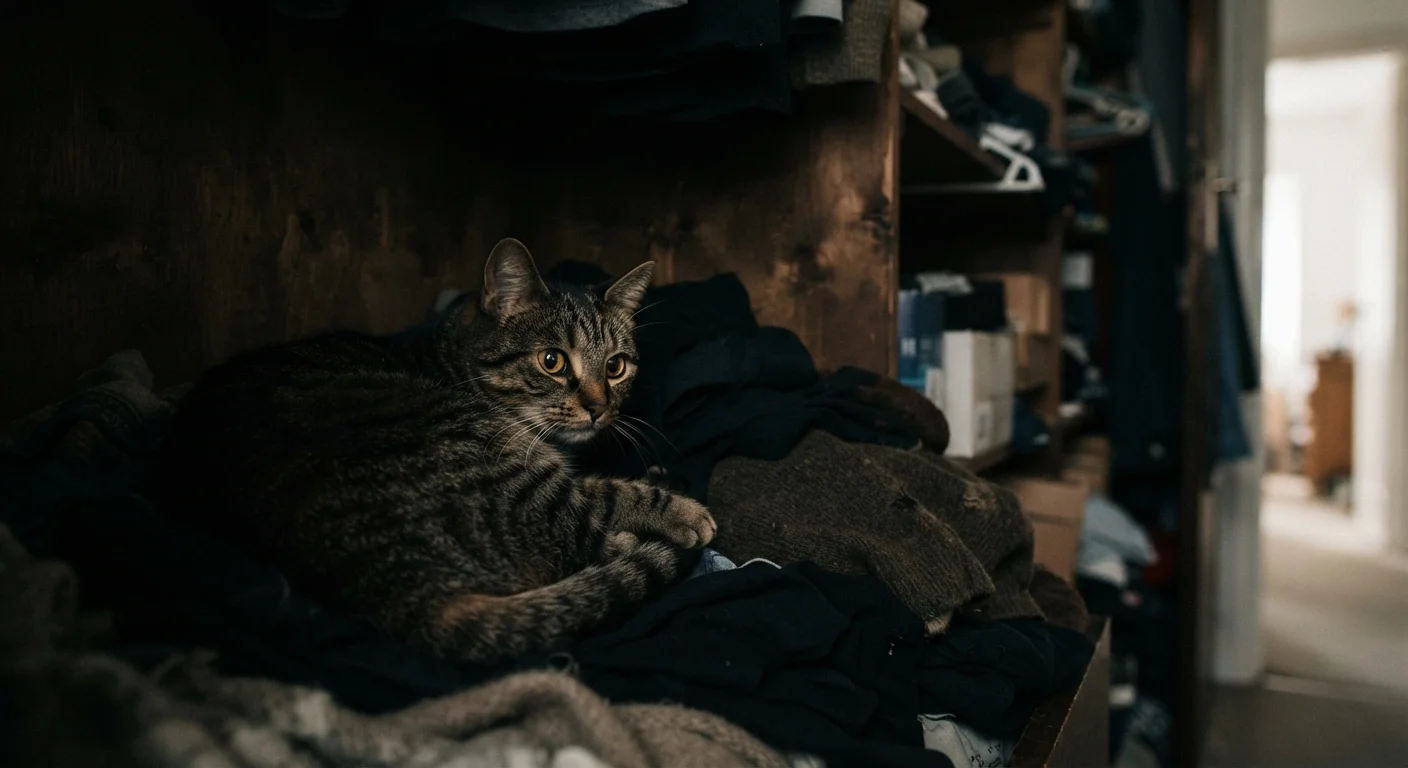
The Evolutionary Reason Cats Conceal Pain
Unlike dogs, which evolved alongside humans and learned to communicate distress openly, cats developed as largely solitary hunters. In the wild, showing pain or weakness — even briefly — could attract predators or signal vulnerability to competitors. This survival pressure shaped a species that instinctively suppresses outward signs of illness.
Domestic cats carry this same wiring. Even in the safety of a home, a cat experiencing pain or nausea may retreat behind a sofa, into a closet, or under a bed rather than seek comfort from their owner. From the cat's perspective, concealment is a protective strategy, not a communicative one.
This is part of why understanding feline behavior matters so much for owners. As explored in our article myths about cat independence, cats are frequently misread as simply aloof when they are actually communicating in subtle, species-specific ways.
Hiding vs. Resting: Knowing the Difference
Not every hidden cat is a sick cat. Cats routinely seek quiet, enclosed spaces for rest, particularly after household disruptions or stressful events like visitors or loud noises. The concern arises when hiding is unusually prolonged, more intense than your cat's normal pattern, or accompanied by other changes in eating, grooming, or bathroom habits. Knowing your individual cat's baseline behavior is the most reliable reference point.
Behavioral Changes That Signal Something Is Wrong
Because cats rarely cry out or limp dramatically when unwell, owners need to tune in to subtler shifts. The following changes — particularly when they appear together or persist beyond a day or two — are worth taking seriously:
- Withdrawal and hiding: A normally social cat suddenly spending hours in unusual, concealed spots.
- Changes in grooming: Over-grooming a specific area (which can indicate localized pain) or neglecting grooming altogether (often a sign of systemic illness or depression).
- Appetite and water intake shifts: Eating significantly less or more, or drinking noticeably more water than usual.
- Litter box changes: Straining, going outside the box, producing unusually small or large amounts of urine or stool, or avoiding the box entirely.
- Altered vocalization: Increased yowling or unusual sounds, especially at night, or becoming notably quieter than usual.
- Changes in posture or movement: Reluctance to jump, hunched posture, or stiffness when rising can all suggest discomfort.
For a broader guide to reading feline signals, see what your cat's body language is actually telling you.
Keep a Simple Health Log for Your Cat
Writing down brief weekly notes on your cat's appetite, weight, grooming, litter box habits, and energy level takes only a few minutes and can be invaluable at vet appointments. Patterns that are hard to remember in the moment — like gradual weight loss over three months — become visible when you have a record. A simple notebook or a notes app on your phone works well.
Why Waiting to See If It Passes Can Be Risky
Because cats mask illness so effectively, by the time a problem becomes obvious to an owner, it may already be significantly advanced. Conditions like kidney disease, dental pain, urinary obstruction, and hyperthyroidism can develop over weeks or months before visible symptoms appear. Early detection nearly always expands treatment options and improves outcomes.
~70%
Cats showing no obvious pain signs despite injury
Veterinary pain researchers estimate that a significant majority of cats in pain display no clearly recognizable signals, based on clinical observation studies in feline pain management literature.
1 in 3
Cats with dental disease showing no obvious distress
Dental disease affects a large proportion of adult cats, yet most continue eating and behaving relatively normally despite significant oral discomfort, according to veterinary dental health resources.
This is especially true for urinary issues in male cats, where a blockage can become life-threatening within 24 to 48 hours. If your cat is making repeated trips to the litter box with little or no output, treat it as urgent and contact a veterinarian immediately.
Establishing a relationship with a vet before a crisis helps enormously. Our guide to routine vet care for cats explains what check-ups typically cover at each life stage, helping owners build a proactive health plan.
“Cats are masters at hiding pain. By the time an owner notices something is wrong, the animal may have been suffering for days or even weeks. We train ourselves to look for the subtlest of behavioral cues.”
— Dr. Robin Downing, Veterinary pain management specialist and contributor to feline pain assessment frameworks
This article provides general information for educational purposes and is not a substitute for professional veterinary advice. Always consult a qualified veterinarian if you are concerned about your cat's health.
Frequently Asked Questions
Cats are instinctively wired to conceal vulnerability, a trait inherited from wild ancestors for whom appearing weak could attract predators. This means a sick cat may withdraw, stay unusually still, or retreat to secluded spots even when in significant discomfort. The behavior is not intentional deception — it's a deeply ingrained survival response.
Look for hiding that is out of character for your cat, especially when combined with other changes like reduced appetite, altered grooming, changes in litter box use, or unusual vocalizations. A cat that normally seeks company but suddenly stays hidden for more than a day or two deserves a veterinary evaluation.
Yes — healthy cats often seek quiet, sheltered spots for rest or stress relief, especially after household changes or loud events. The concern arises when hiding is prolonged, more intense than usual, or paired with other behavioral or physical changes. Knowing your cat's normal habits makes it easier to spot meaningful deviations.
Seek prompt veterinary care if your cat shows labored breathing, inability to urinate (especially in male cats), collapse, seizures, repeated vomiting, or extreme lethargy. These can indicate serious or life-threatening conditions. When in doubt, it is always safer to contact your vet rather than wait.
Senior cats may be more prone to chronic conditions like kidney disease, hyperthyroidism, or arthritis, all of which can cause gradual behavioral shifts that are easy to miss. Older cats often slow down naturally, making illness harder to distinguish from normal aging. More frequent veterinary check-ups are generally recommended for cats over age seven.
The content provided on our blog site traverses numerous categories, offering readers valuable and practical information. Readers can use the editorial team’s research and data to gain more insights into their topics of interest. However, they are requested not to treat the articles as conclusive. The website team cannot be held responsible for differences in data or inaccuracies found across other platforms. Please also note that the site might also miss out on various schemes and offers available that the readers may find more beneficial than the ones we cover.