

Reading the Tail: Your Cat's Emotional Barometer
The tail is one of the most expressive parts of a cat's body, moving almost in real time with their emotional state. A tail held high and straight — sometimes with a slight curl at the tip — signals confidence and a friendly greeting. When a cat approaches you with that upright tail, it's the feline equivalent of a warm hello.
A tail tucked low or wrapped tightly around the body indicates anxiety or submission. A broad, slow side-to-side thrash means frustration or imminent aggression, while a fast, twitchy flick at the very tip usually signals mild irritation or focused attention. Learning to distinguish these small movements helps you respond before tension escalates.
Watch for Tail + Ear Combinations
Rather than reading one signal in isolation, observe the tail and ears together for the most accurate read. A high tail and forward ears indicate a confident, curious cat; a low tail and flattened ears together signal genuine distress. Pairing these cues gives you a clearer overall picture in just a few seconds.
Eyes and Ears: The Face Tells the Story
A cat's pupils and ear position shift rapidly with mood. Constricted pupils in normal lighting suggest alertness or mild arousal; very dilated pupils can indicate fear, excitement, or pain — context determines which. The now well-known slow blink — heavy, deliberate eye closure — is a recognized signal of relaxation and trust. Research published in Scientific Reports (2020) confirmed that cats respond positively when humans mirror this gesture back at them.
Ears forward and slightly outward mean curiosity and engagement. Ears flattened sideways — sometimes called "airplane ears" — signal fear. Ears pinned flat and rotated backward indicate high agitation and a warning that defensive behavior may follow. Watch the ears in combination with the tail for the clearest read on how your cat is feeling.
2020
Year slow-blink study published in Scientific Reports
A peer-reviewed study confirmed that cats respond more positively to humans who use a slow-blink sequence, suggesting it functions as a genuine affiliative signal.
~16
Distinct ear positions cats can produce
Cats have 32 muscles controlling each ear, giving them a range of orientations that communicate mood with remarkable precision compared to many other domestic animals.
2–3 sec
Typical window before overstimulation bite
Animal behavior experts note that warning signals — tail thrashing, skin rippling — often precede a defensive bite by only a few seconds, making early signal recognition important.
Posture and Touch: What the Whole Body Communicates
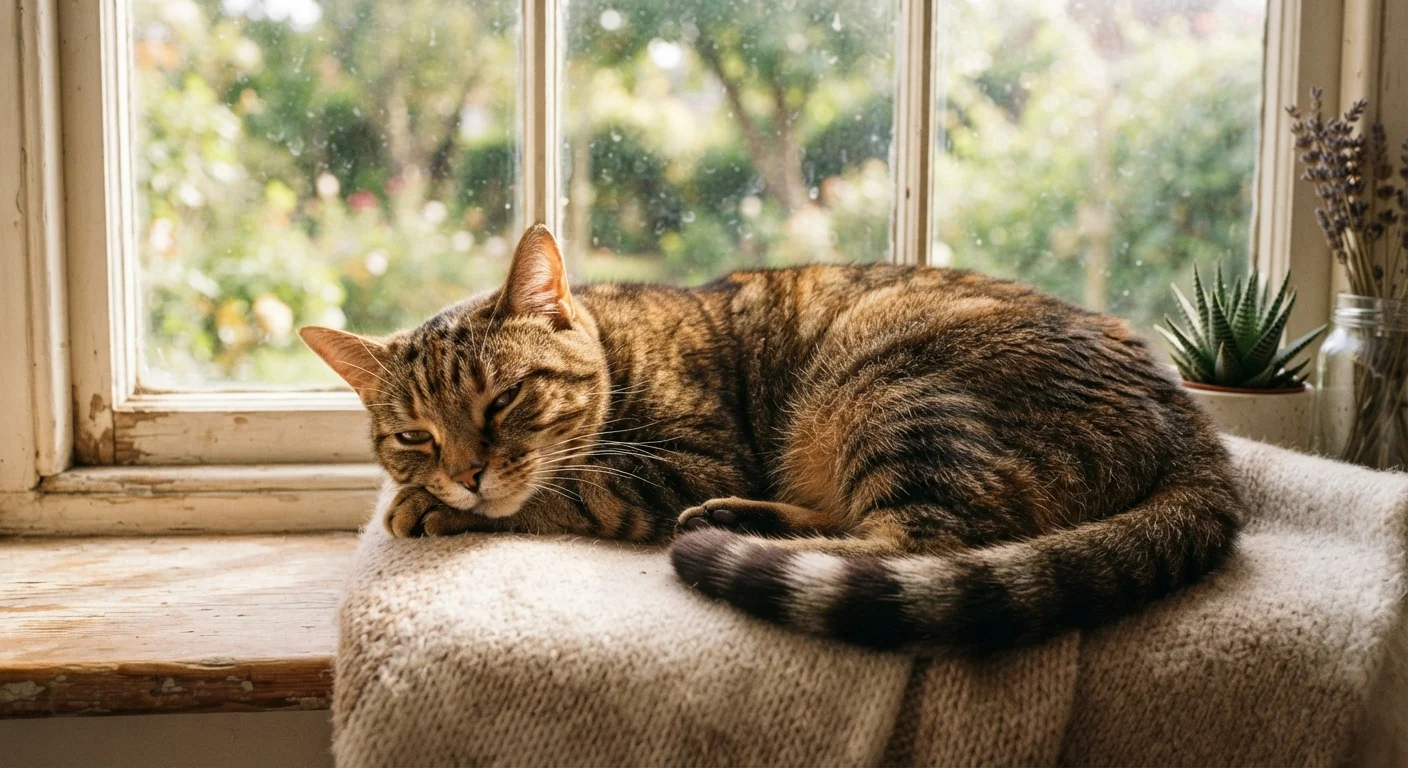
A cat stretched out loosely on their side or back feels completely safe. A cat sitting upright but with tucked paws (the "loaf" position) is comfortable but alert. A hunched posture with weight shifted forward, combined with a tucked head, often signals pain or nausea and warrants attention — see our guide on why cats hide when they're unwell for signs that point to a vet visit.
Head bunting — pressing the forehead against you — and slow kneading are both affectionate, bonding behaviors. A cat rolling to expose its belly is demonstrating trust, not requesting a rub; touching the belly often triggers a defensive scratch reflex because the abdomen is a vulnerable area. Recognizing the difference between an invitation and a display of trust prevents most miscommunication between cats and their owners.
Behavior Varies by Individual Cat
These signals represent general patterns documented across the species, but individual cats develop their own communication quirks shaped by early socialization, breed tendencies, and life experience. Spend time learning your specific cat's baseline behaviors — what relaxed looks like for them — so you can more reliably spot when something is off. For broader context, see our piece on myths about cat independence.
Putting It All Together in Everyday Life
Body language signals rarely appear in isolation — a confident greeting tail paired with slow blinks and forward ears paints a very different picture than flattened ears, a puffed tail, and wide pupils. Context matters enormously: a sudden loud noise can trigger a fear response that looks identical to illness-related withdrawal, so observe patterns over time rather than single moments.
If your cat's typical communication style changes noticeably — increased hiding, persistent flattened ears, unusual stillness, or a shift in how much they seek contact — it's worth taking seriously. Cats mask discomfort instinctively, and behavioral shifts are often the first readable sign that something is physically or emotionally off. Understanding their baseline makes it much easier to spot when something changes.
Building this awareness is especially valuable if you are bringing a cat home for the first time, when both of you are still learning each other's signals. Over time, the communication becomes mutual — your cat will also learn to read you.
This article is for general informational purposes only and is not a substitute for professional veterinary advice. Consult a qualified veterinarian if you have concerns about your cat's health or behavior.
Frequently Asked Questions
A slow blink is widely understood by animal behaviorists as a sign of trust and ease. It signals your cat feels safe enough to briefly lower their guard around you. You can mirror the gesture — close your eyes slowly and open them — to communicate the same calm back.
A puffed or 'bottle-brush' tail means your cat is frightened or feeling threatened. The fluffed fur makes the cat appear larger as a defensive response. Remove whatever is causing the alarm and give your cat space to calm down.
A gently flicking tail tip often signals mild irritation, overstimulation, or focused concentration — for example, while watching birds outside. If the tail thrashes more broadly, the cat is likely annoyed and petting should stop.
A belly display is a sign of trust, not necessarily an invitation to be touched. For many cats, the belly is a vulnerable area and touching it triggers a defensive reflex. Read it as a compliment to your bond, not a request for a belly rub.
Yes. Sudden withdrawal, hunched posture, flattened ears, or unusual stillness can all accompany pain or sickness. Cats instinctively conceal vulnerability, so behavioral shifts are often the earliest visible sign something is wrong. Consult a veterinarian if changes persist.
Kneading — rhythmically pushing paws against a soft surface — is a comfort behavior rooted in kittenhood nursing. When a cat kneads on you, it typically indicates deep contentment and emotional attachment.
The content provided on our blog site traverses numerous categories, offering readers valuable and practical information. Readers can use the editorial team’s research and data to gain more insights into their topics of interest. However, they are requested not to treat the articles as conclusive. The website team cannot be held responsible for differences in data or inaccuracies found across other platforms. Please also note that the site might also miss out on various schemes and offers available that the readers may find more beneficial than the ones we cover.