

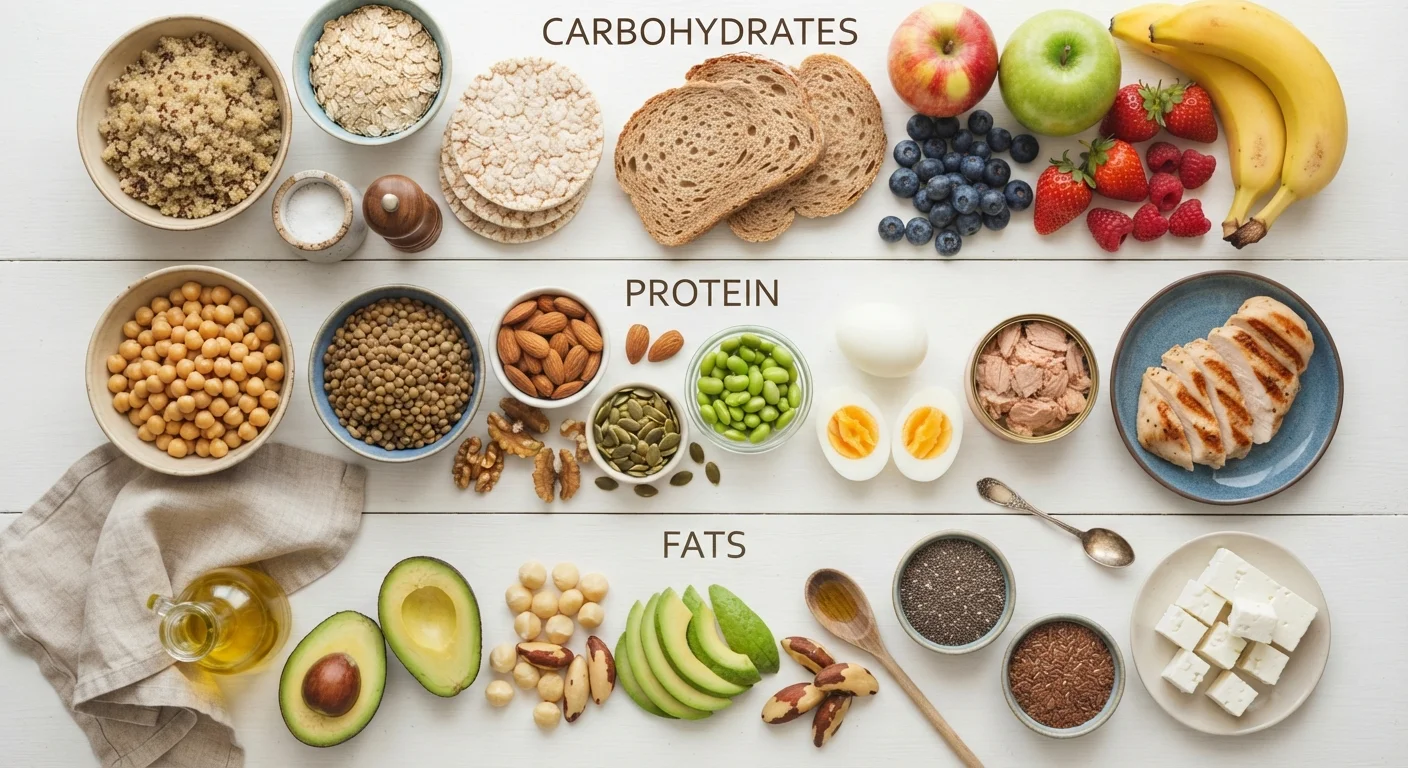
Carbohydrates: Your Body's First Choice for Fuel
Carbohydrates get more dietary criticism than almost any other nutrient — yet they remain the body's preferred energy source. When you eat carbs, your digestive system breaks most of them down into glucose, which cells use to power everything from muscle contractions to cognitive function.
Not all carbohydrates behave the same way. Simple carbohydrates (sugars) digest quickly, causing a faster rise in blood glucose. Complex carbohydrates — found in whole grains, legumes, and vegetables — break down more slowly, providing steadier energy and, often, valuable dietary fiber alongside them. For a deeper look at how fiber fits in, see our article on why fiber is the nutrient most people undereat.
The goal isn't to eliminate carbs but to favor sources that come packaged with fiber, vitamins, and minerals rather than those stripped of nutritional value during processing.
Fiber Is Technically a Carbohydrate
Dietary fiber is classified as a type of carbohydrate, but it behaves differently — most of it passes through the digestive tract largely undigested, feeding beneficial gut bacteria and supporting bowel regularity. This is one reason the carbohydrate category is particularly nuanced: fiber-rich carb sources and refined sugars can have very different effects on the body.
Protein: The Body's Builder and Maintenance Crew
Protein is made up of smaller units called amino acids. Of the 20 amino acids your body uses, nine are considered essential — meaning your body cannot manufacture them and must obtain them from food. This is why dietary protein is non-negotiable.
The functions protein supports are remarkably broad: repairing and building muscle tissue, producing enzymes and hormones, supporting immune cells, and transporting oxygen through the blood (hemoglobin is a protein). Protein also contributes to satiety — it tends to keep you feeling full longer than an equal calorie-load of carbohydrates.
Complete protein sources — those containing all nine essential amino acids — include animal products like meat, poultry, fish, eggs, and dairy. Many plant foods are lower in one or more essential amino acids, but eating a varied plant-based diet over the course of a day generally covers all requirements.
4 kcal/g
Calories per gram of protein
Established nutritional chemistry — protein and carbohydrates each supply 4 calories per gram, compared to 9 for fat.
10–35%
Recommended protein share of daily calories
According to the US Dietary Reference Intakes (DRIs) established by the National Academies of Medicine, protein should represent roughly 10–35% of total daily energy intake for adults.
20–35%
Recommended fat share of daily calories
The same US DRI framework recommends dietary fat account for 20–35% of total daily calories for adults, with an emphasis on unsaturated fat sources.
Fats: Essential, Not Optional
Dietary fat became a nutritional villain in the late 20th century, but research over subsequent decades has rehabilitated its reputation considerably. Fat is essential for absorbing fat-soluble vitamins (A, D, E, and K), producing steroid hormones, maintaining cell membrane integrity, and supporting brain development and function.
The type of fat matters significantly:
- Unsaturated fats (monounsaturated and polyunsaturated) — found in olive oil, avocados, nuts, seeds, and fatty fish — are associated with favorable cardiovascular outcomes in multiple large studies.
- Saturated fats — found mainly in animal products and some tropical oils — are still a topic of active research; most dietary guidelines recommend moderate intake.
- Trans fats — largely removed from the US food supply following FDA action — are the most consistently harmful type in research evidence.
For practical guidance on spotting fat types in packaged foods, see our walkthrough on reading a nutrition label without getting lost in the numbers.
A Simple Way to Think About Fat Sources
If a fat-containing food is also a whole food — nuts, seeds, fish, avocado, olive oil — it's likely delivering beneficial nutrients alongside the fat. If the fat comes primarily from ultra-processed packaged foods, the overall nutritional picture is usually less favorable. Use food source as a rough quality signal rather than obsessing over grams.
Why Balance Matters More Than Elimination
Popular diets often succeed commercially by demonizing one macronutrient. In reality, decades of nutrition research point toward overall dietary patterns — not individual nutrient elimination — as the strongest predictor of long-term health outcomes. Cutting carbs, fat, or protein entirely creates genuine nutritional risk over time and is rarely necessary for the average healthy person.
“The nutrients in food work together synergistically. Focusing on a single nutrient — whether to fear it or champion it — misses the bigger picture of how dietary patterns shape health over a lifetime.”
— Walter Willett, Professor of Epidemiology and Nutrition, Harvard T.H. Chan School of Public Health
A practical approach focuses on food quality within each macro group: choosing whole grains over refined ones, lean and plant-based proteins alongside animal sources, and unsaturated fats as the primary fat type. Understanding how different foods contribute to your macro intake is a foundational skill — one that connects directly to understanding the whole foods vs. processed foods spectrum.
For eating habits that nutrition science consistently supports across research cycles, see our guide to everyday eating habits backed by nutrition science.
This article is for general informational and educational purposes only and is not a substitute for professional medical or dietary advice. Consult a qualified healthcare provider or registered dietitian for guidance tailored to your individual health needs.
Frequently Asked Questions
No — most people can eat well without tracking grams of each macronutrient. Focusing on whole, minimally processed foods naturally tends to produce a reasonable macro balance. Macro tracking can be useful for specific athletic or medical goals, but it's not necessary for general health.
All three are essential; none can be skipped indefinitely. Your body requires carbohydrates for brain fuel, protein for cellular repair, and fats for hormone and nervous system function. The concept of one being 'most important' is misleading — balance and food quality matter more than hierarchy.
Many people tolerate reduced-carb or reduced-fat eating patterns without harm, particularly when the overall diet remains nutrient-dense. However, very restrictive approaches can create deficiencies and may not suit everyone. Consult a registered dietitian or healthcare provider before making major dietary changes.
General guidance from health authorities suggests roughly 0.8 grams of protein per kilogram of body weight per day for sedentary adults, with higher amounts often recommended for active individuals and older adults. Your specific needs depend on age, activity level, and health status — a healthcare provider or dietitian can give personalised guidance.
No. Unsaturated fats found in foods like olive oil, nuts, and fatty fish are associated with cardiovascular benefits in research. Trans fats (largely eliminated from the US food supply) and excessive saturated fat have more concerning profiles in studies. Fat type and food source matter more than fat quantity alone.
The content provided on our blog site traverses numerous categories, offering readers valuable and practical information. Readers can use the editorial team’s research and data to gain more insights into their topics of interest. However, they are requested not to treat the articles as conclusive. The website team cannot be held responsible for differences in data or inaccuracies found across other platforms. Please also note that the site might also miss out on various schemes and offers available that the readers may find more beneficial than the ones we cover.