

Why Drivers Get Maintenance Timing Wrong
Most drivers want to take care of their vehicles — the problem is that the information guiding their decisions is often outdated, oversimplified, or based on habit rather than fact. Service intervals have evolved significantly alongside engine technology, lubricant chemistry, and vehicle monitoring systems, but old rules of thumb have proven surprisingly sticky.
The result is a widespread pattern of either over-servicing (wasting money) or under-servicing (risking mechanical damage). Understanding why these misjudgments happen is the first step toward building a maintenance routine that actually fits your vehicle. For a deeper look at how neglected tasks escalate into expensive problems, see why skipping minor services often leads to major repairs.
~35%
Drivers using outdated oil-change intervals
Industry surveys have consistently found that a significant share of drivers still follow the 3,000-mile oil-change rule despite most modern vehicles requiring far less frequent changes.
2 years
Typical brake fluid change interval
Many vehicle manufacturers specify a brake fluid flush every two years due to moisture absorption, yet this service is among the most commonly overlooked in routine maintenance schedules.
Common Maintenance Interval Mistakes — and How to Correct Them
The following mistakes represent the most frequent timing errors drivers make across core maintenance categories. Each carries real consequences — from unnecessary expense to safety risk.
Changing engine oil every 3,000 miles regardless of oil type or manufacturer guidance.
Why it happens: The 3,000-mile rule was standard advice for decades when conventional oil and older engine designs made it appropriate. Many drivers, quick-lube marketing, and even some service shops still repeat it.
Rotating tyres only when a problem becomes noticeable, rather than on a proactive schedule.
Why it happens: Tyre wear is gradual and easy to ignore until vibration or pulling makes it obvious. Many drivers only act when a mechanic flags it during an unrelated visit.
Treating brake fluid as a set-and-forget fluid that only needs attention if brakes feel different.
Why it happens: Brake fluid is invisible to routine inspection and rarely discussed unless a problem arises. Because brake feel degrades gradually, drivers don't notice the change.
Waiting until a coolant leak or overheating event to address the cooling system.
Why it happens: Coolant (antifreeze) doesn't visibly degrade the way oil does, so it feels like a fluid that lasts indefinitely. Overheating events are often the first signal drivers notice.
Skipping transmission fluid changes on the assumption that 'lifetime fluid' never needs replacing.
Why it happens: Some manufacturers label transmission fluid as 'lifetime fill,' which many drivers interpret as truly permanent. In practice, that designation often refers to the fluid lasting the transmission's warranty period under normal use, not the vehicle's entire lifespan.
Severe-Duty Driving Shortens Many Intervals
If your driving involves frequent short trips under five miles, stop-and-go city traffic, towing or hauling heavy loads, or extreme temperature conditions, your vehicle may qualify as operating under 'severe duty' — a designation that shortens recommended service intervals for oil, transmission fluid, and other systems. Check the severe-duty schedule in your owner's manual, not just the standard one.
Building a Reliable Service Schedule
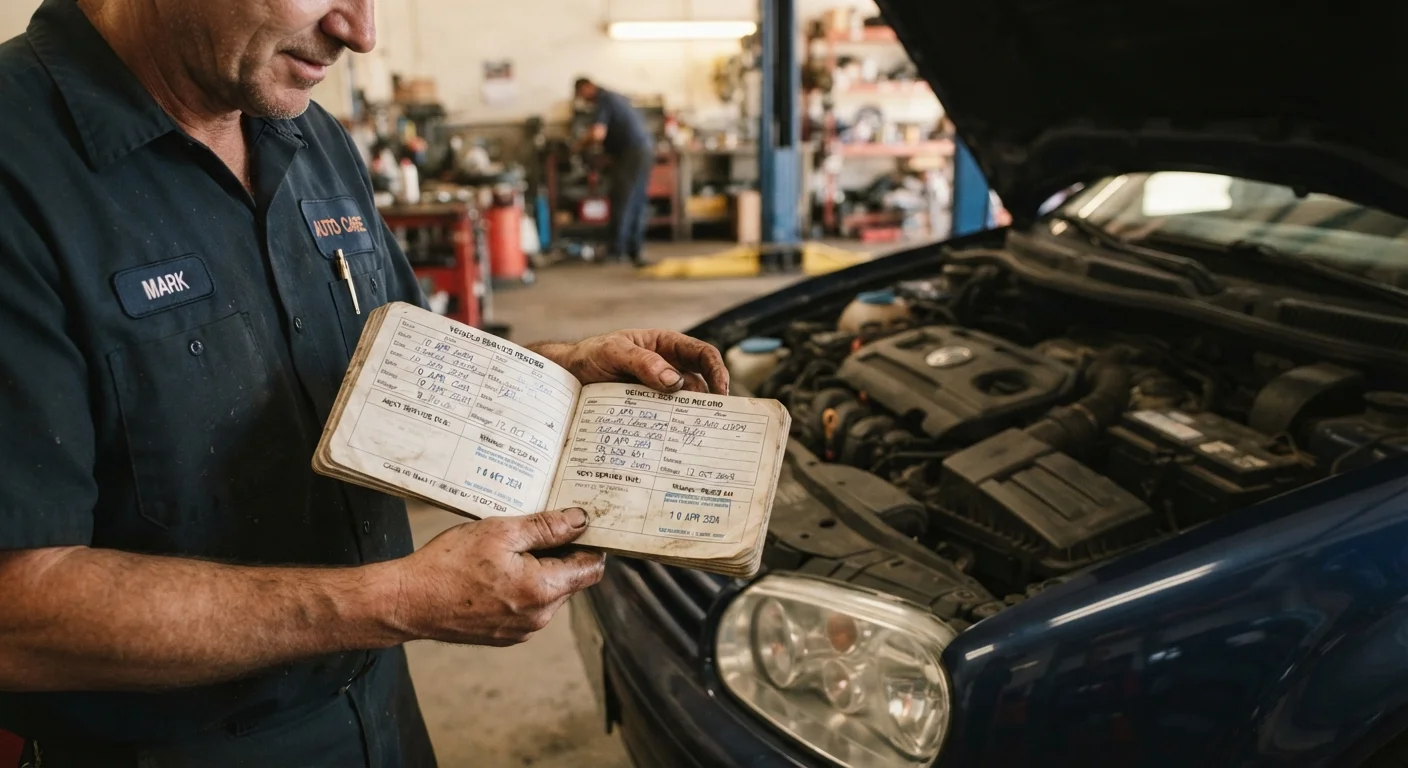
Rather than relying on memory or rules passed down from another era, build your maintenance schedule around three sources: your owner's manual, your vehicle's onboard service reminder system (if equipped), and a simple written or digital log. The owner's manual specifies intervals for your exact engine, transmission, and climate considerations — it is the authoritative reference, not generic industry averages.
Keeping accurate service records pays dividends beyond reliability — it supports resale value and helps mechanics diagnose issues faster. If your vehicle has a dashboard service indicator, treat it as a prompt to cross-check your manual rather than a standalone directive. For a broader framework of vehicle upkeep, the Car Maintenance hub covers everything from fluid checks to seasonal preparation.
Your Owner's Manual Overrides General Advice
No internet article, quick-lube shop recommendation, or general industry guideline replaces the maintenance schedule written for your specific vehicle. Manufacturers engineer service intervals based on your engine's tolerances, the fluids it requires, and the conditions it's designed for. If your manual and a service center's advice conflict, raise the discrepancy directly with a qualified mechanic before proceeding.
The content provided on our blog site traverses numerous categories, offering readers valuable and practical information. Readers can use the editorial team’s research and data to gain more insights into their topics of interest. However, they are requested not to treat the articles as conclusive. The website team cannot be held responsible for differences in data or inaccuracies found across other platforms. Please also note that the site might also miss out on various schemes and offers available that the readers may find more beneficial than the ones we cover.