

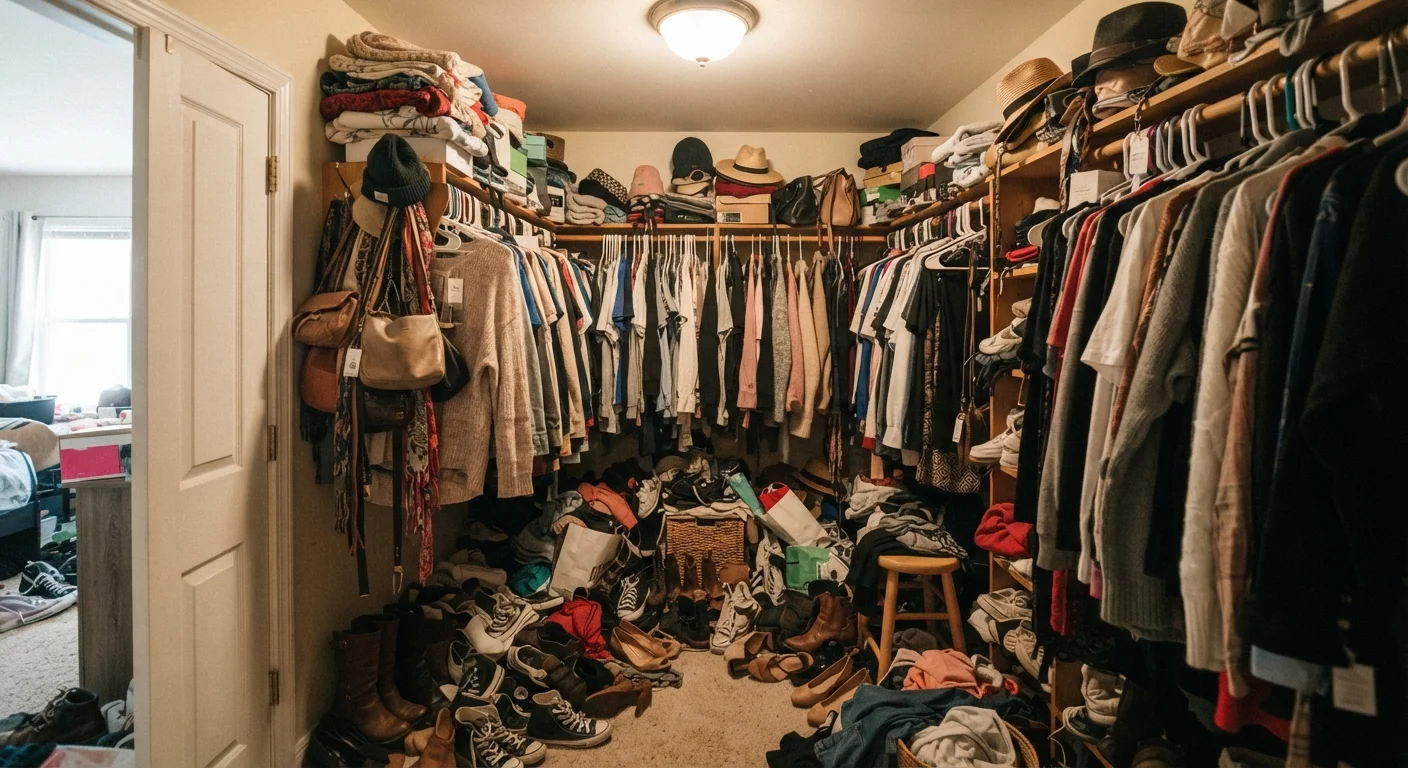
The Organized Closet Illusion
You spent a weekend pulling everything out, sorting piles, folding neatly, and standing back to admire the result. Three weeks later, it looks worse than before. This cycle is remarkably common — and it isn't a willpower problem. It's a systems problem.
Most closet relapses trace back to a handful of predictable missteps that turn initial order into lasting chaos. Identifying them is the fastest path to a closet that actually holds together. See our room-by-room organization checklist if you want to audit the rest of your home through the same lens.
Organizing without first decluttering thoroughly.
Why it happens: People want results quickly, so they rearrange rather than remove — it feels productive but doesn't reduce the actual volume problem.
Building a system around aesthetics rather than your actual behavior.
Why it happens: Inspiration images show color-coded, perfectly folded displays that look beautiful but don't match how most people get dressed under time pressure.
Assigning no fixed home to catch-all categories like accessories, bags, or seasonal pieces.
Why it happens: Organizers focus on primary categories — clothes, shoes — and leave miscellaneous items without a designated zone, so they colonize whatever space remains.
Treating organization as a one-time project instead of a recurring habit.
Why it happens: The initial overhaul feels complete, so people assume the work is done. Without a maintenance rhythm, small disruptions accumulate unchecked.
Adding too much storage hardware without editing what's stored.
Why it happens: More shelves, bins, and dividers feel like solutions, but they can simply give clutter more places to hide rather than reducing it.
Why the Relapse Happens So Fast
The speed of closet collapse surprises people because the initial effort felt so significant. But organization without an underlying structure is essentially staging — it looks right at a distance and falls apart under daily use.
80%
Of clutter is from disorganization, not lack of space
Professional organizers and home-management researchers commonly cite that most household clutter problems stem from absent systems rather than insufficient storage area.
5 min
Weekly reset time needed to maintain order
Organizing professionals generally recommend a brief weekly maintenance window — often just a few minutes — to prevent small disruptions from compounding into full relapses.
Two forces accelerate the timeline. First, any system that requires conscious effort at the end of a long day will be abandoned quickly. Second, new items enter the closet regularly — purchases, dry cleaning returns, laundry — while the storage structure stays static. Those items have no designated place, so they land wherever there's space, which is how pile-stacking begins again.
If you find yourself paralyzed before you even begin the next round, the step-by-step decluttering guide can help you move past that inertia methodically.
Don't Confuse Buying Organizers With Organizing
Purchasing bins, dividers, and labels before decluttering is one of the most common ways people stall progress. New storage products added to an over-full closet create the appearance of action without solving the volume problem. Declutter first, measure what remains, then shop for storage that fits your specific needs.
Sustainable closet order isn't about perfection — it's about friction reduction. The easier it is to put something back correctly, the more likely you are to do it automatically. That behavioral principle should shape every storage decision you make.
For routines that compound over time rather than fade, explore organization habits that actually stick.
The System Must Fit Your Real Life
An organization system you have to think hard about won't survive contact with a busy Tuesday morning. The most effective closet setups are almost effortless to maintain — items return to their spots naturally because the spots make obvious sense. If maintaining your system feels like a chore, redesign the system, not your willpower.
The content provided on our blog site traverses numerous categories, offering readers valuable and practical information. Readers can use the editorial team’s research and data to gain more insights into their topics of interest. However, they are requested not to treat the articles as conclusive. The website team cannot be held responsible for differences in data or inaccuracies found across other platforms. Please also note that the site might also miss out on various schemes and offers available that the readers may find more beneficial than the ones we cover.