

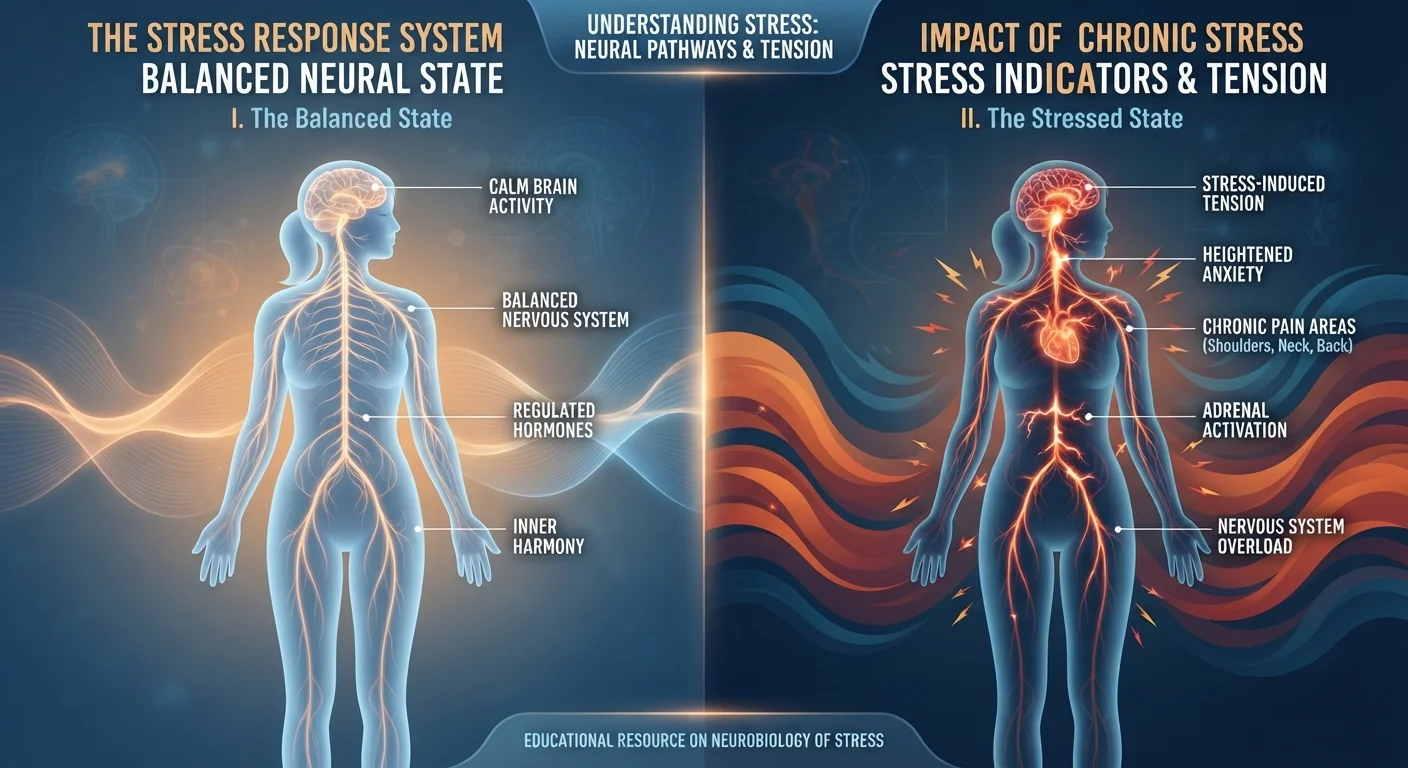
How the Stress Response Works
When the brain perceives a threat — real or imagined — it triggers the hypothalamic-pituitary-adrenal (HPA) axis, a communication network linking the brain and adrenal glands. This activates the release of cortisol and adrenaline, hormones that sharpen focus, raise heart rate, and redirect energy toward immediate survival. In a short-term emergency, this response is life-saving.
The problem arises when the perceived threat never fully resolves. Modern stressors — financial pressure, work demands, relationship conflicts — don't disappear after minutes. The HPA axis stays switched on, flooding the body with stress hormones day after day. This is chronic stress: the body prepared for an emergency that never ends.
Acute vs. Chronic: An Important Distinction
Not all stress is harmful. Acute stress can sharpen performance and motivate action — it is the body functioning as designed. The distinction that matters for health is duration and recovery. When the stress response cannot fully switch off, that is when physical and psychological harm accumulates.
What Prolonged Stress Does to Your Body
Sustained elevated cortisol has measurable effects across multiple body systems. The immune system becomes less efficient at fighting infection, while low-grade inflammation — a known contributor to cardiovascular disease — tends to increase. Blood pressure remains elevated, placing additional strain on the heart and arteries over time.
Digestive function is also affected. The gut and brain communicate through the vagus nerve, and chronic stress disrupts this pathway, contributing to symptoms like nausea, bloating, and altered bowel habits. Sleep quality deteriorates, which compounds virtually every other physiological effect.
77%
Adults reporting physical stress symptoms
According to the American Psychological Association's Stress in America survey, a large majority of U.S. adults regularly experience physical symptoms they attribute to stress.
2–3×
Increased cardiovascular risk with chronic stress
Epidemiological research has associated high chronic stress levels with a two-to-threefold increase in the risk of cardiovascular events, according to reviews published in peer-reviewed cardiology literature.
~20%
Hippocampal volume reduction in chronic stress
Some neuroimaging studies have observed hippocampal volume reductions of roughly 20% in individuals with prolonged elevated cortisol, though findings vary across populations and study designs.
The Brain Under Sustained Pressure
Research using neuroimaging has shown that chronic stress can alter the brain's physical structure. The hippocampus — a region critical for memory formation and emotional regulation — appears to shrink with prolonged high cortisol exposure. Conversely, the amygdala (the brain's threat-detection center) can become more reactive, making individuals more sensitive to perceived danger over time.
These changes help explain why people under chronic stress often report difficulty concentrating, heightened anxiety, and a reduced capacity to regulate their emotions. Importantly, research also suggests the brain retains a degree of neuroplasticity — the ability to adapt and recover — particularly when stress is reduced and healthy habits are introduced. This is one reason evidence-based interventions offer genuine hope.
“The brain is not a fixed organ. Evidence increasingly shows that reducing chronic stress, combined with behavioral interventions, can promote meaningful recovery of cognitive and emotional function.”
— Bruce McEwen, Neuroendocrinologist and leading researcher on stress and the brain, Rockefeller University
Evidence-Based Ways to Lower Your Stress Load
No single approach eliminates chronic stress, but several strategies have consistent research support. Regular aerobic exercise reduces cortisol levels and stimulates the release of endorphins. Mindfulness-based stress reduction (MBSR) — an eight-week structured program — has demonstrated measurable reductions in perceived stress and anxiety in multiple clinical trials.
Sleep is foundational: the HPA axis resets significantly during deep sleep, and consistently poor sleep perpetuates the stress cycle. Social connection also plays a documented protective role; strong relationships buffer the physiological impact of stress.
For practical daily habits that reinforce emotional resilience, see our guide to daily micro-habits for emotional resilience. It's also worth noting that your environment matters — research on cognitive load suggests that disorganized spaces can heighten stress. Our article on why clutter feels so overwhelming explores this connection.
Start Small With Stress Management
You don't need to overhaul your lifestyle overnight. Research on habit formation suggests that small, consistent actions — a 10-minute walk, a brief breathing exercise before bed — compound meaningfully over time. Pick one manageable habit and practice it consistently before adding more.
This article is for informational and educational purposes only and does not constitute medical advice. If you are experiencing persistent stress-related symptoms, please consult a qualified healthcare professional.
Frequently Asked Questions
Everyday stress is a normal, short-lived response to challenges that resolves once the situation passes. Chronic stress persists for weeks or months and keeps the body's stress-response system continuously activated. This prolonged state, rather than the stress itself, is what causes lasting physical and mental harm.
Research links chronic stress to increased risk of cardiovascular disease, weakened immune response, digestive disorders, and metabolic issues. Stress does not directly cause disease in all cases, but it creates conditions that make the body more vulnerable over time. A healthcare provider can help evaluate whether stress may be affecting your specific health.
Common signs include persistent fatigue, difficulty sleeping, frequent headaches, irritability, trouble concentrating, and a lowered sense of well-being. Physical symptoms like muscle tension and digestive upset are also frequently reported. If these symptoms are ongoing, consult a qualified healthcare professional for proper evaluation.
Yes. Sustained stress is associated with elevated risk of anxiety disorders and depression, as well as impaired memory and decision-making. Neuroimaging research shows structural brain changes in stress-related regions after prolonged exposure. Mental health professionals can help assess and address these effects.
Regular aerobic exercise, consistent sleep schedules, mindfulness-based practices, and maintaining strong social connections are among the best-studied approaches. No single strategy works for everyone, and a combination often yields the most benefit. A healthcare or mental health provider can help tailor an approach to your circumstances.
The content provided on our blog site traverses numerous categories, offering readers valuable and practical information. Readers can use the editorial team’s research and data to gain more insights into their topics of interest. However, they are requested not to treat the articles as conclusive. The website team cannot be held responsible for differences in data or inaccuracies found across other platforms. Please also note that the site might also miss out on various schemes and offers available that the readers may find more beneficial than the ones we cover.