

Why Sleep Advice Needs a Reality Check
Sleep hygiene — the set of habits and environmental factors thought to promote consistent, restorative sleep — has become a crowded field of advice. From strict no-phone rules to elaborate wind-down rituals, the recommendations can feel overwhelming, and not all of them are equally supported by evidence.
The good news is that a handful of core habits do hold up under scientific scrutiny. Understanding which ones matter most — and why some popular beliefs are oversimplified — can help you build a realistic routine that actually works for your life. This article is general health information; for persistent sleep difficulties, please consult a qualified healthcare professional.
For complementary approaches to winding down, see how to build a calming evening routine even when your schedule is tight.
Myth
You can fully catch up on lost sleep by sleeping in on weekends.
Fact
Weekend recovery sleep reduces some effects of sleep debt but does not fully restore cognitive performance or metabolic function lost during the week.
Research published in peer-reviewed sleep journals has found that while extended weekend sleep can alleviate feelings of sleepiness, it does not completely reverse the impairments to attention, reaction time, and metabolic markers that accumulate from chronic short sleep. Irregular sleep schedules can also shift your circadian rhythm, making Monday mornings harder — a phenomenon sometimes called "social jet lag."
Myth
Alcohol before bed helps you sleep better.
Fact
Alcohol may shorten the time it takes to fall asleep, but it suppresses REM sleep and increases nighttime awakenings, reducing overall sleep quality.
REM (rapid eye movement) sleep plays a key role in memory consolidation and emotional regulation. Even moderate alcohol consumption close to bedtime has been shown to reduce REM sleep in the first half of the night, leading to a rebound effect — lighter, more fragmented sleep — in the second half. The net result is typically less restorative rest, even if initial sleep onset feels easier.
Myth
Screens before bed ruin sleep for everyone equally.
Fact
Blue light from screens can suppress melatonin and delay sleep onset, but the magnitude of this effect varies considerably by individual and context.
Melatonin is a hormone that signals to your body that it's time to sleep; certain wavelengths of light — including blue light from device screens — can suppress its release. However, studies suggest that the cognitive stimulation of engaging content (a gripping show or stressful work email) may matter as much as the light itself. Passive, low-engagement screen use in a dimly lit room appears less disruptive than stimulating content at full brightness. Individual sensitivity also varies widely.
Myth
Eight hours is the right amount of sleep for every adult.
Fact
Sleep needs are individual; the broadly cited seven-to-nine-hour range for adults reflects population averages, not a universal prescription.
Major health organizations, including the American Academy of Sleep Medicine, recommend that most adults aim for at least seven hours of sleep per night — but acknowledge that some individuals function well with slightly more or less. Genetics, age, health status, and activity level all influence personal sleep needs. Focusing on how rested and functional you feel during the day is often a more useful signal than hitting an exact number.
Myth
If you can't sleep, staying in bed longer gives your body more opportunity to rest.
Fact
Lying awake in bed for extended periods can actually reinforce the association between your bed and wakefulness, making insomnia worse over time.
A well-established behavioral approach to chronic insomnia — called stimulus control — is based on the principle that the bed should be associated primarily with sleep. Cognitive Behavioral Therapy for Insomnia (CBT-I), which is recommended as a first-line treatment by several clinical guidelines, includes techniques that involve getting out of bed when unable to sleep rather than lying awake. This approach is not self-treatment guidance; it should be explored with a qualified sleep specialist or healthcare provider.
What the Evidence Actually Supports
Sorting myth from fact is only the first step. The stronger goal is replacing unhelpful beliefs with habits that have durable research support behind them.
1 in 3
US adults regularly not getting enough sleep
According to data from the Centers for Disease Control and Prevention (CDC), about one-third of US adults report regularly sleeping less than the recommended amount.
~90 min
Average REM cycle length disrupted by alcohol
Sleep research consistently shows that even moderate alcohol consumption can suppress the first REM cycle, which typically occurs around 90 minutes after sleep onset.
65–68°F
Room temperature range linked to better sleep
Sleep scientists generally identify this approximate range (around 18–20°C) as conducive to the drop in core body temperature that supports sleep onset and maintenance.
Consistent wake times are among the most replicated findings in sleep research. Your body's circadian rhythm — its internal 24-hour clock — responds most powerfully to the time you wake up and expose yourself to light. Anchoring your mornings, even on weekends, reinforces this rhythm more reliably than any supplement or gadget.
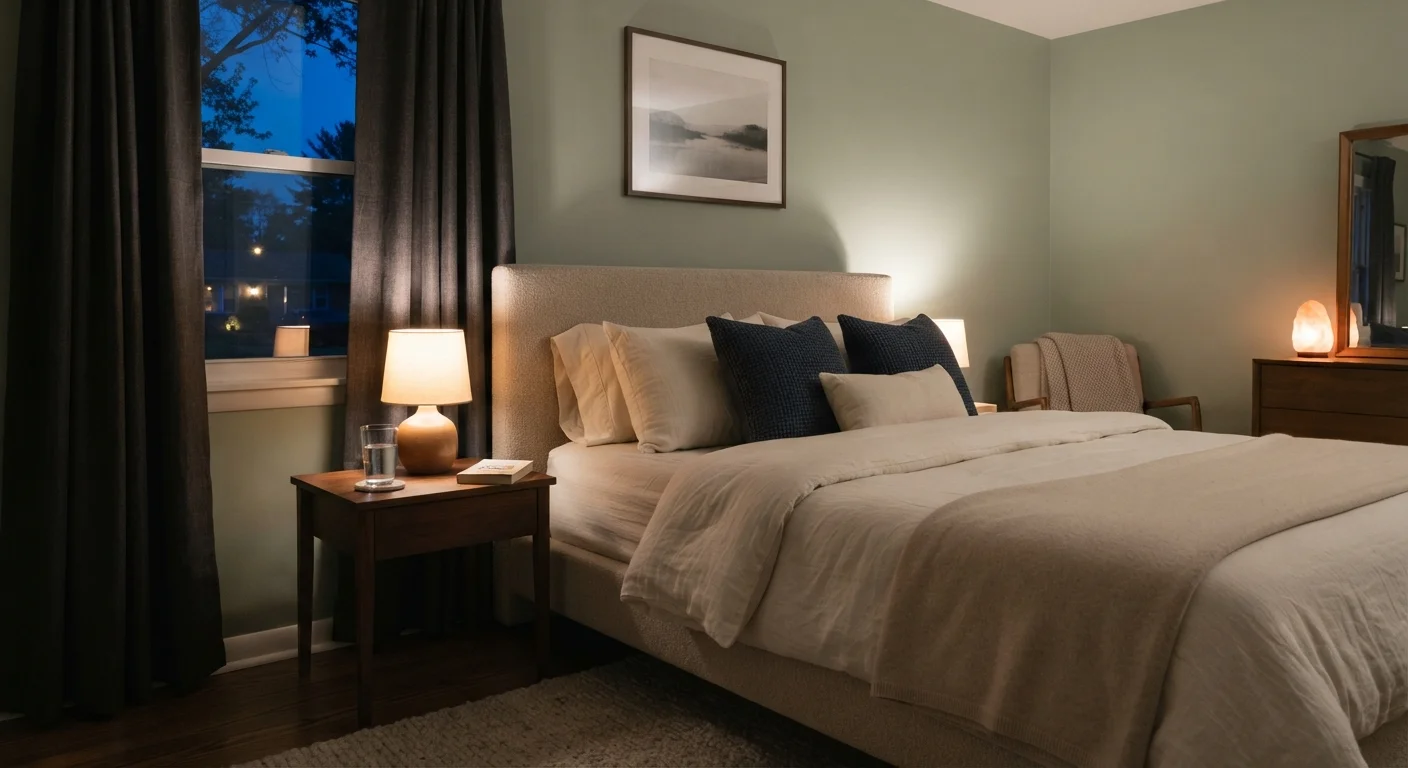
Room environment also matters more than many people realise. A cooler, darker, and quieter space reduces the number of brief awakenings most people don't remember but that fragment sleep quality. Blackout curtains or a sleep mask can meaningfully reduce light intrusion without any cost to your routine.
Don't Self-Diagnose a Sleep Disorder
Persistent difficulty falling asleep, staying asleep, or feeling rested despite adequate time in bed may indicate an underlying sleep disorder such as insomnia or sleep apnea. These conditions have established diagnostic criteria and evidence-based treatments. Self-managing with over-the-counter sleep aids or supplements is not a substitute for professional evaluation. Please consult a healthcare professional if sleep problems are significantly affecting your daily functioning.
Small, consistent habits compound over time. Research into behavioral change consistently shows that pairing new habits with existing anchors — like a brief relaxation exercise after brushing your teeth — improves adherence. See daily micro-habits that support emotional resilience for a broader look at this approach.
This article is for informational purposes only and does not constitute medical advice. If you are experiencing chronic sleep difficulties or a sleep disorder, please speak with a qualified healthcare professional.
The content provided on our blog site traverses numerous categories, offering readers valuable and practical information. Readers can use the editorial team’s research and data to gain more insights into their topics of interest. However, they are requested not to treat the articles as conclusive. The website team cannot be held responsible for differences in data or inaccuracies found across other platforms. Please also note that the site might also miss out on various schemes and offers available that the readers may find more beneficial than the ones we cover.