

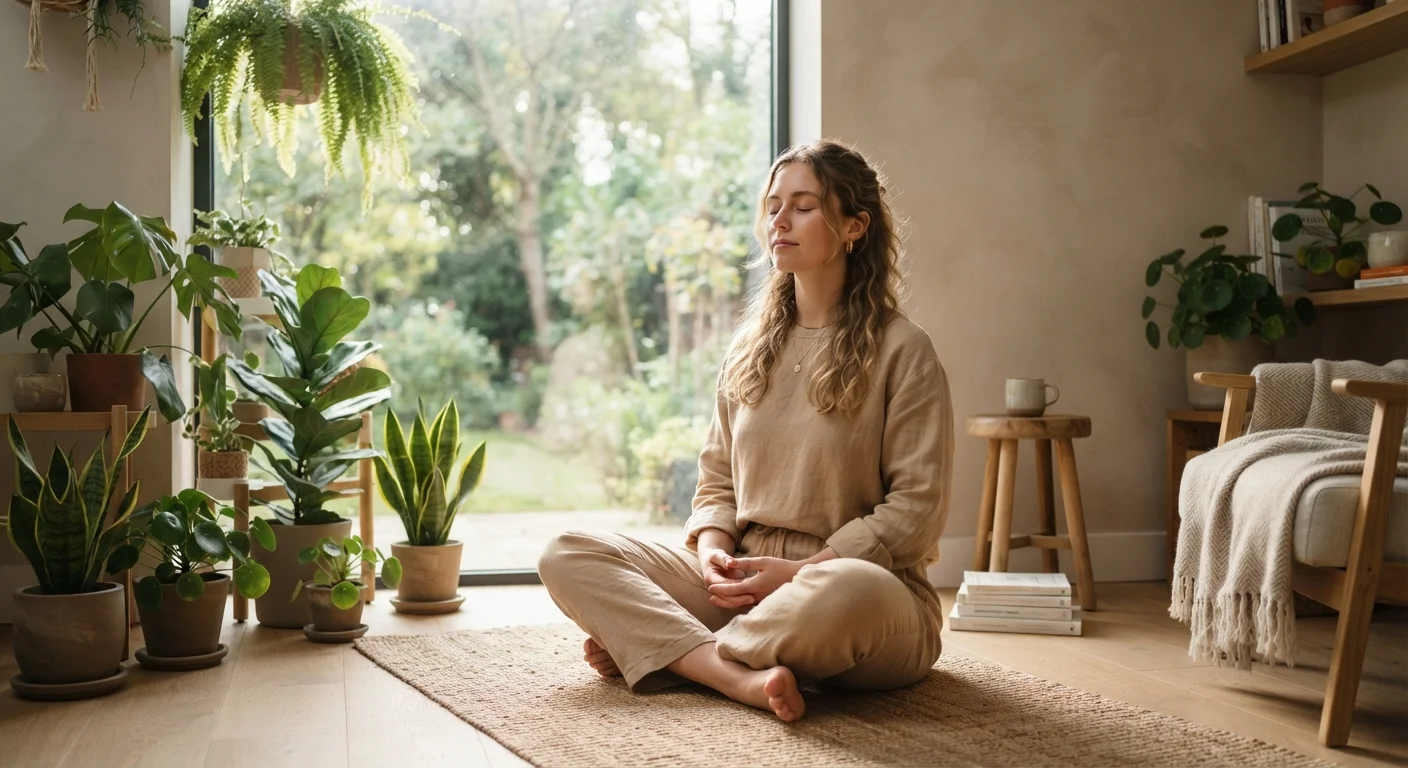
Option A
Mindfulness
The always-available awareness practice.
Best for: People who want to reduce stress and improve focus during everyday activities without carving out dedicated practice time.
Option B
Meditation
The structured, intentional training session.
Best for: People seeking deeper mental conditioning and are willing to commit regular, uninterrupted time to a formal practice.
Two Terms, One Confusion
Walk into any wellness conversation and you'll hear mindfulness and meditation treated as synonyms. They're closely related — but they're not the same thing. Understanding the distinction isn't just semantic; it shapes how you incorporate each into your life and what you can realistically expect from them.
In simple terms: mindfulness is a mental quality, and meditation is a practice. Mindfulness refers to the capacity to pay deliberate, non-judgmental attention to what's happening right now — your thoughts, sensations, and surroundings. Meditation, on the other hand, is a structured exercise in which you train that capacity, typically by sitting quietly and focusing your attention on a chosen anchor such as your breath, a sound, or a body sensation.
Think of it this way: meditation is the gym session; mindfulness is the physical fitness you build from going. You can carry the fitness with you all day — you can't carry the gym.
A Note on Terminology
In popular media, 'mindfulness' is sometimes used loosely to describe any calm, present-focused activity — from yoga to coloring books. Clinically and in research, mindfulness has a more specific meaning rooted in Buddhist psychology and adapted into secular health frameworks. Keeping that distinction in mind helps you evaluate what any given program or article is actually describing.
How Each Practice Works
Mindfulness in daily life means bringing conscious, curious attention to ordinary moments. Washing dishes, eating lunch, listening to a colleague — each becomes an opportunity to notice what's actually happening rather than running on autopilot. This isn't a passive state; it takes genuine effort, especially when the mind wants to drift toward worry or distraction.
Meditation as a formal practice usually involves setting aside a specific block of time — often anywhere from five to forty-five minutes — and following a structured technique. Common forms include focused-attention meditation (anchoring attention on the breath), open-monitoring meditation (observing thoughts without engaging them), and loving-kindness meditation (cultivating compassionate feelings toward oneself and others). Guided sessions, apps, and in-person classes are common entry points.
| Criterion | Mindfulness | Meditation |
|---|---|---|
| What it is | A mental quality or state of awareness | A structured, formal practice |
| When it happens | Anytime, during daily activities | During dedicated, set-aside sessions |
| Time required | No extra time needed | Typically 5–45 minutes per session |
| Skill level to start | Accessible immediately | Requires some instruction or guidance |
| Primary goal | Present-moment awareness in life | Training and deepening attention capacity |
| Research basis | Strong, often studied via MBSR programs | Strong, especially for attention and stress |
| Common formats | Informal awareness during routine tasks | Breath focus, body scan, loving-kindness |
Research published in journals such as JAMA Internal Medicine and Psychological Science has linked both practices to reductions in perceived stress, improvements in attention, and modest benefits for anxiety and depression symptoms. It's worth noting that most studies involve participants in structured programs and results vary across individuals. Neither practice is a clinical treatment on its own.
What the Evidence Actually Says
The science on mindfulness and meditation has grown substantially, though it's still maturing. Meta-analyses — studies that pool data from many smaller trials — generally support the idea that mindfulness-based interventions can meaningfully reduce symptoms of anxiety and psychological stress. Mindfulness-Based Stress Reduction (MBSR), an eight-week program developed at the University of Massachusetts Medical School, is among the most studied frameworks.
~30%
Reduction in self-reported stress
A meta-analysis in JAMA Internal Medicine found mindfulness meditation programs produced moderate reductions in psychological stress across participants.
8 weeks
Typical MBSR program length
The Mindfulness-Based Stress Reduction program, developed at UMass Medical School, runs eight weeks and remains one of the most rigorously studied mindfulness interventions.
47%
of waking hours spent mind-wandering
A Harvard University study using experience-sampling found people's minds wander nearly half of their waking time, suggesting substantial room for mindfulness practice.
One nuance worth understanding: many mindfulness studies measure outcomes after participants complete formal meditation programs. In other words, the "mindfulness" being studied often arrived through meditation training. Separating the two in research is genuinely difficult. What researchers consistently find is that regular practice — whether formal or informal — matters more than the precise label attached to it.
For those managing diagnosed mental health conditions, mindfulness and meditation may serve as useful adjuncts to professional treatment — not replacements. Always consult a qualified healthcare professional if you're addressing a specific mental health concern. See also: daily micro-habits that support emotional resilience for evidence-backed complementary strategies.
Choosing, Combining, or Starting Fresh
If you're deciding where to begin, consider your constraints honestly. Formal meditation asks for uninterrupted time and a willingness to sit with discomfort — both real barriers for many people. Mindfulness, by contrast, slots into time you're already spending. Noticing the texture of your coffee cup or the sensation of your feet on the ground during a meeting costs nothing extra.
That said, the two practices reinforce each other powerfully. Meditation sharpens your attentional muscles; mindfulness puts them to use in real-world moments. Many practitioners find that starting with brief, guided meditation sessions — even five minutes — makes it easier to sustain mindful awareness throughout the rest of the day.
Journalling is another complementary tool worth considering. Reflecting on thoughts and emotions in writing can deepen self-awareness in ways that support both mindfulness and meditation. For a grounded look at what journalling genuinely offers and where it falls short, see journalling for mental well-being.
Ultimately, neither practice is universally superior. The better question is: which can you sustain, and which fits the life you're actually living right now?
This article is for general informational and educational purposes only and is not a substitute for professional medical or mental health advice. If you have concerns about your mental health, please consult a qualified healthcare professional.
The content provided on our blog site traverses numerous categories, offering readers valuable and practical information. Readers can use the editorial team’s research and data to gain more insights into their topics of interest. However, they are requested not to treat the articles as conclusive. The website team cannot be held responsible for differences in data or inaccuracies found across other platforms. Please also note that the site might also miss out on various schemes and offers available that the readers may find more beneficial than the ones we cover.