

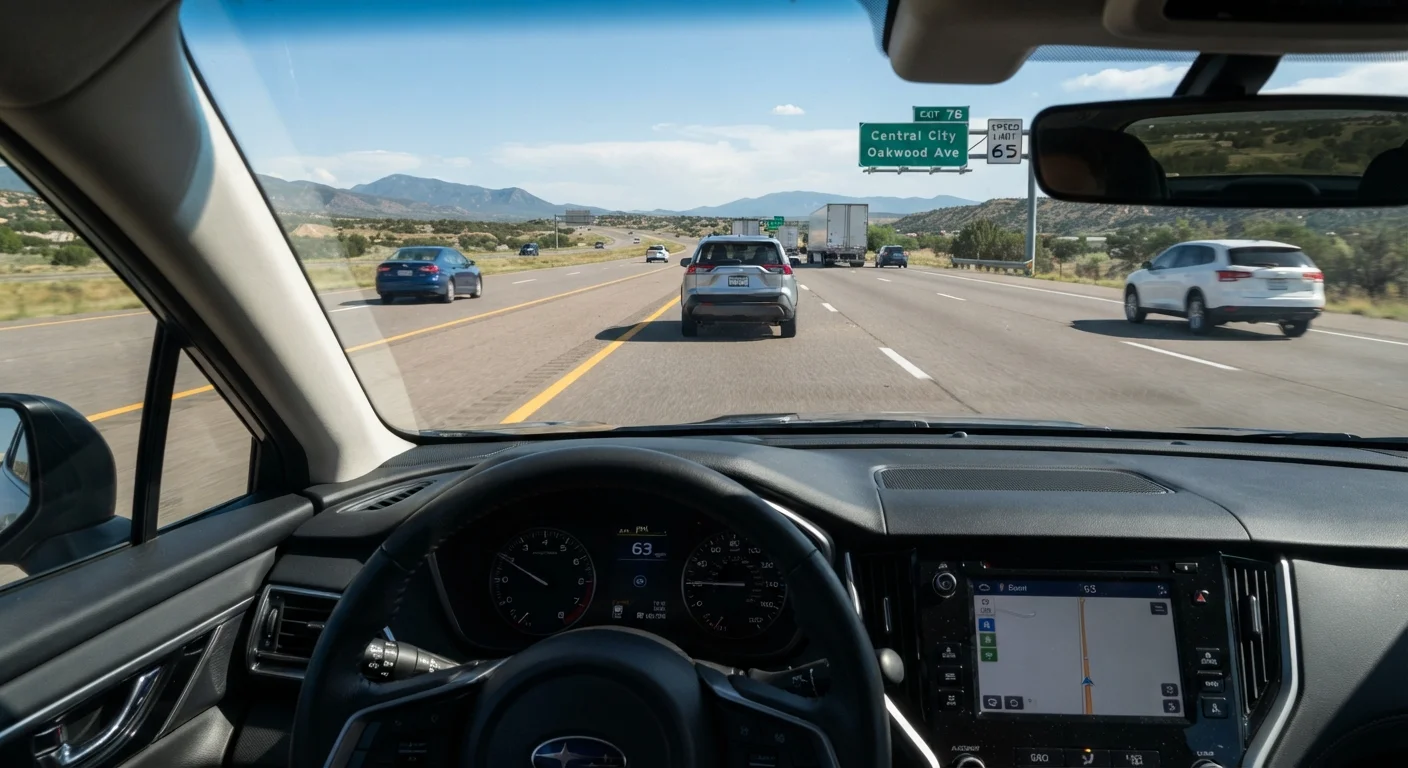
Why Following Distance Matters More Than You Think
Rear-end collisions are among the most common crashes on American roads. A significant portion of them share one root cause: the driver behind was not leaving enough space to stop in time. Following distance is not just a rule-book concept — it is the physical buffer between normal driving and a preventable crash.
When you follow too closely, you eliminate your own reaction time. Even alert drivers need roughly 1.5 seconds to perceive a hazard and begin braking. Add the distance your vehicle travels during that window, then add your actual braking distance, and the numbers add up quickly — especially at speed.
How the Two-Second Rule Works in Practice
The two-second rule turns an abstract safety concept into something any driver can measure in real time. Here is how to use it:
- Choose a stationary landmark ahead — a sign, bridge, or painted road marking.
- Watch for the vehicle in front to pass that landmark.
- Begin counting: "one-one-thousand, two-one-thousand."
- If your front bumper reaches the landmark before you finish counting, ease off the accelerator. You are following too closely.
One important thing to understand: this rule measures time, not car lengths. At 30 mph, two seconds equals roughly 88 feet. At 65 mph, the same two seconds covers about 190 feet. Speed dramatically changes the physical gap the rule creates, which is why time-based thinking is more reliable than counting vehicle lengths.
When Two Seconds Is Not Enough
The two-second guideline assumes dry pavement, good visibility, and an alert driver in a well-maintained vehicle. Numerous real-world conditions demand a longer cushion.
Weather and Road Conditions
Wet roads can double your stopping distance. Ice can increase it by eight to ten times compared to dry asphalt. In rain, snow, or fog, many driving safety programs recommend a minimum of four seconds — and more in severe conditions.
Vehicle Type and Load
Heavier vehicles take longer to stop. If you are towing a trailer or carrying a full load, extend your following distance accordingly. Commercial truck drivers operating under federal guidelines must account for much longer stopping distances than a passenger car.
Visibility and Fatigue
Reduced visibility — night driving, glare, heavy rain — slows your ability to detect hazards. Fatigue lengthens reaction time in ways that mirror impaired driving. When either factor is present, add extra seconds to your gap.
Building the Habit
Consistent following distance is a skill that improves with intentional practice. Many experienced drivers check their gap so automatically that it becomes second nature, but it starts with deliberate repetition.
One practical approach: each time you settle in behind another vehicle, briefly find a reference point and run the count. Over time, your eye develops a calibrated sense of safe spacing without needing to consciously measure every time.
If another driver pulls into your gap, resist the urge to close back up immediately. Simply ease off slightly and re-establish your buffer. The goal is not to "win" space — it is to protect yourself and others.
“The single most important thing a driver can do to prevent rear-end crashes is maintain adequate following distance. It is the cushion that makes every other defensive driving skill possible.”
— AAA Foundation for Traffic Safety, Traffic safety research organization
Frequently Asked Questions
Pick a stationary reference point ahead, such as a road sign or overpass. When the vehicle in front passes it, begin counting 'one-one-thousand, two-one-thousand.' If you reach that point before finishing the count, you are following too closely and should ease off the accelerator.
Two seconds is a minimum for dry, clear conditions. At highway speeds of 60–70 mph, many safety experts recommend extending to three or four seconds to account for the greater stopping distances involved. Always increase the gap if conditions are anything less than ideal.
Increase your following distance during rain, snow, ice, fog, or reduced visibility. You should also allow extra space when following large trucks or motorcycles, when you are fatigued, when your vehicle is heavily loaded, or when driving on unfamiliar roads.
Rear-end crashes frequently occur because drivers follow too closely and cannot stop in time when traffic slows suddenly. Distracted driving compounds the problem, since even a brief glance away from the road eliminates the reaction time that safe following distance is designed to preserve.
Yes, in two ways. If you are driving behind a motorcycle, allow extra space because motorcycles can stop faster than cars. If you are riding a motorcycle, many safety programs recommend a minimum three-second following distance because riders have less crash protection than car occupants.
The content provided on our blog site traverses numerous categories, offering readers valuable and practical information. Readers can use the editorial team’s research and data to gain more insights into their topics of interest. However, they are requested not to treat the articles as conclusive. The website team cannot be held responsible for differences in data or inaccuracies found across other platforms. Please also note that the site might also miss out on various schemes and offers available that the readers may find more beneficial than the ones we cover.